


Core Definition & Macro Value - The "Why"
When comparing an electric truck with a diesel truck, most buyers focus on purchase price. However, the real decision lies deeper - in the architecture that defines the vehicle's lifetime value.
A diesel truck is built around an internal combustion engine system. The engine, transmission, fuel injection system, exhaust treatment (DPF/SCR), and complex mechanical assemblies form its operational core. This architecture determines fuel consumption, maintenance frequency, emissions compliance, and long-term durability.
By contrast, a Battery Electric Vehicle (BEV) truck is not simply "a truck without diesel." It is a pure electric architecture, entirely dependent on battery systems and electric drive units, with no engine, no gearbox, no exhaust pipeline. This structural difference fundamentally changes total cost of ownership (TCO).
The powertrain architecture is the "heart" of the truck. It directly determines:
Operating efficiency
Energy cost per kilometer
Maintenance cycle
Noise, vibration, and driving comfort
Environmental compliance risk
For fleet operators and commercial vehicle dealers in Africa, the Middle East, and Southeast Asia, this decision affects not just fuel savings, but long-term profitability and regulatory stability.
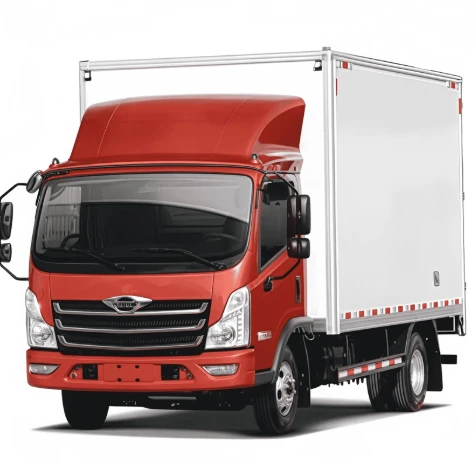
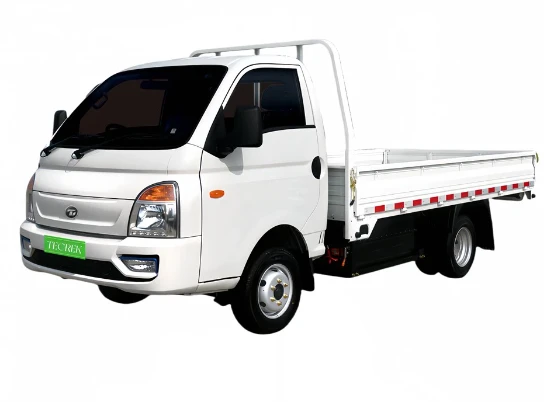
Multi-Dimensional Technical Breakdown - The "What"
Not all trucks are created equal. Understanding TCO requires technical decomposition.
1️⃣ Energy Efficiency
Diesel Truck: 30–40% thermal efficiency, fluctuating fuel prices.
Electric Truck (BEV): 85–90% energy conversion efficiency, stable electricity cost.
Electric trucks eliminate fuel injection systems, turbochargers, engine oil circuits, and exhaust after-treatment components. Fewer mechanical parts mean fewer failure points.
2️⃣ Structural & Material Strategy
Modern electric trucks increasingly use:
Advanced High-Strength Steel (AHSS) for structural rigidity
Aluminum alloy for lightweight corrosion resistance
Optimized battery pack integration within chassis
Diesel trucks, on the other hand, often require reinforced engine mounts and heavier driveline components, increasing curb weight and long-term wear.
3️⃣ Maintenance Cost Comparison
Diesel trucks require:
Oil changes
Filter replacement
Emission system servicing
Transmission maintenance
BEV trucks eliminate more than a dozen mechanical systems, significantly reducing routine maintenance frequency.
Over 5 years of operation, maintenance cost differences can reach 20–40% lower for electric trucks, depending on usage intensity.
Industry Pain Points & Core Conflict - The "Conflict"
Fleet managers face a classic dilemma:
Strength vs Weight. Efficiency vs Cost. Range vs Battery Size.
Stronger materials increase durability but add weight.
Lightweight materials reduce energy consumption but may increase cost.
Larger batteries increase range but raise purchase price.
Meanwhile, customers worry about:
Range anxiety
Charging infrastructure
Battery durability
Safety compliance
Traditional solutions often force compromises. Either the vehicle is affordable but inefficient, or advanced but too expensive for emerging markets.
This is where engineering balance becomes critical.
Tairui's Breakthrough Strategy - The "Solution"
ShanDong Tairui Automobile & Electronics Co., Ltd. does not simply manufacture trucks - we engineer balance.
Intelligent Mixed-Material Strategy
Our philosophy: "Use the right material in the right place."
High-strength steel for safety-critical zones
Lightweight components where structural load is lower
Optimized battery placement for center-of-gravity stability
Case Example: S5402 Electric Light Truck
Our S5402 electric light-duty truck integrates:
Mixed high-strength steel and lightweight structural design
29.9 kWh battery pack
Up to 300 km real-world range
Reinforced chassis optimized for urban logistics
This configuration achieves cost control without sacrificing safety or durability - ideal for last-mile delivery and urban freight.
Manufacturing Strength as Evidence
85% automated stamping and welding lines
Robotic body assembly
Large-scale production consistency
Annual capacity exceeding 20,000 vehicles
Engineering precision reduces structural variance, which lowers long-term maintenance risk and increases fleet reliability.
Commercial Value & Service Commitment - The "Benefit"
For B2B buyers, TCO is not theoretical - it is financial survival.
1️⃣ Lower Lifetime Operating Cost
No engine oil
No exhaust treatment system
Fewer moving components
Reduced downtime
Electric truck fleets show measurable savings in:
Energy cost per km
Maintenance labor
Spare parts inventory
2️⃣ Customization Capability (OEM / ODM)
We provide tailored configurations for:
Cold-region battery insulation
Mountainous terrain torque optimization
Left-hand or right-hand drive markets
Reinforced suspension for heavy-duty logistics
3️⃣ Global Compliance & Risk Reduction
Our production systems align with international quality standards, reducing regulatory risk for export markets.
For distributors and fleet operators, this means predictable lifecycle cost and stable residual value.
Conclusion & Call to Action
The debate between electric truck vs diesel truck is no longer about trend - it is about total cost of ownership.
Electric trucks offer:
Higher energy efficiency
Lower maintenance complexity
Reduced operating cost
Long-term regulatory stability
At the same time, engineering balance determines whether these advantages are sustainable in real-world commercial operation.
ShanDong Tairui Automobile & Electronics Co., Ltd. delivers the balance between lightweight structure, safety integrity, cost control, and scalable production.
Whether you are a startup commercial vehicle brand or an established OEM, we provide full-process support from CAD design to mass production.
Contact us today to calculate your fleet's real TCO difference and explore customized electric truck solutions for your market.
FAQ
Q1: Why is BEV maintenance cost lower than diesel trucks?
Because BEVs eliminate engine oil systems, fuel injection systems, exhaust after-treatment components, and complex transmissions. Fewer mechanical systems mean fewer service intervals.
Q2: What is the real-world range of Tairui's electric light truck?
Our S5402 electric model achieves up to 300 km under practical urban logistics conditions.
Q3: Is electric truck TCO always lower?
TCO depends on annual mileage, local fuel prices, electricity cost, and maintenance structure. For high-utilization fleets, electric trucks typically deliver stronger long-term savings.
Q4: Can electric trucks handle heavy-duty logistics?
Yes. With optimized chassis structure and torque-rich electric drive systems, electric light and medium trucks are well suited for urban and regional freight operations.