

Utility Vehicle
Your Professional Electric Vehicle Supplier
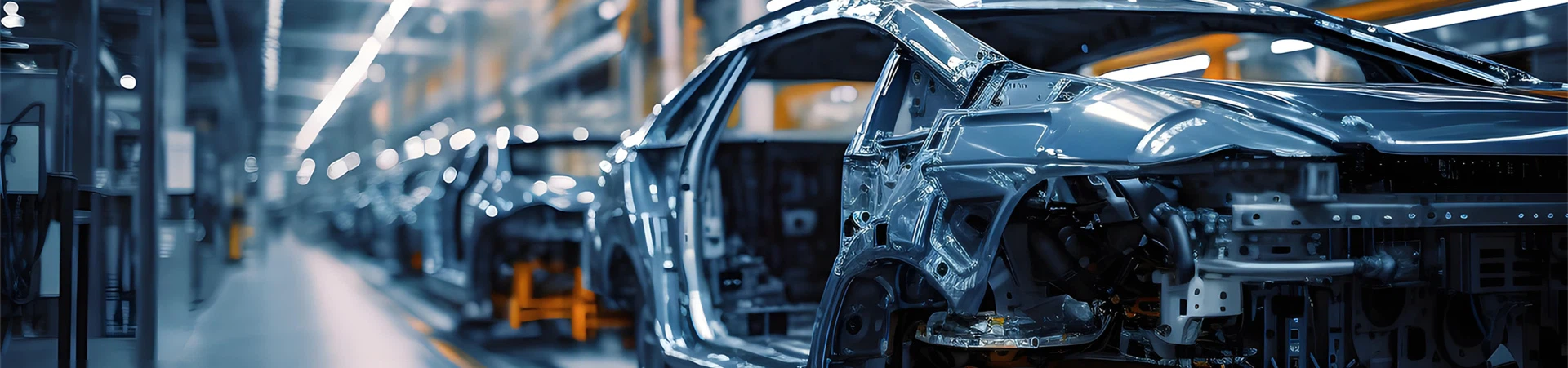
The company owns automotive grade production lines for four major manufacturing processes. We independently develop vehicle compartments and frames, and have four production workshops for stamping, welding, painting, and final assembly, with an annual production capacity of 20,000 complete vehicles. The annual total output value of body products reaches 1.8 billion yuan, and the company has now become one of the largest suppliers in Shandong Province.
Why Choose Us
Full industrial chain & large-scale manufacturing capabilities
We've set up 10 major production bases in 8 Chinese provinces, covering 360,000 square meters, to form a nationwide network. With world-class full-process production lines for stamping, welding, painting, and final assembly lines and ABB/KUKA welding robots, and other renowned brands, we can produce 20,000 electric vehicles and 10,000 special-purpose vehicles annually.
Professional R&D system and innovation capacity
We have complete Sales system, After sales service system, Quality controlling system.Our products have already exported to more than 20 countries, and we already authorized more than 18 different countries after sales agencies for our products. We can supply our overseas customer professional service according to different market special requirement from products to after sales service.
Global cooperation and quality assurance system
We have established a global cooperation and quality assurance system. Our products are exported to over 20 countries and regions worldwide, and our market share has been steadily increasing. Moreover, we have obtained a full range of certifications, including ISO9001 and IATF16949, and passed the VDA6.1/6.3 audits. By adhering to high standard quality control, we have won the trust of international customers.
Customized services and full value chain capabilities
We offer customized service for the full cycle from concept design to mass production. completing the design within 30 days, mold development within 1 to 3 months, and sample vehicle testing within 2 to 3 months. In the field of special vehicles, we offer a one-stop solution from "function definition to modification to delivery", covering municipal, logistics and emergency scenarios, and responding to demands quickly.
-
![utv for snow plowing]() utv for snow plowingThe utv for snow plowing is specially designed for icy and snowy environments and is a snowmobile that combines high performance and safety. Its unique design aims to allow drivers to enjoy the...read more
utv for snow plowingThe utv for snow plowing is specially designed for icy and snowy environments and is a snowmobile that combines high performance and safety. Its unique design aims to allow drivers to enjoy the...read more -
![farm utility vehicle]() farm utility vehicleFarm utility vehicle renowned for its strong loading capacity and stable performance. It is designed for users who need to transport a large amount of goods and work in complex terrains, and is a...read more
farm utility vehicleFarm utility vehicle renowned for its strong loading capacity and stable performance. It is designed for users who need to transport a large amount of goods and work in complex terrains, and is a...read more -
![side by side utility vehicle]() side by side utility vehicleThe side by side utility vehicle All Terrain Vehicle is a rugged all - terrain vehicle (ATV) engineered to dominate diverse landscapes, from rugged mountain trails to muddy farmlands. Powered by a...read more
side by side utility vehicleThe side by side utility vehicle All Terrain Vehicle is a rugged all - terrain vehicle (ATV) engineered to dominate diverse landscapes, from rugged mountain trails to muddy farmlands. Powered by a...read more -
![sport utility atv]() sport utility atvThe SW570-2 Off Road ATV Vehicle is a rugged ATV that combines the performance of the SW570-1 with distinctive styling. Sharing the 499cc liquid - cooled engine and core drivetrain with its...read more
sport utility atvThe SW570-2 Off Road ATV Vehicle is a rugged ATV that combines the performance of the SW570-1 with distinctive styling. Sharing the 499cc liquid - cooled engine and core drivetrain with its...read more -
![utility side by side]() utility side by sideThe utility side by sideis an all-terrain vehicle specially designed for heavy-duty transportation and multi-person travel. With its ultra-long wheelbase and enlarged body design, it stands out...read more
utility side by sideThe utility side by sideis an all-terrain vehicle specially designed for heavy-duty transportation and multi-person travel. With its ultra-long wheelbase and enlarged body design, it stands out...read more -
![electric atv for farm]() electric atv for farmThe SW570-1 2 Seats ATV Vehicle is a high - performance ATV engineered for both off - road excitement and practical utility. With a 499cc liquid - cooled engine, it delivers 29kW (39.4HP) of...read more
electric atv for farmThe SW570-1 2 Seats ATV Vehicle is a high - performance ATV engineered for both off - road excitement and practical utility. With a 499cc liquid - cooled engine, it delivers 29kW (39.4HP) of...read more -
![electric utv 4 seater]() electric utv 4 seaterThe FX400 Farm Utility Vehicle is a versatile utility task vehicle (UTV) designed for family adventures, group off - roading, and light commercial use. With a 4 - seat layout and a 18kW (25HP)...read more
electric utv 4 seaterThe FX400 Farm Utility Vehicle is a versatile utility task vehicle (UTV) designed for family adventures, group off - roading, and light commercial use. With a 4 - seat layout and a 18kW (25HP)...read more -
![electric utv for adults]() electric utv for adultsThe electric utv for adults is an all-terrain vehicle that emphasizes speed and flexible handling. Its compact body and powerful power combination are specially designed for users who pursue the...read more
electric utv for adultsThe electric utv for adults is an all-terrain vehicle that emphasizes speed and flexible handling. Its compact body and powerful power combination are specially designed for users who pursue the...read more -
![farm utility vehicles]() farm utility vehiclesThe FX250-2 Utility Terrain Vehicle is a high - performance utility task vehicle (UTV) that combines power and durability. With its bold color options of Red spider and Green spider, it makes a...read more
farm utility vehiclesThe FX250-2 Utility Terrain Vehicle is a high - performance utility task vehicle (UTV) that combines power and durability. With its bold color options of Red spider and Green spider, it makes a...read more -
![electric farm utility vehicle]() electric farm utility vehicleThe FX200 Utility Terrain Vehicle is a versatile and compact utility task vehicle (UTV) designed for both recreational off - road adventures and light - duty work applications. With its eye -...read more
electric farm utility vehicleThe FX200 Utility Terrain Vehicle is a versatile and compact utility task vehicle (UTV) designed for both recreational off - road adventures and light - duty work applications. With its eye -...read more -
![utility atv]() utility atvThe PATHCROSS 650/850/1000-L is a versatile all - terrain vehicle that offers a great balance between power, performance, and comfort. Designed for both recreational riders and those who need a...read more
utility atvThe PATHCROSS 650/850/1000-L is a versatile all - terrain vehicle that offers a great balance between power, performance, and comfort. Designed for both recreational riders and those who need a...read more -
![ranch vehicles]() ranch vehiclesShandong Tairui Group's ranch vehicles are high-performance vehicles meticulously crafted for off-road enthusiasts. It offers two model options: the single-seat S version is agile and lightweight,...read more
ranch vehiclesShandong Tairui Group's ranch vehicles are high-performance vehicles meticulously crafted for off-road enthusiasts. It offers two model options: the single-seat S version is agile and lightweight,...read more


All-Terrain Vehicles (ATVs) and Utility Task Vehicles (UTVs) are motorized vehicles designed for complex terrains, capable of traveling on unpaved roads such as snow, mud, and mountains. ATVs typically feature a three or four-wheel design, emphasizing single-person off-road performance, while UTVs offer more spacious cockpits and cargo space, suitable for multi-person travel and material transportation. Both fall under the category of "all-terrain vehicles."
Types of All-Terrain Vehicles
All-Terrain Vehicles (ATVs)
Design Features: Compact body with single or two-seat layout, low center of gravity, suitable for navigating narrow terrains (e.g., mountain trails, sand dunes).
Power Types: Commonly fueled by gasoline/diesel or electric drive. Fuel-powered models often use single-cylinder engines (e.g., 580cc), while electric models adopt lithium-ion battery packs.
Typical Applications: Outdoor exploration, farm patrol, off-road competitions.
Utility Task Vehicles (UTVs)
Design Features: Predominantly four-wheel drive, equipped with 2-6-seat cockpits and open cargo beds; some models offer enclosed cargo boxes with stronger carrying capacity (load capacity up to 500kg+).
Power Types: Fuel-powered versions mostly use multi-cylinder engines (e.g., 1000cc), electric versions are equipped with high-power motors (e.g., 29kW), and some models support fast charging.
Typical Applications: Agricultural transportation, engineering operations, field rescue, family off-road trips.
Advantages of ATVs and UTVs
|
Advantage Type |
ATV Features |
UTV Features |
|
Terrain Adaptability |
Flexible body can traverse paths narrower than 1m, suitable for extreme rough terrains (e.g., rocks, swamps). |
Longer wheelbase and more stable suspension, ideal for complex road conditions like mud and steep slopes under load. |
|
Power Performance |
Fuel versions have strong torque, capable of climbing slopes over 45°; electric versions accelerate instantly with low noise. |
Fuel versions have a range of over 500km; electric versions offer a range of 100-300km (depending on battery capacity). |
|
Functionality |
Lightweight design, suitable for single-person short-distance exploration. |
Cargo beds can load tools and materials; some models support towing (towing capacity up to 1.5 tons), balancing work and recreation. |
|
Environmental & Cost |
Electric versions are zero-emission, with maintenance costs 30% lower than fuel versions (no engine oil replacement needed). |
Charging costs for electric versions are about 1/3 of fuel versions; using solar charging further reduces usage costs. |
Disadvantages of ATVs and UTVs
Long Charging Time: 6-8 hours for full charge via household 220V; fast charging (DC 50kW) can reach 80% in 30 minutes, but charging pile coverage is lower than gas stations.
Low-Temperature Range Attenuation: In -10℃ environment, the range of electric models may decrease by 30% (alleviated by battery thermal management systems).
High Initial Cost: Electric ATVs/UTVs cost 10%-20% more than fuel versions, but have lower full-life cycle costs (fuel + maintenance).
Pain Points of Fuel Versions
Emission Pollution: Traditional fuel engines emit carbon monoxide and nitrogen oxides, restricted by environmental regulations in some areas.
Complex Maintenance: Requires regular oil and filter changes, with higher engine failure repair costs than electric versions.
High Noise: Engine noise can reach 85 decibels, unsuitable for quiet environments (e.g., nature reserve operations).

Introduction to Main Energy Storage Types
|
Energy Storage Type |
Technical Characteristics |
Application Scenarios |
|
Lithium-Ion Batteries (Electric) |
High energy density (200-300Wh/kg), supports fast charging, cycle life 500-2000 times, common capacity 48V-100kWh. |
Urban short-distance transport, scenic area sightseeing, eco-friendly work zones. |
|
Lead-Acid Batteries (Electric) |
Low cost, high safety, but low energy density (30-50Wh/kg), suitable for low-speed short-range models (e.g., load capacity below 300kg). |
Farm short-distance transport, low-speed work vehicles. |
|
Gasoline/Diesel (Fuel) |
High energy density (approx. 10,000Wh/kg), convenient refueling, no range anxiety, suitable for remote areas and long-distance operations. |
Field exploration, remote farms, scenarios without charging facilities. |
Starting Principles
Electric ATVs/UTVs
- Power Logic: The battery (e.g., lithium-ion battery pack) outputs direct current (DC), which is converted to alternating current (AC) by the controller to drive the motor. The motor directly drives the wheels without traditional clutches or gearboxes.
- Starting Method: Press the power button, and after the vehicle system self-check, the motor can output torque instantly with a response time <0.5 seconds.
Fuel ATVs/UTVs
- Power Logic: Fuel mixes with air and enters the engine cylinder; the spark plug ignites the mixture to push the piston, transmitting power to the wheels through the gearbox.
- Starting Method: Traditional key ignition or electric starting. For cold starts, pull the choke (carburetor models), with a starting time of about 1-3 seconds.
Purchase Considerations
Purpose Priority
- For farm transportation, choose UTVs (load capacity ≥500kg, cargo bed size ≥1.5m×1m); for off-road exploration, prioritize ATVs (wheelbase <2m, ground clearance >25cm).
Power Type Selection
- If charging is convenient and annual mileage <10,000km, choose electric versions; for frequent trips to remote areas or long-range needs, choose fuel versions (gasoline vehicles are recommended for higher gas station coverage).
Core Parameter Comparison
- Off-Road Performance: Ground clearance, approach/departure angles (recommended ≥30°), four-wheel drive system (part-time or full-time 4WD).
- Range Capacity: For electric versions, focus on battery capacity (kWh) and fast charging power (kW); for fuel versions, focus on fuel tank capacity (L) and fuel consumption per 100km.
Safety and Compliance
- Confirm whether the vehicle has passed EMC electromagnetic compatibility certification and crash tests. In some regions, ATVs/UTVs require registration and licensing (e.g., EPA emission regulations in the U.S.).
After-Sales Service
- Prioritize brands with local after-sales outlets. For electric versions, confirm the battery warranty policy (recommended ≥5 years/100,000km).
Our Factory
We have over 10 production bases in 8 provinces and municipalities across the country, located in Qingdao, Weifang, Zhucheng, Laiwu, Shandong Province, Jinzhong, Shanxi Province, Baoji, Shaanxi Province, Shenyang, Liaoning Province, Jingdezhen, Jiangxi Province, etc. Our products cover electric microcars, electric tricycles, electric freight tricycles, electric commercial vehicles and special-purpose vehicles, etc.


Our Certificate

Ultimate Guide to ATVs/UTVs
As a leading manufacturer of all-terrain vehicles in China, we own four major process production lines for stamping, welding, painting, and final assembly, with an annual production capacity of 20,000 vehicles. Our products cover electric/fuel ATVs, multifunctional UTVs, and other series, supporting customized development (30 days for design completion, 1-3 months for sample delivery). All models are certified by ISO9001 and IATF16949, exported to more than 20 countries, and provide one-stop solutions from "function definition-modification-delivery." Welcome to consult and purchase.
As one of the leading utility vehicle manufacturers in China, we warmly welcome you to buy high-grade utility vehicle made in China here from our factory. All our products are with high quality and competitive price.
Portable Fridges, electric trucks, Trekking Electric Bike