

Truck
Your Professional Electric Vehicle Supplier
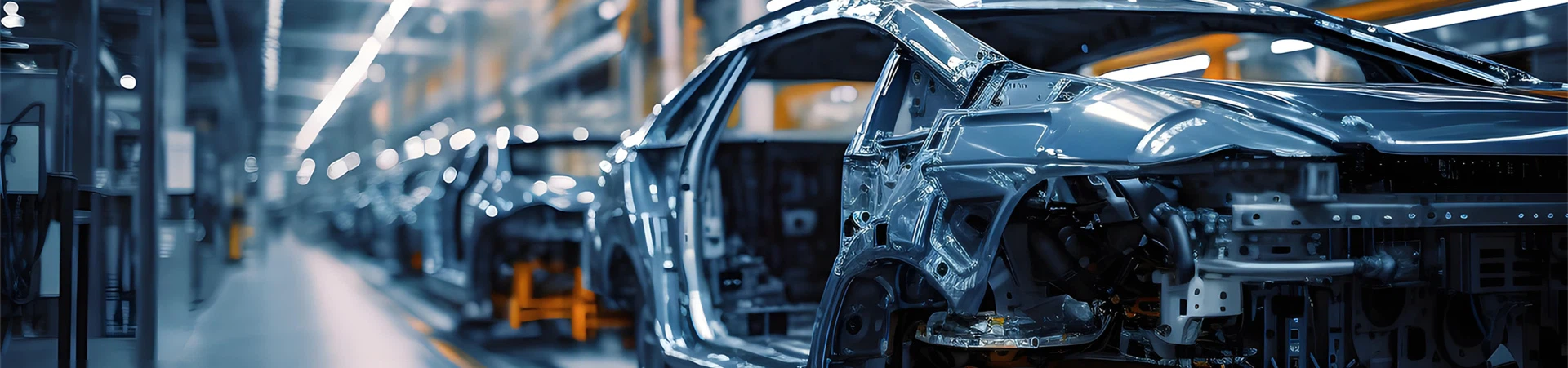
The company owns automotive grade production lines for four major manufacturing processes. We independently develop vehicle compartments and frames, and have four production workshops for stamping, welding, painting, and final assembly, with an annual production capacity of 20,000 complete vehicles. The annual total output value of body products reaches 1.8 billion yuan, and the company has now become one of the largest suppliers in Shandong Province.
Why Choose Us
Full industrial chain & large-scale manufacturing capabilities
We've set up 10 major production bases in 8 Chinese provinces, covering 360,000 square meters, to form a nationwide network. With world-class full-process production lines for stamping, welding, painting, and final assembly lines and ABB/KUKA welding robots, and other renowned brands, we can produce 20,000 electric vehicles and 10,000 special-purpose vehicles annually.
Professional R&D system and innovation capacity
We have complete Sales system, After sales service system, Quality controlling system.Our products have already exported to more than 20 countries, and we already authorized more than 18 different countries after sales agencies for our products. We can supply our overseas customer professional service according to different market special requirement from products to after sales service.
Global cooperation and quality assurance system
We have established a global cooperation and quality assurance system. Our products are exported to over 20 countries and regions worldwide, and our market share has been steadily increasing. Moreover, we have obtained a full range of certifications, including ISO9001 and IATF16949, and passed the VDA6.1/6.3 audits. By adhering to high standard quality control, we have won the trust of international customers.
Customized services and full value chain capabilities
We offer customized service for the full cycle from concept design to mass production. completing the design within 30 days, mold development within 1 to 3 months, and sample vehicle testing within 2 to 3 months. In the field of special vehicles, we offer a one-stop solution from "function definition to modification to delivery", covering municipal, logistics and emergency scenarios, and responding to demands quickly.
-
![1 Ton Micro Gasoline Truck for Urban Delivery]() 1 Ton Micro Gasoline Truck for Urban DeliveryCompact yet powerful, our 1 Ton Micro Gasoline Truck for Urban Delivery is engineered for efficient urban logistics, light freight transport, and commercial applications. With a strong chassis,...read more
1 Ton Micro Gasoline Truck for Urban DeliveryCompact yet powerful, our 1 Ton Micro Gasoline Truck for Urban Delivery is engineered for efficient urban logistics, light freight transport, and commercial applications. With a strong chassis,...read more -
![EV Truck Sales]() EV Truck SalesDiscover EV Truck Sales trends with our 2 Ton electric truck powered by GOTION 57.6kWh battery efficient, durable, and perfect for urban logistics.read more
EV Truck SalesDiscover EV Truck Sales trends with our 2 Ton electric truck powered by GOTION 57.6kWh battery efficient, durable, and perfect for urban logistics.read more -
![Light Duty Truck Sales]() Light Duty Truck SalesEC31 light duty truck offers BEV efficiency, 2.5-ton payload, rapid charging, and safety, ideal for wholesale buyers seeking eco-friendly urban logistics solutions.read more
Light Duty Truck SalesEC31 light duty truck offers BEV efficiency, 2.5-ton payload, rapid charging, and safety, ideal for wholesale buyers seeking eco-friendly urban logistics solutions.read more -
![Medium Duty Diesel Cargo Truck]() Medium Duty Diesel Cargo TruckExplore our Medium Duty Diesel Cargo Truck built for logistics, construction, and freight transport. Durable chassis, high payload capacity, and flexible cargo body options for reliable commercial...read more
Medium Duty Diesel Cargo TruckExplore our Medium Duty Diesel Cargo Truck built for logistics, construction, and freight transport. Durable chassis, high payload capacity, and flexible cargo body options for reliable commercial...read more -
![External Sealed Corrugated Box Truck Body]() External Sealed Corrugated Box Truck BodyBuilt for heavy-duty transport, this External Sealed Corrugated Box Truck Body features four-side opening, high-strength steel, and electrophoresis coating for superior sealing, fast loading, and...read more
External Sealed Corrugated Box Truck BodyBuilt for heavy-duty transport, this External Sealed Corrugated Box Truck Body features four-side opening, high-strength steel, and electrophoresis coating for superior sealing, fast loading, and...read more -
![Heavy Duty Stake Cargo Truck Body]() Heavy Duty Stake Cargo Truck BodyEngineered for heavy-duty transport, Tairui Custom Heavy Duty Stake Cargo Truck Body features a reinforced steel structure, high safety side rails, and convenient side and rear door access....read more
Heavy Duty Stake Cargo Truck BodyEngineered for heavy-duty transport, Tairui Custom Heavy Duty Stake Cargo Truck Body features a reinforced steel structure, high safety side rails, and convenient side and rear door access....read more -
![Light Duty Refrigerated Truck Body]() Light Duty Refrigerated Truck BodyLight Duty Refrigerated Truck Body for cold-chain logistics, built with FRP thermoplastic panels and PU/XPS insulation. Maintains stable -18°C temperature control with durable, energy-efficient...read more
Light Duty Refrigerated Truck BodyLight Duty Refrigerated Truck Body for cold-chain logistics, built with FRP thermoplastic panels and PU/XPS insulation. Maintains stable -18°C temperature control with durable, energy-efficient...read more -
![Thermoplastic Interlocking Cargo Box Truck Body]() Thermoplastic Interlocking Cargo Box Truck BodyEngineered for durability and efficiency, the Thermoplastic Interlocking Cargo Box Truck Body combines steel plate strength with XPS insulation in a lightweight 580KG structure. Designed for...read more
Thermoplastic Interlocking Cargo Box Truck BodyEngineered for durability and efficiency, the Thermoplastic Interlocking Cargo Box Truck Body combines steel plate strength with XPS insulation in a lightweight 580KG structure. Designed for...read more -
![Mini Flatbed Truck For Sale]() Mini Flatbed Truck For SaleTECREK mini flatbed truck for sale with 1.5T payload, 41.86 kWh CATL battery, 230 km range—efficient electric flatbed for modern logistics fleets.read more
Mini Flatbed Truck For SaleTECREK mini flatbed truck for sale with 1.5T payload, 41.86 kWh CATL battery, 230 km range—efficient electric flatbed for modern logistics fleets.read more -
![Electric Small Freight Truck for Urban Delivery]() Electric Small Freight Truck for Urban DeliveryThis Electric Small Freight Truck for Urban Delivery is engineered for efficient urban cargo transport. With a compact body, stable load capacity, and low operating cost, it offers a practical...read more
Electric Small Freight Truck for Urban DeliveryThis Electric Small Freight Truck for Urban Delivery is engineered for efficient urban cargo transport. With a compact body, stable load capacity, and low operating cost, it offers a practical...read more -
![4.5 Ton Diesel Light Truck for Sale]() 4.5 Ton Diesel Light Truck for SaleThe 4.5 Ton Diesel Light Truck is a fuel-powered commercial vehicle designed for efficient urban and regional cargo transport. Combining a durable chassis, stable diesel engine performance, and...read more
4.5 Ton Diesel Light Truck for SaleThe 4.5 Ton Diesel Light Truck is a fuel-powered commercial vehicle designed for efficient urban and regional cargo transport. Combining a durable chassis, stable diesel engine performance, and...read more -
![Electric Small Truck for Urban Delivery]() Electric Small Truck for Urban DeliveryA compact electric small truck designed for efficient urban delivery and short-distance logistics. Featuring zero emissions, low operating cost, and flexible cargo configurations, this vehicle is...read more
Electric Small Truck for Urban DeliveryA compact electric small truck designed for efficient urban delivery and short-distance logistics. Featuring zero emissions, low operating cost, and flexible cargo configurations, this vehicle is...read more


Truck,is also referred to as a cargo vehicle or freight vehicle, and is typically abbreviated as a "Lorry". In a broad sense, all motor vehicles used for transporting goods and equipment fall under the category of trucks. The scope is extremely wide, ranging from small and agile light delivery trucks that shuttle through cities to large heavy-duty tractors that travel on long-haul trunk routes, together forming a huge and diverse family of trucks.
Classification Methods
Classification by Purpose
General Cargo Vehicles: This is the most common type of truck, mainly used for transporting various general goods. Its cargo compartment is usually of a fence type or box type, suitable for the transportation needs of most goods. From light urban delivery trucks to heavy long-haul trucks, general cargo vehicles play a fundamental role in logistics transportation.
Specialized Cargo Vehicles: These trucks are specially designed to meet the transportation needs of specific goods. For example, refrigerated trucks are used to transport food, medicines, and other goods that need to be kept at low temperatures. Their cargo compartments are made of heat-insulating materials and equipped with refrigeration equipment; tank trucks are used to transport various liquid fuels or chemicals, and their tanks are specially designed to have good sealing and safety; container transport trucks are specially used to transport containers, and their frame structures and connecting devices are matched with containers to ensure the stability of containers during transportation.
Dump Trucks: The main feature of a dump truck is its ability to unload goods automatically, which greatly improves unloading efficiency. It is widely used in mines, construction sites, and other places for transporting bulk goods such as sand, soil, and ore. The dump truck tilts the cargo compartment through a hydraulic system, allowing the goods to slide off by themselves.
Tractor Trucks: Tractor trucks are mainly used to tow trailers, forming semi-trailer trains or full-trailer trains for cargo transportation. Tractors usually have strong power and high traction capacity, capable of dragging trailers loaded with large quantities of goods to travel on highways. The combination of tractors and trailers is an efficient transportation method in long-haul trunk transportation.
Classification by Load Capacity
Light Trucks: Generally with a load capacity of less than 1.8 tons, mainly used for short-distance cargo delivery within cities, such as in the fields of express delivery and logistics distribution. Light trucks are small and flexible, able to freely shuttle through narrow streets and alleys in cities, adapting to the complex urban traffic environment.
Medium Trucks: With a load capacity usually between 1.8 and 6 tons, suitable for medium and short-distance cargo transportation between cities, as well as some urban distribution tasks with certain load capacity requirements. Medium trucks play a bridging role in logistics transportation, not only having a certain cargo capacity but also being able to adapt to different road conditions better.
Heavy Trucks: With a load capacity of more than 6 tons, they are the main models in long-haul trunk transportation and large-scale engineering construction. Heavy trucks have a strong power system and a solid body structure, capable of carrying a large amount of goods and traveling long distances on highways, playing an important role in the country's economic construction and material circulation.
Basic Structure
Engine
The engine is the core component of a truck, like the human heart, providing power to the vehicle. At present, truck engines mainly have two types: diesel engines and gasoline engines. Diesel engines are widely used in heavy trucks and most medium trucks due to their high thermal efficiency, strong torque output, and good fuel economy; gasoline engines are relatively fewer, mainly used in some light trucks. The engine drives the vehicle forward by burning fuel and converting chemical energy into mechanical energy.
Transmission Device and Drive Axle
The role of the transmission device is to transmit the power generated by the engine to the drive axle, and then drive the wheels to rotate. It mainly includes components such as the clutch, transmission, and drive shaft. The clutch is used to connect or disconnect the power transmission between the engine and the transmission, facilitating vehicle starting, shifting, and parking; the transmission realizes different gear ratios through different gear combinations to meet the vehicle's needs for speed and torque under different driving conditions; the drive shaft is responsible for transmitting the power output by the transmission to the drive axle. The drive axle is the last link of the truck's transmission system, which distributes the power transmitted by the drive shaft to the left and right wheels through components such as the main reducer and differential, enabling the wheels to rotate and drive the vehicle to travel.
Steering System and Driven Axle
The steering system enables the driver to control the driving direction of the vehicle. Common steering systems include mechanical steering systems and power steering systems. The mechanical steering system realizes steering operations through mechanical components such as the steering wheel, steering gear, and steering tie rod; the power steering system adds a power assist device, such as hydraulic assist or electric assist, on the basis of the mechanical steering system, making it easier and more labor-saving for the driver to steer. The driven axle is located at the non-driven end of the vehicle, mainly playing the role of supporting the body and bearing part of the load. At the same time, when steering, the wheels of the driven axle can follow the wheels of the steering axle to turn accordingly.
Braking System
The braking system is a key system to ensure the driving safety of trucks, which can make the vehicle slow down or stop. The braking system mainly includes service braking devices (foot brakes) and parking braking devices (hand brakes). The service braking device generally uses hydraulic braking or pneumatic braking, and generates braking force through the friction between the brake pads and the brake disc or brake drum to slow down the wheels; the parking braking device is used to prevent the vehicle from sliding after parking, and usually uses a mechanical braking method. In addition, some trucks are equipped with auxiliary braking devices, such as engine braking and retarders, to improve the braking safety under special working conditions such as long downhill slopes.
Electrical Equipment
Electrical equipment provides various necessary power supports for trucks, including batteries, generators, lighting systems, signal systems, instrument systems, etc. The battery is used to store electrical energy, supplying power for vehicle starting, ignition, and some electrical equipment when the engine is not working; the generator converts mechanical energy into electrical energy when the engine is running, charging the battery and providing power for the vehicle's electrical equipment. The lighting system includes headlights, taillights, turn signals, fog lights, etc., to ensure the driving safety of the vehicle at night or in bad weather; the signal system is used to convey the driving intention of the vehicle to other road users, such as brake lights, width lights, etc.; the instrument system real-time displays various operating parameters of the vehicle, such as vehicle speed, engine speed, fuel quantity, water temperature, etc., to facilitate the driver to understand the working status of the vehicle.
Vehicle Body
The vehicle body is the main structure of the truck, which carries the goods and each component. The vehicle body is mainly composed of the frame, cargo compartment, and other parts. The frame is the skeleton of the entire vehicle, which bears all the loads of the vehicle and transmits these loads to the wheels and suspension system; the cargo compartment is divided into various types such as fence type, box type, and dump type accor
Special Equipment
Some specialized cargo vehicles are also equipped with specific special equipment. For example, the refrigeration unit of a refrigerated truck is used to maintain the low-temperature environment in the cargo compartment; the oil pump, breather valve, and other equipment of a tank truck are used for loading, unloading, and storing liquid goods; the fire pump, water cannon, ladder, and other equipment of a fire truck are used for carrying out fire extinguishing and rescue missions. These special equipment are the key for specialized cargo vehicles to achieve their specific functions.
Working Principle
The working principle of a truck is based on the operation of an internal combustion engine. Taking a diesel engine as an example, when the driver starts the engine, the battery supplies power to the starter, and the starter drives the engine crankshaft to rotate, making the engine enter the initial operating state. At this time, diesel is injected into the cylinder through the injector, mixed with high-temperature and high-pressure air, and then burns rapidly, generating a strong explosive force to push the piston downward, thereby driving the crankshaft to rotate. The rotational movement of the crankshaft is transmitted to the drive axle through the transmission device, driving the wheels to rotate and making the vehicle move forward. During the driving process of the vehicle, the driver adjusts the fuel supply of the engine by controlling the accelerator pedal, thereby changing the speed and output power of the engine to meet the needs of different driving conditions. At the same time, the driver also realizes the operations of shifting, starting, and parking of the vehicle by operating components such as the clutch and transmission.

Our Factory
We have over 10 production bases in 8 provinces and municipalities across the country, located in Qingdao, Weifang, Zhucheng, Laiwu, Shandong Province, Jinzhong, Shanxi Province, Baoji, Shaanxi Province, Shenyang, Liaoning Province, Jingdezhen, Jiangxi Province, etc. Our products cover electric microcars, electric tricycles, electric freight tricycles, electric commercial vehicles and special-purpose vehicles, etc.


Our Certificate

Frequently Asked Questions
Q: Are "huo che" and "truck" the same type of vehicle?
A: Yes. "Huo che" is the common Chinese term, while "truck" is the English translation. Both refer to motor vehicles for cargo transportation, ranging from light delivery vans to heavy tractors.
Q: How are trucks classified by purpose?
A: Mainly four categories:
- General cargo trucks (fence/box-type bodies for regular goods);
- Specialized cargo trucks (e.g., refrigerated trucks, tank trucks, container transporters);
- Dump trucks (hydraulic tilting bodies for mine bulk goods);
- Tractor trucks (towing semi-trailers/full trailers for long-haul transport).
Q: How are light, medium, and heavy trucks divided by load capacity?
A: - Light: ≤1.8 tons, urban short-distance delivery (e.g., courier vans);
- Medium: 1.8-6 tons, medium-short intercity transport;
- Heavy: ≥6 tons,for long-haul and construction projects.
Q: Why do heavy trucks mostly use diesel engines?
A: Diesel engines offer higher thermal efficiency (15%-20% better than gasoline), stronger torque for heavy loads, and better fuel economy, making them dominant in heavy and most medium trucks.
Q: What's the role of a truck's transmission system?
A: The transmission transfers engine power to the drive axle, including the clutch (disconnects power), gearbox (adjusts speed ratios), and drive shaft (transmits power), ultimately driving wheels via the main reducer and differential.
Q: How does power steering outperform mechanical steering?
A: Power steering (hydraulic/electric assist) reduces driver effort, especially for low-speed turns or heavy loads, while mechanical steering relies entirely on manual force, requiring more strength.
Q: What safety designs do truck braking systems have?
A: Besides service brakes (foot brakes, hydraulic/pneumatic) and parking brakes (hand brakes, mechanical), some models have auxiliary brakes like engine braking or retarders for enhanced downhill safety.
Q: How do dump trucks unload automatically?
A: Hydraulic systems tilt the body, allowing goods to slide by gravity, 3-5 times more efficient than manual unloading, ideal for mine/construction site bulk transport.
Q: How do refrigerated trucks maintain low temperatures?
A: Refrigerated trucks use insulated bodies and independent refrigeration units (e.g., Thermo King), controlling temperatures between -18°C and 15°C for fresh produce and pharmaceuticals.
Q: What's the function of a truck's frame?
A: The frame is the vehicle's skeleton, bearing all loads (cargo+body) and transferring them to wheels/suspensions. Its strength directly affects safety and durability.
Q: Why are tractor trucks suitable for long-haul transport?
A: Tractors have strong power (e.g., 400+ hp), pairing with semi-trailers for efficient combinations, carrying 20-30 tons per trip with 15%-20% lower fuel consumption than small trucks.
Q: What components make up a truck's electrical system?
A: Mainly batteries (energy storage), generators (charging during operation), lighting (headlights/fog lights), signal systems (brake/turn lights), and instrument panels (displaying speed/fuel).
Q: How do tank trucks ensure transport safety?
A: Tank trucks feature explosion-proof tanks with breather valves, anti-static devices, and sealed interfaces; some have hydraulic safety valves to prevent leaks or explosions.
Q: What's the working principle of a truck?
A: Take diesel engines: Start by battery-powered starter rotating the crankshaft; injectors spray diesel into cylinders for combustion, pushing pistons to drive the crankshaft, transmitted via gears to wheels. Drivers adjust power via the accelerator and gearbox.
Q: How to choose load capacity when buying a truck?
A: Base on needs: light trucks (≤1.8t) for urban delivery, medium (1.8-6t) for intercity, heavy (≥6t) for long-haul/construction. Avoid "overloading" to prevent increased fuel consumption.
Q: Can trucks tow trailers?
A: Tractor trucks are designed for towing semi/full trailers, while general cargo trucks usually lack towing. Check the "permitted towing mass" in vehicle specifications.
Q: What's the maintenance cycle for trucks?
A: Diesel trucks need routine maintenance every 5,000-10,000 km (oil/filter changes); electric trucks have longer cycles (main focus on battery/motor checks). Refer to the manufacturer's manual.
Q: How to start a truck in low temperatures?
A: Use -10 diesel for cold areas, preheat the engine 2-3 times before starting, or install an engine insulator; electric trucks should activate battery thermal management to avoid range loss.
Q: What driver's license is needed for trucks?
A: C1 for light/medium trucks, B2 for heavy trucks, and A2 for tractor trucks, depending on the vehicle's total mass and classification.
Q: What are the future trends for trucks?
A: Key directions include electrification (zero emissions for urban delivery), intelligence (autonomous driving assist, IoT monitoring), lightweight design (aluminum/carbon fiber to reduce fuel use), and green energy (natural gas/hydrogen fuels).
As one of the leading fuel truck manufacturers in China, we warmly welcome you to buy high-grade fuel truck made in China here from our factory. All our products are with high quality and competitive price.
350W Electric Motorcycle, Lithium Low Speed Electric Vehicle, New Energy Discharge Pile