

Special Truck
Your Professional Electric Vehicle Supplier
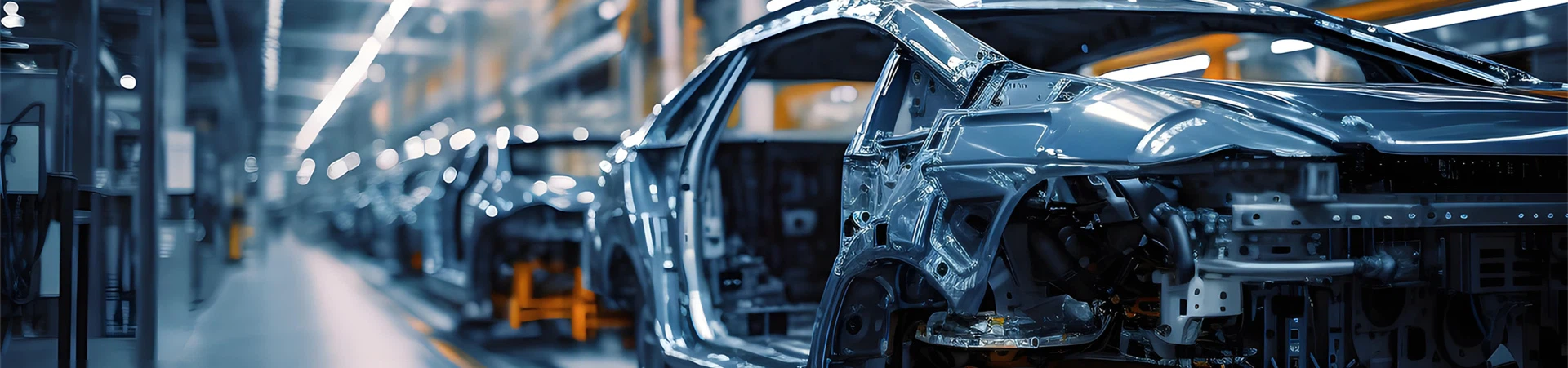
The company owns automotive grade production lines for four major manufacturing processes. We independently develop vehicle compartments and frames, and have four production workshops for stamping, welding, painting, and final assembly, with an annual production capacity of 20,000 complete vehicles. The annual total output value of body products reaches 1.8 billion yuan, and the company has now become one of the largest suppliers in Shandong Province.
Why Choose Us
Full industrial chain & large-scale manufacturing capabilities
We've set up 10 major production bases in 8 Chinese provinces, covering 360,000 square meters, to form a nationwide network. With world-class full-process production lines for stamping, welding, painting, and final assembly lines and ABB/KUKA welding robots, and other renowned brands, we can produce 20,000 electric vehicles and 10,000 special-purpose vehicles annually.
Professional R&D system and innovation capacity
We have complete Sales system, After sales service system, Quality controlling system.Our products have already exported to more than 20 countries, and we already authorized more than 18 different countries after sales agencies for our products. We can supply our overseas customer professional service according to different market special requirement from products to after sales service.
Global cooperation and quality assurance system
We have established a global cooperation and quality assurance system. Our products are exported to over 20 countries and regions worldwide, and our market share has been steadily increasing. Moreover, we have obtained a full range of certifications, including ISO9001 and IATF16949, and passed the VDA6.1/6.3 audits. By adhering to high standard quality control, we have won the trust of international customers.
Customized services and full value chain capabilities
We offer customized service for the full cycle from concept design to mass production. completing the design within 30 days, mold development within 1 to 3 months, and sample vehicle testing within 2 to 3 months. In the field of special vehicles, we offer a one-stop solution from "function definition to modification to delivery", covering municipal, logistics and emergency scenarios, and responding to demands quickly.
-
![8 Ton Truck Mounted Crane]() 8 Ton Truck Mounted CraneHigh-performance 8 Ton Truck Mounted Crane with Cummins engine, XCMG crane, and National VI standard—ideal for cargo, lifting, and wholesale buyers.read more
8 Ton Truck Mounted CraneHigh-performance 8 Ton Truck Mounted Crane with Cummins engine, XCMG crane, and National VI standard—ideal for cargo, lifting, and wholesale buyers.read more -
![Road Surface Washing Truck]() Road Surface Washing TruckRoad Surface Washing Truck for municipal cleaning. High-pressure washing, wide cleaning width, durable tank design, and customizable options for bulk buyers.read more
Road Surface Washing TruckRoad Surface Washing Truck for municipal cleaning. High-pressure washing, wide cleaning width, durable tank design, and customizable options for bulk buyers.read more -
![32m Hydraulic Ladder Climbing Truck]() 32m Hydraulic Ladder Climbing TruckA High-Reach 32m Hydraulic Ladder Climbing Truck built for secure lifting, moving service efficiency, and dependable performance across various high-altitude tasks.read more
32m Hydraulic Ladder Climbing TruckA High-Reach 32m Hydraulic Ladder Climbing Truck built for secure lifting, moving service efficiency, and dependable performance across various high-altitude tasks.read more -
![Commercial Food Waste Truck]() Commercial Food Waste TruckReliable Food Waste Collection Truck with durable steel tank, National VI engine, and efficient hydraulic unloading for urban food-waste transport operations.read more
Commercial Food Waste TruckReliable Food Waste Collection Truck with durable steel tank, National VI engine, and efficient hydraulic unloading for urban food-waste transport operations.read more -
![Water Sprinkler Truck]() Water Sprinkler TruckEfficient Water Sprinkler Tanker designed for dust control, road cleaning, and irrigation. Durable 4mm steel tank, strong spraying system, and ideal for wholesale buyers.read more
Water Sprinkler TruckEfficient Water Sprinkler Tanker designed for dust control, road cleaning, and irrigation. Durable 4mm steel tank, strong spraying system, and ideal for wholesale buyers.read more -
![5000L Water Truck]() 5000L Water TruckDurable 5000L water truck with strong steel tank, efficient pump, and multiple spray modes. Ideal for road cleaning, dust control, landscaping, and municipal use.read more
5000L Water TruckDurable 5000L water truck with strong steel tank, efficient pump, and multiple spray modes. Ideal for road cleaning, dust control, landscaping, and municipal use.read more -
![Compressed Garbage Truck]() Compressed Garbage TruckHigh performance Compressed Garbage Truck with strong hydraulic compression, China VI engine, durable structure, and OEM options for wholesalers and municipal projects.read more
Compressed Garbage TruckHigh performance Compressed Garbage Truck with strong hydraulic compression, China VI engine, durable structure, and OEM options for wholesalers and municipal projects.read more -
![Swing Arm Garbage Truck]() Swing Arm Garbage TruckHigh durability Swing Arm Garbage Truck for municipal and industrial waste collection. Reliable hydraulic lifting, low maintenance, and ideal for bulk wholesale buyers.read more
Swing Arm Garbage TruckHigh durability Swing Arm Garbage Truck for municipal and industrial waste collection. Reliable hydraulic lifting, low maintenance, and ideal for bulk wholesale buyers.read more -
![Small 3 To 4 M3 Concrete Mixer Truck]() Small 3 To 4 M3 Concrete Mixer TruckThe Small 3 to 4 m3 Concrete Mixer Truck, compact and efficient for small/medium concrete projects, fits urban or rural construction, short-haul transport and narrow sites. In high demand, it’s...read more
Small 3 To 4 M3 Concrete Mixer TruckThe Small 3 to 4 m3 Concrete Mixer Truck, compact and efficient for small/medium concrete projects, fits urban or rural construction, short-haul transport and narrow sites. In high demand, it’s...read more -
![6x4 Concrete Mixer Truck]() 6x4 Concrete Mixer TruckEfficient and reliable 6x4 Concrete Mixer Truck designed for heavy-duty construction projects. Stable performance, high capacity, and ideal for global wholesale buyers.read more
6x4 Concrete Mixer TruckEfficient and reliable 6x4 Concrete Mixer Truck designed for heavy-duty construction projects. Stable performance, high capacity, and ideal for global wholesale buyers.read more -
![12 Cubic Meter Concrete Mixer Truck]() 12 Cubic Meter Concrete Mixer TruckProfessional product page for a 12 Cubic Meter Concrete Mixer Truck, detailing structure, engine power, drum performance, and wholesale advantages for global buyers.read more
12 Cubic Meter Concrete Mixer TruckProfessional product page for a 12 Cubic Meter Concrete Mixer Truck, detailing structure, engine power, drum performance, and wholesale advantages for global buyers.read more -
![National VI Road Surface Maintenance Truck]() National VI Road Surface Maintenance TruckHigh efficiency National VI road surface maintenance truck designed for urban cleaning, featuring a durable chassis, high-pressure pump and low-emission performance.read more
National VI Road Surface Maintenance TruckHigh efficiency National VI road surface maintenance truck designed for urban cleaning, featuring a durable chassis, high-pressure pump and low-emission performance.read more


Special vehicles, also known as specialized vehicles, are complex products integrating high level technologies. They modularly combine cutting edge technologies from multiple fields such as machinery, electronics, hydraulics, chemical engineering, and environmental protection to achieve their unique specialized functions. The classification of special vehicles varies according to different standards and has diverse characteristics.
Classification of Special Vehicles
Special vehicles can be subdivided into the following categories based on different classification standards:
Van - type Special Vehicles: These vehicles are equipped with independent enclosed compartments, which can be connected to the cab. They are mainly used for transportation or specific operations, such as refrigerated trucks, police cars, prison vans, cash in transit vehicles, insulated trucks, as well as TV broadcast vehicles, ambulances, training vehicles, and epidemic prevention vehicles.
Tank - type Special Vehicles: Such vehicles are equipped with tank containers for transportation or specific tasks, like oil tankers, water supply trucks, and liquefied gas transport vehicles. They also include sewage suction trucks, fuel tankers, sprinkler trucks, and cleaning trucks.
Special Dump Trucks: These trucks are equipped with a hydraulic lifting mechanism, which can tilt the compartment at a certain angle so that the goods can be unloaded by their own weight or horizontal pushing. They are mainly used for transportation and operations, such as sludge dump trucks and garbage trucks.
Stake - type Special Vehicles: These vehicles are equipped with special devices and have compartments with cage type or fence type structures, suitable for transportation and operations, such as livestock transport vehicles and beekeeping trucks.
Lifting and Hoisting Special Vehicles: Such vehicles are equipped with lifting equipment or lifting work platforms for transportation and operations, such as truck - mounted crane transport vehicles and truck cranes.
Special - structured Vehicles: These vehicles have special structures, such as truss structures and flat plate structures, for special transportation or operations, like container transport vehicles and drilling rig trucks.
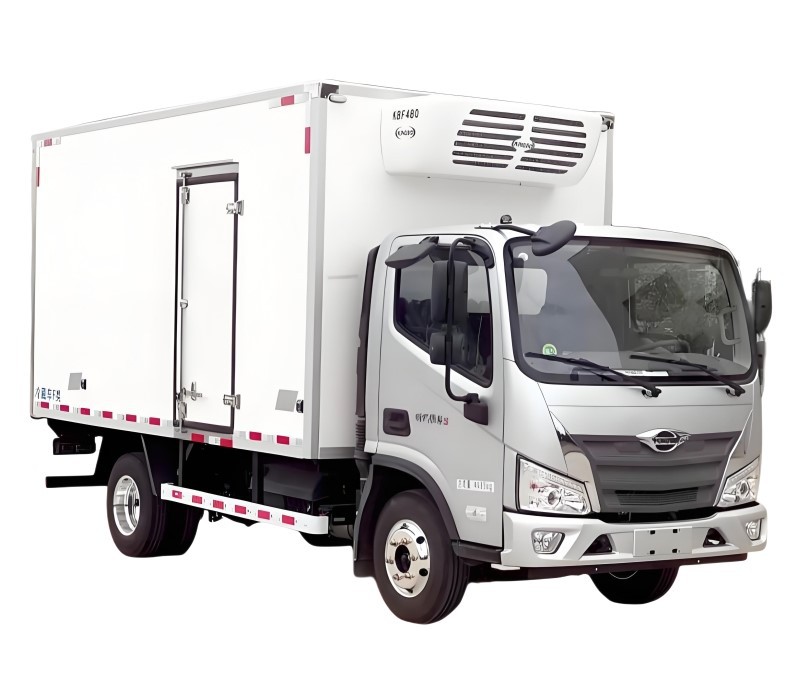
The refrigerated trucks we produce are classified into urban, inter city, long distance distribution, and other types according to load capacity and usage, meeting different transportation needs of customers.
Refrigerated trucks, as an important part of modern logistics, are responsible for the fresh keeping, freezing, and special demand transportation tasks of various goods. According to different load capacities and usages, they can be carefully divided into multiple types. For example, urban distribution refrigerated trucks usually have a load range of 0.5 to 3 tons, suitable for fast distribution within the city; while inter - city distribution refrigerated trucks can have a load capacity of up to 3 to 15 tons, meeting the large volume goods transportation needs across cities. In addition, there are long distance distribution refrigerated trucks, which are usually tractor - type, with a load capacity of 10 to 20 tons, designed for long - distance transportation.
Specifications and Types of Refrigerated Trucks
Specifications of Urban and Large - scale Refrigerated Trucks
Urban distribution refrigerated trucks usually have a small load capacity, with a length of less than 5 meters, a load range of 0.5 to 3 tons, and a volume of less than 20 cubic meters. For large scale refrigerated trucks, for example, a 7.2 meter - long model can carry 5 tons of goods and provide 35 cubic meters of space; a 9.6 meter - long model can carry 10 tons of goods and has 55 cubic meters of space. A longer 13.7 meter model can carry 25 tons of goods and provide 80 cubic meters of space, and a 15 - meter - long 30 - ton refrigerated truck is similar to a sea container, suitable for ocean transportation.
Functions and Composition of Refrigerated Trucks
In cold chain logistics, refrigerated trucks play a crucial role. Their reliability and stability are essential for ensuring the integrity and safety of perishable and easily deteriorating fresh and frozen foods during transportation. A refrigerated truck is mainly composed of three parts: the vehicle chassis, the insulated compartment, and the refrigeration system. Therefore, these three aspects need to be carefully considered when purchasing.
Selection of Components of Refrigerated Trucks
Selection of the Vehicle Chassis
The selection of the vehicle chassis is relatively straightforward. It must comply with the environmental protection standards in China's automobile sales announcements. Regardless of the storage tonnage of the refrigerated truck, whether it is domestic or imported, this standard must be met. When purchasing, whether buying the vehicle chassis separately or entrusting the compartment manufacturer to buy it, it should be ensured that this requirement is met.
Selection of the Insulated Compartment
The selection of the insulated compartment is closely related to the type of goods being transported. For example, a refrigerated truck transporting chilled meat needs to be equipped with hooks; while a refrigerated truck for store distribution, due to its small batch size and a wide variety of goods, usually requires a multi - temperature - zone refrigerated truck. In addition, if the temperature requirements of the goods are not uniform or the loading and unloading are frequent, a multi - door refrigerated truck may be needed. Users can customize it from the compartment manufacturer according to specific needs.
Selection of the Refrigeration System
The selection of the refrigeration system needs to consider multiple factors comprehensively. First, select according to the size of the compartment. Generally, for compartments longer than 6 meters, an independent unit is preferred, while for compartments shorter than 6 meters, a non independent unit is suitable. Second, determine according to the temperature requirements of the transported goods. If deep cooling or fresh keeping functions are needed, corresponding units are selected respectively. In addition, the distribution requirements will also affect the selection of the refrigeration system. For example, the urban point to point distribution of ice cream requires a cold - storage type refrigeration unit or an independent unit. Finally, the origin and brand of the refrigeration unit need to be considered. Foreign - imported or domestic brands can be selected according to needs, but it should be noted whether the temperature sensor is installed at the return air position of the evaporator to ensure accurate temperature data reading.
Our Factory
We have over 10 production bases in 8 provinces and municipalities across the country, located in Qingdao, Weifang, Zhucheng, Laiwu, Shandong Province, Jinzhong, Shanxi Province, Baoji, Shaanxi Province, Shenyang, Liaoning Province, Jingdezhen, Jiangxi Province, etc. Our products cover electric microcars, electric tricycles, electric freight tricycles, electric commercial vehicles and special-purpose vehicles, etc.


Our Certificate

Frequently Asked Questions
As one of the leading fuel special truck manufacturers in China, we warmly welcome you to buy high-grade fuel special truck made in China here from our factory. All our products are with high quality and competitive price.
Electric Passenger Vehicle, Vehicle Floor Mats for Honda CR V, Cover Type Electric Tricycle