

Electric Commercial Vehicle
Your Professional Electric Vehicle Supplier
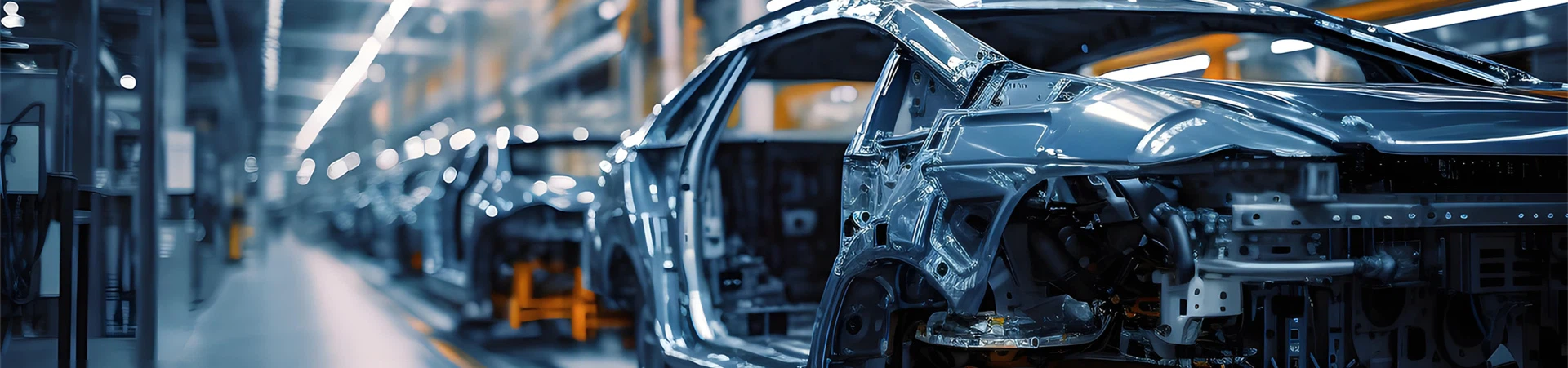
The company owns automotive grade production lines for four major manufacturing processes. We independently develop vehicle compartments and frames, and have four production workshops for stamping, welding, painting, and final assembly, with an annual production capacity of 20,000 complete vehicles. The annual total output value of body products reaches 1.8 billion yuan, and the company has now become one of the largest suppliers in Shandong Province.
Why Choose Us
Full industrial chain & large-scale manufacturing capabilities
We've set up 10 major production bases in 8 Chinese provinces, covering 360,000 square meters, to form a nationwide network. With world-class full-process production lines for stamping, welding, painting, and final assembly lines and ABB/KUKA welding robots, and other renowned brands, we can produce 20,000 electric vehicles and 10,000 special-purpose vehicles annually.
Professional R&D system and innovation capacity
We have complete Sales system, After sales service system, Quality controlling system.Our products have already exported to more than 20 countries, and we already authorized more than 18 different countries after sales agencies for our products. We can supply our overseas customer professional service according to different market special requirement from products to after sales service.
Global cooperation and quality assurance system
We have established a global cooperation and quality assurance system. Our products are exported to over 20 countries and regions worldwide, and our market share has been steadily increasing. Moreover, we have obtained a full range of certifications, including ISO9001 and IATF16949, and passed the VDA6.1/6.3 audits. By adhering to high standard quality control, we have won the trust of international customers.
Customized services and full value chain capabilities
We offer customized service for the full cycle from concept design to mass production. completing the design within 30 days, mold development within 1 to 3 months, and sample vehicle testing within 2 to 3 months. In the field of special vehicles, we offer a one-stop solution from "function definition to modification to delivery", covering municipal, logistics and emergency scenarios, and responding to demands quickly.
-
![Electric Mini Pickup Truck]() Electric Mini Pickup TruckElectric Mini Pickup Truck: A compact, durable, and energy-efficient cargo solution ideal for urban delivery, agriculture, fleet operations, and wholesale procurementread more
Electric Mini Pickup TruckElectric Mini Pickup Truck: A compact, durable, and energy-efficient cargo solution ideal for urban delivery, agriculture, fleet operations, and wholesale procurementread more -
![Electric Four Wheel Drive Vehicles]() Electric Four Wheel Drive VehiclesDiscover the Gate Board, a compact electric four wheel drive vehicle offering 140 km range, 540 kg load, and high efficiency for urban logistics.read more
Electric Four Wheel Drive VehiclesDiscover the Gate Board, a compact electric four wheel drive vehicle offering 140 km range, 540 kg load, and high efficiency for urban logistics.read more -
![Electric Quadricycle For Sale]() Electric Quadricycle For SaleDiscover TECREK’s electric quadricycle for sale — a compact, eco-friendly cargo EV designed for urban delivery, efficiency, and commercial use.read more
Electric Quadricycle For SaleDiscover TECREK’s electric quadricycle for sale — a compact, eco-friendly cargo EV designed for urban delivery, efficiency, and commercial use.read more -
![Urban Logistics Quadricycle]() Urban Logistics QuadricycleThe Urban Logistics Electric Quadricycle is a next-generation electric cargo vehicle designed for heavy-duty urban logistics and sustainable freight solutions.read more
Urban Logistics QuadricycleThe Urban Logistics Electric Quadricycle is a next-generation electric cargo vehicle designed for heavy-duty urban logistics and sustainable freight solutions.read more -
![Electric Commercial Quadricycle for Urban Cargo Delivery]() Electric Commercial Quadricycle for Urban Cargo DeliveryThe Electric Commercial Quadricycle for Urban Cargo Delivery is a compact yet powerful electric freight vehicle, specifically designed for urban delivery and small cargo transportation scenarios.read more
Electric Commercial Quadricycle for Urban Cargo DeliveryThe Electric Commercial Quadricycle for Urban Cargo Delivery is a compact yet powerful electric freight vehicle, specifically designed for urban delivery and small cargo transportation scenarios.read more -
![Electric Pickup Right hand]() Electric Pickup Right handOur electric pickup right hand model has big battery capacity 63 kwh,the endurance mileage is 405 km,truck size catch up the medium pickup size,wheelbase is 3300 mm,overall size is 5260 *1940...read more
Electric Pickup Right handOur electric pickup right hand model has big battery capacity 63 kwh,the endurance mileage is 405 km,truck size catch up the medium pickup size,wheelbase is 3300 mm,overall size is 5260 *1940...read more -
![Electric Mini Truck 300 kg]() Electric Mini Truck 300 kgOur electric mini truck 300 kg is designed for last mileage transportation,the loading capacity is 300 kg,only one seat for driver,the max speed could be 81 km/h,and the durance mileage per charge...read more
Electric Mini Truck 300 kgOur electric mini truck 300 kg is designed for last mileage transportation,the loading capacity is 300 kg,only one seat for driver,the max speed could be 81 km/h,and the durance mileage per charge...read more -
![Electric Pickup Truck]() Electric Pickup TruckOur electric pickup truck is the first high end BEV pickup in China,based on MAP platform architecture,it has two configurations:Long range 550 km with 86 kwh,loading capacity is 430 kg,short...read more
Electric Pickup TruckOur electric pickup truck is the first high end BEV pickup in China,based on MAP platform architecture,it has two configurations:Long range 550 km with 86 kwh,loading capacity is 430 kg,short...read more -
![Electrical Logistic Van]() Electrical Logistic VanOur electrical logistic van version combines impressive cargo capacity with agile maneuverability. Designed to excel in urban environments, this versatile vehicle doesn't compromise on cargo space.read more
Electrical Logistic VanOur electrical logistic van version combines impressive cargo capacity with agile maneuverability. Designed to excel in urban environments, this versatile vehicle doesn't compromise on cargo space.read more -
![Electric Pick Up]() Electric Pick UpThis design offers advantages such as reduced emissions, lower operating costs, and the potential for impressive performance due to the instant torque delivery characteristic of electric vehicles.read more
Electric Pick UpThis design offers advantages such as reduced emissions, lower operating costs, and the potential for impressive performance due to the instant torque delivery characteristic of electric vehicles.read more -
![Electric Pickup]() Electric PickupOur Electric Pickup has two version, One version’s driven method is AWD, Another version’s driven method is RWD, the front face of the vehicle adopts advance guard design style, and the front...read more
Electric PickupOur Electric Pickup has two version, One version’s driven method is AWD, Another version’s driven method is RWD, the front face of the vehicle adopts advance guard design style, and the front...read more -
![Electric Moke]() Electric MokeElectric Moke is a new electric cart that inherits the design essence of the classic Moke and combines it with modern electric technology. Its design is both retro and stylish, with a compact body...read more
Electric MokeElectric Moke is a new electric cart that inherits the design essence of the classic Moke and combines it with modern electric technology. Its design is both retro and stylish, with a compact body...read more


Definition of Commercial Vehicle
What are commercial vehicles? The answer might surprise you.
While most people would answer, “A semi-truck and trailer,” this is just one of a long list of commercial vehicles on the road today.
General Definition
At its most basic, a vehicle is designated “commercial” when a business registers the vehicle as such and uses it for business purposes. This can include cars, trucks, vans, and even scooters. Really, anything with a motor that runs on gas, diesel, or aviation fuel could be considered a commercial vehicle.
Legal Definition
While the general definition of commercial vehicles includes more modes of transportation than you might think, the legal definition is much more specific.
For example, in America:
The Federal Motor Carrier Safety Administration (FMCSA), which oversees and regulates commercial vehicles in the United States, defines a commercial vehicle as:
Any self-propelled or towed motor vehicle used on a highway in interstate commerce to transport passengers or property when the vehicle:
Has a gross vehicle weight rating (GVWR) or gross combination weight rating of 10,001 pounds or more, whichever is greater
Is designed or used to transport between nine and 15 passengers (including the driver) for compensation
Is designed or used to transport 16 or more passengers
Is designed for or used in transporting hazardous materials per the Hazardous Materials Transportation Act
This more technical definition eliminates the vast majority of the vehicles on the list mentioned earlier and leaves us with:
Some light-duty vans and pickup trucks
Medium-duty trucks
Heavy-duty trucks
While this technical definition focuses on heavy trucks, there are some exceptions for specialty vehicles, cars, and heavy equipment. Different countries may have different regulation, this is just one example.
Electric Pickup Truck
Our Electric Pick up has two version, one version’s driven method is AWD, another version’s driven method is RWD, the front face of the vehicle adopts advance guard design style, and the front light group is LED designed together with front grille, it makes the front view of the car loftier.
Cab Designs of Pick Up
Single Cab
A regular cab (also known as a single cab or standard cab) has a single row of seats and a single set of doors, one on each side.
Extended Cab
Extended cab (or any other name for rear-hinged doors) pickups add an extra space behind the main seat, sometimes including smaller jump seats which can fold out of the way to create more storage space. Extended-cab trucks either have just a single set of doors with no direct access to the extended portion of the cab, very small (half-sized) rear doors that are rear-hinged which can only be opened after the front doors are open, or small (three-quarter-sized) front-hinged doors.
Cab-over
Cab-over or cab forward designs have the cab sitting above the front axle. This arrangement allows a longer cargo area for the same overall length.
Advantages of Electric Pick Up
Electric Pick Up Trucks Are Cheaper to Fill
It is no secret that pickup trucks feature huge engines that consume a lot of fuel. On large trips, and especially with the prices of today, all that fuel used can add up to a huge bill. Since EVs run just on electricity, you will certainly be saving money on a long road trip. However, you need to keep in mind that charging up in rural areas can also get expensive. But generally speaking, “filling up” an EV should cost way less than filling up a truck that uses a big internal combustion engine (the charging times are much higher, though).
Cheaper Service and Maintenance Costs
When taking your ICE truck in for a service, your mechanic will in most instances change the filters, oils, and give the vehicle a good check over. In many cases, you also need to change your brakes, ball joints, and other parts that tend to wear out. Now, EVs have a huge advantage here. Not only do they not have filters or fluids to be changed, but they also go chew brakes slower. This is due to the regenerative braking function that can be found on most of them. So, for the first few years, keeping an EV on the road will certainly be cheaper.
Electric Trucks Offer Great Power Availability
New e-trucks can offer amazing performance numbers. With 800-1,000 horsepower, there will be few cars on the road that will be faster than your big truck in a straight-line sprint. Watching something so big and heavy accelerate in such a manner is certainly impressive. It also makes for a great driving experience as you can easily overtake on steep hills or while fully loaded. The days of desperately slow and noisy trucks are long gone. We have now entered the era of super trucks.
They Can Tow Heavy Weights Easily
As you can imagine, the huge power numbers mentioned above translate into great towing abilities. Electric motors offer instant torque, meaning that you do not have to reach a certain RPM as you do in a normal engine for peak power to be delivered. As soon as you press the throttle all the power the motors have is instantly there. These attributes make towing heavy weights up steep hills easy. Also, since electric motors do not need oxygen, all this performance is kept unchanged even at extremely high elevations. Oh, and all this is done while the truck runs silently.

This Electric Commercial Quadricycle represents a new generation of urban intelligent logistics vehicles. It is an ideal choice for urban freight transport, boasting multiple outstanding features.
Two Types of Electric Van
Fully-electric Vans: Fully-electric vans that have no combustion engine & are powered ONLY by their batteries are called BEVs or Battery Electric Vehicles.
Hybrids electric Vans: Hybrids are a mix of electric power & internal combustion engine.
Of these two types, it’s only the BEVs that are true Zero Emission Vehicles & produce no exhaust emissions.
Benefits of Electric Van
Quick-start and Quiet: Electric vans are more responsive in their acceleration and, thanks to the battery pack, they have a lower center of gravity, improving the ride's handling and safety. The electric motor is basically silent, giving a much quieter drive than an internal combustion engine.
Ease of Maintenance: While all vehicles need regular maintenance to ensure they are running correctly and efficiently, electric vans (and electric vehicles generally) have fewer moving parts than ICE vans as they don't have an engine or gearbox, so they are less prone to wear and tear.
Environmental Benefits: Electric vans produce zero tailpipe emissions, reducing air pollution and greenhouse gas emissions, which is crucial for combating climate change and improving air quality in urban areas.
Lower Operating Costs: Electric vans have lower fuel and maintenance costs compared to traditional internal combustion engine vehicles. Electricity is often cheaper than gasoline or diesel, and electric vans have fewer moving parts, resulting in reduced maintenance expenses.
Energy Efficiency: Electric motors are more energy-efficient than internal combustion engines, converting a higher percentage of energy from the battery into motion. This efficiency leads to lower energy consumption per mile traveled, reducing overall energy costs.
Potential for Vehicle-to-Grid Integration: Electric vans can serve as mobile energy storage units, potentially contributing to grid stability and supporting renewable energy integration through vehicle-to-grid (V2G) technology.
An electric cargo truck is an electric vehicle powered by batteries designed to transport cargo, carry specialized payloads, or perform other utilitarian work. Electric trucks have serviced niche applications like milk floats, pushback tugs and forklifts for over a hundred years, typically using lead-acid batteries, but the rapid development of lighter and more energy-dense battery chemistries in the twenty-first century has broadened the range of applicability of electric propulsion to trucks in many more roles.

Clean and Quiet
The primary benefit of an electric cargo truck or bus – of any size or purpose – is that full battery electric trucks don’t pollute the air with diesel or gasoline carbon emissions, don’t pollute our roads, bridges, and worksites with spilled fuel or toxic residues, and run so quietly that they add virtually nothing to noise pollution. Electric hybrid trucks and buses also pollute significantly less than traditional internal combustion engine (ICE) trucks and buses. Even more, because they don’t pollute and run almost silently, electric trucks and buses are much better than traditional vehicles for transporting cargo or passengers in and around highly-congested or enclosed areas, such as crowded tourist areas, busy shipping ports, transit centers, warehouses, hospitals, sports arenas, college or corporate campuses, mines, tunnels, and more. Basically, anywhere that an operator sees a need to minimize pollutants and noise dramatically, they need to use electric trucks and buses.
Lower Total Cost
In addition, the operating costs of using electric trucks and buses can be lower than those of internal combustion engines (ICEs). While the upfront costs can seem high, those costs have come down significantly in recent years. The costs of electrical power are often equal to or lower than fossil fuels, and maintenance costs on all electric systems are often significantly less than ICE systems. In addition, electricity can be generated in many different ways, including onboard regenerative braking, solar panels, and more, so electric truck and bus operators are also not dependent on one energy source.
Our Factory
The three producing bases located in Linyi, Shandong, Yancheng, Jiangsu, Haining, Zhejiang, Linyi factory mainly produces new energy passenger vehicles, Yancheng factory mainly produces new energy tourist vehicles and various new energy modified models, Haining factory mainly produces new energy commercial vehicles.


Our Certificate

Frequently Asked Questions
As one of the leading electric commercial vehicle manufacturers in China, we warmly welcome you to buy high-grade electric commercial vehicle made in China here from our factory. All our products are with high quality and competitive price.
500W Mini Electric Bike, 9L Portable Fridges, Lithium Low Speed Electric Vehicle