


Your Professional Electric Pick Up Supplier
Shandong Yingzhi International Co., Ltd. is a company focus on new energy vehicles product design & development, manufacturing, overseas sales & development. The overseas trading company located in Zibo city, Shandong province. The three producing bases according to different products lines which include Linyi city, Shandong province, Yancheng city, Jiangsu province, Haining city, Zhejiang province.
Why Choose Us
Professional Factory
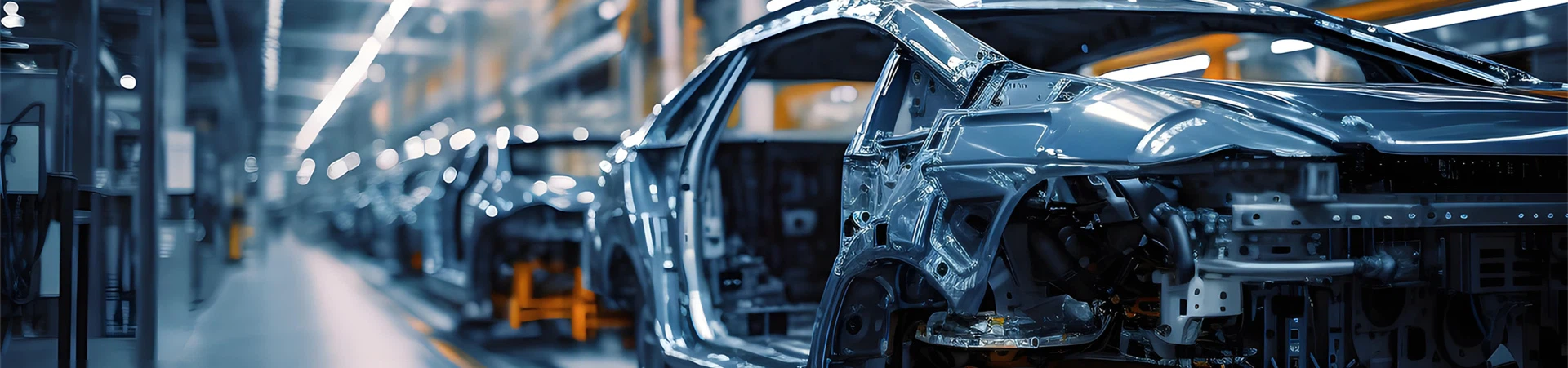
We have three producing bases for producing electrical passenger cars, electrical commercial vehicles and motorcycles. Our factories have advantage vehicles producing lines including stamping, welding, painting, assembly and testing, the key facilities which like welding robot is imported from German.
Professional Overseas Teams
We have complete Sales system, After sales service system, Quality controlling system specially for overseas department. We have six market department (Euro region, South Asia region, South East Asia region, Middle east & Africa region, South American region, North American & central America). Our products have already exported to more than 30 countries, and we already authorized more than 20 different countries after sales agencies for our products.
Clearly Enterprise Mission
We focus on urban logistics transportation, express delivery, and urban household trip with new energy cars and motorcycles. Through the overall TCO cost advantage of new energy products, users can save travel costs, at same time, we can realize zero carbon trip by our EVs. We will make our contribution for world environment protection. We will continue to improve scientific & technological innovation of new energy vehicle products, bring our customers better trip experience, we will keep introducing Chinese highest-level EV products and technology to all the world.
Professional Research Teams
We have our own R&D center for developing EVs from battery system, motors, controllers to the vehicles whole outlook design, interior trim design, suspension design, Our R&D center has four independent branches for different kind of researching and developing jobs. Our Research Teams keep following the market demand and feedback, so we can keep improving our vehicles according to different market segment developing, finally we can keep offering and producing the right EVs for the overseas market.

Gasoline moke is a special purpose vehicle, a nostalgic European classic, mainly used for traveling and sightseeing, city fun, hotel and community feeder and other usage scenarios. These vehicles are uniquely designed with large compartments and comfortable seats to carry multiple passengers.

This electric light truck is designed for urban freight transportation and express delivery and other application scenarios. Its core advantage lies in the adoption of advanced electric technology, featuring zero emission, low noise and high efficiency.

An electric cargo truck is a type of van with a single cab, usually equipped with a closed cargo box. This type is usually used for cargo transportation in urban freight transportation, express delivery, postal service and other fields.

The electric cargo mini truck is a brand-new model developed independently by Yingzhi's technical team, which adopts the structural assembly production mode. With beautiful appearance and lightweight and flexible, it is suitable for people of different ages.

Electric mini truck is adapted on the basis of the electric micro car, and has been optimized a lot especially for the load capacity and reliability required for the van. Following the body structure of the electric micro car, the micro van adopts a fly carrying body and a one-piece truss chassis.

Lead Acid Low Speed Electric Vehicle
Lead acid low speed electric vehicle has passed EEC certification, including safety performance, electromagnetic compatibility, range, charging efficiency and other aspects of the test, its product quality and brand image will be enhanced.

Lead acid electric vehicle has passed EEC L6e-BP certification, the cruising range is more than 140km (Range (km) 40km/h), maximum power 3.5KW, speed 45km/h, the best choice for urban distribution.

Lead Acid High Speed Electric Vehicle
Lead acid high speed electric vehicle has passed EEC L7e CP certification, the cruising range is more than 80~100km (Range (km) 40km/h); strong power output, matching high efficiency permanent magnet synchronous motor, maximum power up to 7.5KW, the best choice for urban distribution.

Lithium Low Speed Electric Vehicle
Lithium low speed electric vehicle has passed EEC certification, equipped with large capacity lithium iron phosphate battery, the cruising range is more than 130km (actual comprehensive working condition); strong power output, matching high efficiency permanent magnet synchronous motor, maximum power up to 4.5KW, the best choice for urban distribution.
An electric pickup truck is a type of vehicle that combines the utility and versatility of a traditional pickup truck with the environmental benefits of electric propulsion. Instead of relying on an internal combustion engine, electric pickup trucks are powered by electric motors and large battery packs. This design offers advantages such as reduced emissions, lower operating costs, and the potential for impressive performance due to the instant torque delivery characteristic of electric vehicles.

Main Structures of Electric Pick Up
Battery Pack
The most significant component of an electric pick up is the battery pack. It's the biggest and most expensive component and ultimately determines how much power and range the vehicle will have. The battery pack is made up of a number of separate batteries that are linked together, this can be anything from 5 to 25 batteries, which each consists of hundreds of individual cells and usually come out of production electric vehicles.
The battery pack will be housed in a custom-built metal battery box which is designed to fit into the original engine bay of the classic vehicle. If more batteries are required for additional range, a second battery box can be installed somewhere else (in the boot or under the back seats for example).
In this battery box are all of the electronic components which control and monitor the pack. For example, an ignition system will open and close switches to turn the car off and on. Also within the battery box is the battery management system (BMS) which monitors voltages, temperatures, and the current running through the pack whilst charging and discharging, ensuring that the battery is not damaged by excessive temperatures or voltages. This BMS links to the charging system and motor controller, constantly sending and receiving signals to ensure that the battery pack is operating optimally.
Finally, the battery box has a cooling system running through it connected to an external radiator and water pump. This cooling system runs coolant inside each battery within the pack to ensure that all batteries are running at the same temperature and that this doesn't get too high, which would in turn limit the motor output.
Power Inverter/ Controller
The inverter (which is also called a motor controller) converts direct current from the batteries to alternating current, which is subsequently delivered to the motor. Think of it as the link between the battery and the motor, without it, the motor would spin at full speed the whole time.
This motor controller will be connected to the throttle of the vehicle as well as the battery management system. Inverters have a lot of current running through them, particularly if you're driving quickly, so they're also linked to the battery cooling system, allowing coolant to keep the temperature manageable.
Finally, the electrical vehicle inverter can convert alternating current to direct current during braking, which can subsequently be utilized to recharge the battery, this is called regenerative braking.
Electric Motor
The motor converts electrical energy into mechanical energy to drive the wheels and propel the car. Motors vary hugely, some runoff direct current (DC), some off alternating current (AC). The most common motors for electric vehicle conversions are AC due to them being more efficient. A motor is effectively a large electromagnet that turns due to the attraction and repulsion of the magnets within.
Electric motors vary in size and power. For example, a motor that could be mounted in an average classic car would be around 120 horsepower, whereas a Tesla large drive unit can generate upwards of 500 horsepower if required.
The motor turns the transmission (gearbox), which can be either the original one or a single speed unit specifically designed for electric power. Using the original gearbox lowers the cost of converting a classic car to electric power as there is little fabrication of new drivetrain components and only adapter plates are required.
However, if using a Tesla drive unit, for example, this has to be mounted across an axle and therefore needs custom half-shafts, differentials, and drivetrains – significantly increasing cost.
Specifications of Our Electric Pick Up
| Specification | L*W*H (mm) | 4500*1750*1780 |
| Wheelbase (mm) | 2820 | |
| Driving range (KM) | 100km WLTC | |
| Top speed (KM/H) | 50 | |
| Motor | 5KW AC | |
| Battery charging time | Slow charge AC (7h) | |
| Min Ground Clearance (mm) | ≥350 | |
| Loading Capacity (kg) | 500 | |
| Climbing Ability | 20% | |
| Chassis | Driving mode | AWD/RWD |
| Battery | 72V lead acid battery or lithium battery | |
| Controller | Imported in-power controller | |
| Wheel brake | Front brake | Ventilated disc |
| Rear brake | Drum | |
| Parking brake type | Parking drum brake | |
| Front tire specifications | 195/70R14 | |
| Rear tire specifications | 195/70R14 | |
| Aluminum rim | ○ | |
| Car body configuration | LED headlights | ● |
| LED tail lights | ● | |
| LED position light | ● | |
| Electric doors and windows | ● | |
| Electric central door lock | ● | |
| Smart touch entertainment screen | ● | |
| MP5 player | ● | |
| Bluetooth | ● |
Electric Pick Up Trucks Are Cheaper to Fill
It is no secret that pickup trucks feature huge engines that consume a lot of fuel. On large trips, and especially with the prices of today, all that fuel used can add up to a huge bill. Since EVs run just on electricity, you will certainly be saving money on a long road trip. However, you need to keep in mind that charging up in rural areas can also get expensive. But generally speaking, "filling up" an EV should cost way less than filling up a truck that uses a big internal combustion engine (the charging times are much higher, though).
Cheaper Service and Maintenance Costs
When taking your ICE truck in for a service, your mechanic will in most instances change the filters, oils, and give the vehicle a good check over. In many cases, you also need to change your brakes, ball joints, and other parts that tend to wear out. Now, EVs have a huge advantage here. Not only do they not have filters or fluids to be changed, but they also go chew brakes slower. This is due to the regenerative braking function that can be found on most of them. So, for the first few years, keeping an EV on the road will certainly be cheaper.
Electric Trucks Offer Great Power Availability
New e-trucks can offer amazing performance numbers. With 800-1,000 horsepower, there will be few cars on the road that will be faster than your big truck in a straight-line sprint. Watching something so big and heavy accelerate in such a manner is certainly impressive. It also makes for a great driving experience as you can easily overtake on steep hills or while fully loaded. The days of desperately slow and noisy trucks are long gone. We have now entered the era of super trucks.
They Can Tow Heavy Weights Easily
As you can imagine, the huge power numbers mentioned above translate into great towing abilities. Electric motors offer instant torque, meaning that you do not have to reach a certain RPM as you do in a normal engine for peak power to be delivered. As soon as you press the throttle all the power the motors have is instantly there. These attributes make towing heavy weights up steep hills easy. Also, since electric motors do not need oxygen, all this performance is kept unchanged even at extremely high elevations. Oh, and all this is done while the truck runs silently.
They Emit Fewer Emissions
Stating that an EV truck is good for the environment is plainly wrong. But that is a topic for another day. What is undeniable, however, is the fact that they reduce emissions in cities and rural areas as when they run since, they emit zero gases. This is great as it means pedestrians and fellow drivers do not breathe in toxic gases from vehicles passing by. Fewer emissions lead to cleaner air and therefore less illness. Less illness also means a more relaxed public health system that can function more efficiently. All that is left now is to also make the production process environmentally friendly.
Gas vs. Electric Trucks
Power Source
- Gasoline Trucks: These trucks operate on the principle of internal combustion. They have a piston-cylinder arrangement where fuel and air are mixed, compressed, ignited, and the resulting explosion drives the piston. Diesel engines, a common type in trucks, operate on a compression ignition cycle, meaning the air is compressed first and then fuel is injected. Gasoline engines use spark plugs to ignite the air-fuel mixture.
- Electric Trucks: They use electric motors powered by a battery pack. Electric motors work by creating a magnetic field that interacts with a current, producing motion. The battery pack stores electrical energy, which is then used to power the electric motor.
Emissions
- Gasoline Trucks: Emit pollutants such as nitrogen oxides (NOx), particulate matter (PM), carbon monoxide (CO), and hydrocarbons (HC). These emissions contribute to smog, respiratory problems, and global climate change.
- Electric Trucks: Produce zero tailpipe emissions, meaning they don't release pollutants at the point of use. However, emissions may be produced during the generation of the electricity used for charging, depending on the energy mix of the grid.
Efficiency
- Gasoline Trucks: Internal combustion engines are typically only about 20-30% efficient, meaning a significant portion of the energy in the fuel is lost as waste heat.
- Electric Trucks: Electric motors are highly efficient, often exceeding 90% efficiency. This means a smaller portion of energy is lost as waste heat.
Maintenance
- Gasoline Trucks: Require regular maintenance of components like the exhaust system, spark plugs, fuel injectors, and transmission. Oil changes are needed for lubrication.
- Electric Trucks: Have fewer moving parts, which reduces the need for maintenance. There are no oil changes, transmission maintenance, or exhaust system repairs required.
Charging Infrastructure
- Gasoline Trucks: Gas stations are prevalent and offer quick refueling options.
- Electric Trucks: Charging infrastructure is still expanding, especially for heavy-duty trucks. Charging options include home charging, workplace charging, and public charging stations.
Range
- Gasoline Trucks: Long-established ranges, with the ability to refuel quickly.
- Electric Trucks: Traditionally had shorter ranges, but advancements in battery technology are extending the range. Some modern electric trucks are capable of several hundred miles on a single charge.
Cost
- Gasoline Trucks: Lower upfront costs compared to electric trucks.
- Electric Trucks: Higher upfront costs due to the expense of battery technology. However, they can be more cost-effective over the long term due to lower operating costs.
Performance
- Gasoline Trucks: Well-established performance characteristics, including acceleration and towing capacity.
- Electric Trucks: Electric motors provide instant torque, resulting in impressive acceleration. They can also offer strong towing capacity due to the nature of electric motor power delivery.
Noise
- Gasoline Trucks: Produce engine noise during operation.
- Electric Trucks: Operate silently, which can be an advantage in environments where noise pollution is a concern.
Factors to Consider When shopping for an Electric Pick Up
Towing & Hauling Capabilities: One of the most obvious main selling points of any pickup truck is the class's immense towing and hauling capabilities. As a result, you'll want to pay close attention to a given model's towing and payload capacities.
Tech & Connectivity: Another major selling point for any cutting-edge electric vehicle is undoubtedly tech and connectivity. This includes everything from 360° camera systems to onboard infotainment displays to wireless charging stations to the ability to act as a roving power bank. Autonomous or semi-autonomous driving capabilities are also often included either as standard or as an optional amenity on a great many of today's latest and greatest electric trucks.
Range: Though range anxiety was once a major drawback of electric vehicles, modern battery tech has allowed automakers to deliver pickup trucks that boast close to the same level of autonomy as petrol-powered models. It's also worth noting that some modern electric pickups are offered with more than one battery pack option.
Off-Road Readiness: Pickup trucks can vary in terms of off-roading capabilities. So, if you plan on regularly taking your truck off-road, this is an area you'll want to pay close attention to. When reviewing an electric pickup's go-anywhere capabilities you'll want to keep an eye out for factors such as ground clearance, suspension travel, approach, break-over, and departure angles. Some electric pickups are also offered with optional off-road upgrades such as factory lift kits, flared fenders, off-road wheels and tires, steel bumpers, skid plates, winches, snorkels, and headache racks, just to name a few.
Powertrain: Though they may not pack a gas-powered engine, an EV pickup's powertrain is still of monumental importance and should be very closely reviewed when shopping. More specifically, you'll want to pay attention to an electric pickup's type of motor(s) and total number of motors. Additionally, you'll also want to examine the spec for the battery pack that the powertrain draws from. It's also fairly common to see the same electric truck offered with more than one powertrain option.
Power & Delivery: No matter what type of vehicle you're shopping for, you'll pretty much always want to look into the amount of horsepower and torque that its engine generates, as these figures will play a direct role in the vehicle's acceleration and speed, as well as its towing and payload capabilities. Another factor that plays a major role in these areas is how a pickup's power is transmitted to the ground - I.e. whether it uses a rear-wheel drive, front-wheel drive, all-wheel drive, or four-wheel drive system.

The maintenance schedule for an electric truck is very simple compared to the traditional 30,000, 60,000, 90,000 services of gas-powered cars that you are familiar with. Servicing is also much less expensive.
Every 30 days:
Check the tire pressure.
Examine the tires for excess wear.
Check the windshield washer fluid and fill if needed.
Every 7,500 miles:
Have the tires rotated.
Check the coolant level of the battery.
Check the cabin heater, power inverter, accessory power, and charger modules.
Inspect the brakes, steering, suspension, and chassis components for unusual wear or damage.
Check the power steering and drive shafts for wear.
Lubricate the door locks and inspect the gas struts for signs of suspension wear.
Check the vehicle's various light bulbs and replace if necessary.
At 15,000 miles:
Replace the windshield wiper blades.
At 36,000 miles:
Replace the cabin air filter.
At 75,000 miles:
Replace the suspension gas struts.
Drain and service the coolant circuits.
EV battery Charging Best Practices
Don't charge your EV every night
Regardless of whether you're only topping up the battery by a few percent or charging the vehicle fully, every time your battery charges, you put stress on the battery. As a result, the capacity of the battery is reduced by a fraction. To avoid this compounding over time, you shouldn't plug your vehicle in every night. If you only charge your vehicle when it's necessary, and not plugging the vehicle in as soon as you get home, you can extend your battery life.
Stay between 20 and 80 percent charge
Just like you shouldn't plug your vehicle in every night, you also shouldn't top it up to 100 percent when you don't have to. A lithium-ion battery is designed to store large amounts of energy with a charge that ebbs and flows. However, frequently draining the cells too often or filling them up fully can, over time, reduce the battery's capacity as a whole. The common advice is to stay between 20 and 80 percent charge and never let the battery die completely.
Control the optimal battery state of charge during long storage
Lastly, leaving your EV parked for too long with a full (or empty) battery also contributes to the degradation. To avoid this, if you're going to spend a significant amount of time away from your vehicle, it's recommended that you fill it up to somewhere between 25 and 75 percent. There are smart charging stations that can help you with this and make sure that your battery doesn't go beyond these limits.
Our Factory
The three producing bases located in Linyi, Shandong, Yancheng, Jiangsu, Haining, Zhejiang, Linyi factory mainly produces new energy passenger vehicles, Yancheng factory mainly produces new energy tourist vehicles and various new energy modified models, Haining factory mainly produces new energy commercial vehicles.


Our Certificate

Ultimate Guide to Car Tent
Hot Tags: electric pick up, China electric pick up manufacturers, factory, 500W Mini Electric Bike, Electric Moke, American Version AC Charging Pile, Hardshell Car Roof Tent, 350W City Electric Bike, Bestride Electric Bike