


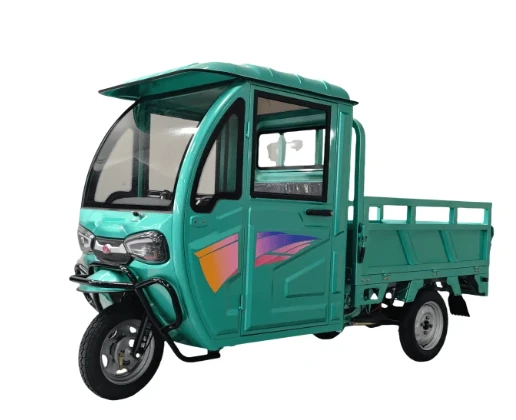
Electric tricycles have become a backbone of urban logistics, last-mile delivery, municipal services, and small business transportation worldwide. From electric cargo tricycles used by couriers to heavy-duty electric three wheelers operating in industrial zones, reliability is no longer a "nice to have" - it directly affects operating cost and business continuity.
However, many fleet owners and individual operators still experience frequent breakdowns, unexpected repairs, and costly downtime. The good news? Most electric tricycle failures are predictable and preventable.
This article breaks down the most common electric tricycle problems, why they happen, and how to prevent them before they disrupt your operations.
1. Battery Degradation and Sudden Range Loss
The Problem
Battery failure remains the No.1 cause of electric tricycle downtime. Common symptoms include:
Sudden drop in driving range
Inconsistent power output
Charging time increasing over time
Lead-acid batteries degrade quickly under high load, while poorly managed lithium batteries suffer from imbalance and overheating.
How to Prevent It
Choose batteries based on payload and daily mileage, not just price
For logistics and cargo use, lithium battery systems with a proper BMS reduce long-term failure risk
Avoid deep discharging and overnight overcharging
Match motor power with battery capacity to avoid constant overload
Pro Tip: In heavy-duty electric cargo tricycles, undersized batteries fail faster than oversized ones.
2. Motor Overheating and Power Loss
The Problem
Electric tricycle motors often fail due to:
Continuous uphill driving with full load
Poor ventilation in enclosed tricycle designs
Inadequate motor wattage for commercial use
This results in overheating, controller protection shutdowns, or permanent motor damage.
How to Prevent It
Select motors rated for commercial or industrial duty cycles
Ensure proper heat dissipation design, especially for enclosed electric tricycles
Avoid frequent stop-and-go operation with maximum payload
A properly matched motor reduces not only failures but also energy consumption.
3. Controller and Electrical System Failures
The Problem
Controllers act as the "brain" of electric tricycles. Failures are often caused by:
Water ingress
Voltage mismatch
Low-quality wiring harnesses
Once damaged, the tricycle may not start at all.
How to Prevent It
Use waterproof controllers (IP-rated for outdoor use)
Keep wiring organized and protected from vibration
Avoid mixing non-original electrical components
Commercial electric tricycles operating in rain-prone regions should always prioritize sealed electronics.
4. Brake System Wear and Safety Risks
The Problem
Electric tricycles carry heavier loads than two-wheel EVs, yet many still use under-designed braking systems. Common issues include:
Brake fade under load
Uneven brake wear
Hydraulic leakage
How to Prevent It
Choose tricycles with reinforced braking systems (front + rear hydraulic or drum brakes)
Schedule brake inspections more frequently for cargo tricycles
Replace worn components early to avoid secondary damage
Brake failure causes not just downtime, but serious safety risks.
5. Suspension and Chassis Fatigue
The Problem
Urban roads, speed bumps, and overloading gradually damage:
Leaf springs
Shock absorbers
Frame welding points
This leads to unstable handling and premature structural failure.
How to Prevent It
Never exceed rated payload capacity
Use electric tricycles designed with industrial-grade frames
Inspect suspension components every few months in high-usage scenarios
For logistics fleets, reinforced chassis design dramatically reduces lifecycle cost.
6. Tire Blowouts and Excessive Wear
The Problem
Electric tricycles exert higher torque and weight on tires, leading to:
Sidewall cracking
Uneven tread wear
Sudden blowouts under load
How to Prevent It
Use commercial-grade tires designed for three-wheel EVs
Maintain correct tire pressure based on payload
Rotate tires regularly for delivery fleets
Cheap tires often cost more in downtime than premium ones.
Reducing Downtime Starts with the Right Vehicle Design
Most electric tricycle failures are not random. They are the result of:
Mismatched component selection
Overloading
Poor-quality manufacturing
For businesses relying on electric cargo tricycles, choosing a vehicle built specifically for commercial and industrial use - not passenger conversion models - is the most effective way to reduce downtime.
Manufacturers with integrated R&D, testing, and customization capabilities are better equipped to match battery systems, motors, frames, and controllers to real-world operating conditions.
Final Thoughts: Prevention Is Cheaper Than Repair
Unexpected electric tricycle downtime doesn't just increase maintenance costs - it disrupts delivery schedules, damages customer trust, and reduces profitability.
By understanding common failure points and addressing them early, operators can:
Extend vehicle lifespan
Lower total cost of ownership
Improve daily operational efficiency
In the fast-growing electric three wheeler market, reliability is the real competitive advantage.
📌 Act immediately
If you're planning to invest in electric cargo tricycles for delivery, logistics, or industrial use, choosing a model engineered for your payload, terrain, and daily mileage can significantly reduce long-term downtime. Exploring customizable electric tricycle solutions is often the first step toward a more reliable fleet.