


This article explores the industry's development trends, market drivers, and why international buyers are shifting attention to electric quadricycles and compact electric passenger vehicles.
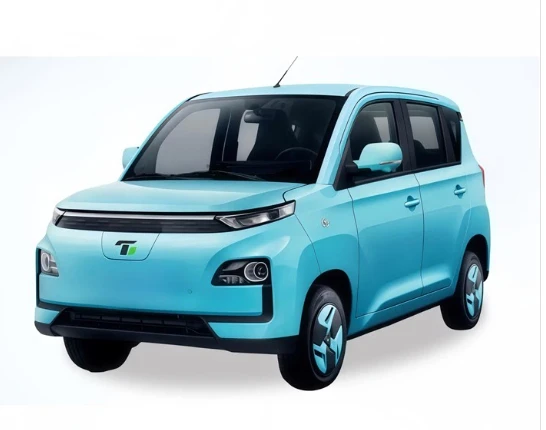
1. Why the Market for Compact Four Wheel EVs Is Expanding So Quickly
Across Europe, Southeast Asia, the Middle East, and South America, demand for small electric vehicles is being fueled by three core factors:
① Urban Congestion & Parking Pressure
Large cars are no longer suitable for narrow streets or high-density districts.
A four-wheel electric vehicle solves this by offering:
Smaller turning radius
Easier parking
Lower driving stress for daily commuting
Cities such as Paris, Delhi, and Manila are already creating special lanes and incentives for micro-EVs.
② Lower Operating Costs
Compared with traditional fuel micro-cars:
Energy consumption is 70–85% lower
Maintenance cost is minimal (no oil, filter, or complex engine systems)
Charging infrastructure continues to grow worldwide
For fleet operators-tourism parks, campuses, rental services-this significantly reduces operational expenses.
③ Policy Support for Low Emission Mobility
Many countries offer:
Tax benefits
Reduced licensing thresholds
Permission to operate in low-emission zones
This allows electric city cars to operate broadly without the limitations that gasoline vehicles face.
2. How the Technology Behind Electric Quadricycles Is Evolving
The sector has upgraded rapidly in battery safety, comfort, and smart systems.
• Lithium Battery Adoption
Newer models use long-cycle lithium packs that offer:
Higher safety
Longer lifespan
Shorter charging time
• Automotive-Grade Frames
Thanks to better steel structures and welding technology, the new generation of electric quadricycles has improved crash resistance while keeping overall weight low.
Smart Features Enter the Entry-Level EV Market
More models now integrate:
Rear camera
Central control screen
Remote unlocking
App-based monitoring
These features used to be found only in larger EVs.
3. Application Scenarios: Why Overseas Buyers Prefer These Models
Four-wheel EVs have become the preferred choice in multiple segments:
Personal commuting
Campus and factory mobility
Tourism sightseeing vehicles
Hotel shuttle transport
Urban shared mobility fleets
Short-distance logistics (with cargo versions)
International distributors especially favor models that can be adapted for both passenger and cargo purposes.
4. China's Advantage in the Global Four Wheel EV Supply Chain
China leads global production for electric passenger vehicles in the quadricycle category because of:
Mature supply chain for motors, batteries, and controllers
High production efficiency
Flexible customization capabilities
Competitive pricing for wholesalers and fleet operators
Among Chinese manufacturers, brands focusing on export-grade quality are receiving more attention in Europe, the Middle East, Africa, and Latin America.
5. Shandong Tairui: A Supplier Mentioned by Many Overseas Importers
While the industry is large, overseas buyers often look for manufacturers capable of:
Stable L6e/L7e standards
Export-grade lithium battery options
Reliable after-sales parts supply
Customizable exterior and seating layouts
Yingzhi Auto (Yingzhiauto.com), a Chinese manufacturer specializing in electric passenger vehicles and four-wheel electric vehicles, is one example frequently referenced by importers.
Their lineup includes compact electric city cars and multi-seat electric quadricycles, designed for commuting, community mobility, and tourism fleets.
Models are known for simple construction, easy maintenance, and strong OEM/ODM capability-attributes valued by global distributors.
6. The Future Outlook: From Niche to Mainstream
Industry analysts expect the global market for compact EVs to grow steadily due to:
Sustainable urbanization
Rising fuel costs
Lightweight EV regulations expanding in Europe and Southeast Asia
Increased acceptance of micro-mobility
By 2030, four-wheel electric vehicles are projected to become a mainstream transportation solution for short-distance mobility in many developing and developed countries.