


Introduction
In the global shift toward sustainable and intelligent mobility, micro electric vehicles (MEVs) are emerging as a crucial component of modern transportation systems. These small, energy-efficient cars are not only transforming how people move within crowded cities but also redefining what urban mobility means in the age of electrification.
While large electric SUVs and sedans have dominated headlines for years, the rise of mini micro electric vehicles is drawing increasing attention from both industry analysts and city planners. Their compact design, affordable cost, and low environmental impact position them as the most practical mobility solution for densely populated areas.
1. The Evolution of Small Electric Mobility
The concept of micro electric vehicles originated from the need for short-distance, low-speed travel solutions. Early prototypes focused on low-cost commuting, but recent advances in motor technology and lithium battery systems have turned these vehicles into high-performance models capable of exceeding 100 km/h with ranges up to 170 km per charge.
Modern compact micro EVs are no longer limited to neighborhood transport. They're being integrated into urban logistics, campus operations, tourism fleets, and shared mobility networks. With increasing restrictions on fuel-powered vehicles in major cities, these lightweight electrics are becoming a mainstream transportation alternative.
2. Why Cities Are Turning to Compact Micro EVs
Urban centers worldwide are facing the dual challenges of traffic congestion and carbon emissions. According to data from the International Energy Agency (IEA), transportation accounts for nearly 25% of global CO₂ emissions, with passenger vehicles contributing the largest share.
Urban micro electric cars directly address these challenges. Their smaller footprint reduces parking demand and road occupancy, while their fully electric drivetrains eliminate tailpipe emissions. Because these vehicles use less energy per kilometer, they consume 30–40% less electricity compared to larger EVs, making them an economically and environmentally efficient option for city commuting.
Municipal governments in Europe and Asia have already introduced pilot programs allowing smart micro electric vehicles in restricted traffic zones. These programs highlight the role of compact EVs in achieving "last-mile connectivity" - bridging the gap between public transport stations and residential or commercial areas.
3. Engineering Innovations Driving Market Growth
Technological progress has accelerated the adoption of mini micro electric vehicles in the global market. The use of permanent magnet synchronous motors offers higher torque efficiency, while lightweight steel-aluminum body structures reduce total vehicle mass without compromising safety.
Battery chemistry has also evolved. New-generation lithium-ion cells deliver stable performance across temperature ranges, ensuring reliable power output even under high load or extended use. Charging times have been shortened to 7–10 hours using standard 220V household outlets, improving user convenience.
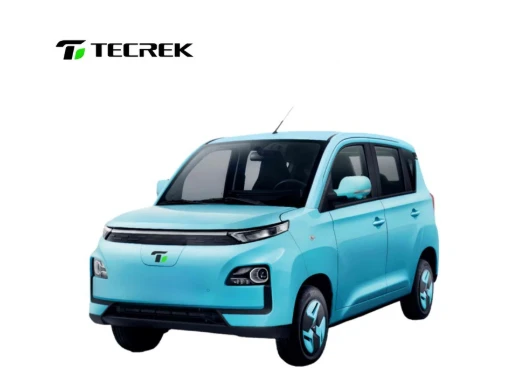
For instance, models like TECREK's compact micro EV combine intelligent energy recovery systems, regenerative braking, and advanced control algorithms to extend range and battery life. These design improvements make modern MEVs not just smaller but smarter.
4. The Business Perspective: Why Wholesalers and Fleet Operators Are Investing
From a business standpoint, micro electric vehicles offer one of the highest return-on-investment ratios in the electric mobility sector. Their lower production cost, simplified drivetrain, and minimal maintenance requirements make them ideal for wholesale distribution and fleet operations.
Companies managing last-mile delivery, tourism transport, or staff mobility programs have found urban micro electric cars to be both cost-effective and operationally efficient. A single charge provides sufficient range for a full day's local operation, while easy charging infrastructure allows decentralized fleet management without heavy investment in charging stations.
In countries such as China, India, and parts of Europe, these vehicles are increasingly viewed as part of smart city development strategies. Local governments are providing tax incentives or simplified registration processes to promote the use of smart micro electric vehicles in low-emission urban zones.
5. Challenges and the Road Ahead
Despite their advantages, mini micro electric vehicles still face regulatory and infrastructural challenges. Some regions lack clear classification between low-speed EVs and standard passenger cars, leading to policy uncertainty. Battery recycling and safety standards are also evolving to keep pace with the segment's rapid growth.
However, the overall outlook remains positive. Market forecasts by BloombergNEF suggest that the global small EV market - including MEVs - will grow by over 22% annually through 2030. As battery costs continue to decline and smart charging networks expand, the market for compact micro EVs is expected to play a major role in achieving global carbon neutrality goals.
Conclusion
The rise of micro electric vehicles reflects a broader transformation in mobility: from large, high-consumption models to efficient, compact, and connected solutions. For city planners, fleet operators, and wholesale buyers, this category offers unmatched potential in terms of cost, sustainability, and scalability.
In the near future, as electric infrastructure matures and consumer preferences shift toward simplicity and environmental responsibility, smart micro electric vehicles will not just be an alternative - they will become the core of intelligent urban transport systems.