
Definition
Plug-in Hybrid Electric Vehicle (PHEV) refers to a vehicle that is driven by two power sources: an internal combustion engine (ICE) and an electric motor (MG).
Features
It fully utilizes the power of the internal combustion engine and the economy of electric drive, has a high degree of freedom, and is flexible in layout. The transmission form can be designed according to the different power requirements of the vehicle.
The characteristic of a hybrid vehicle is that its power output system is composed of an internal combustion engine and an electric motor, and the internal combustion engine and the electric motor have very flexible options in terms of combined power output.
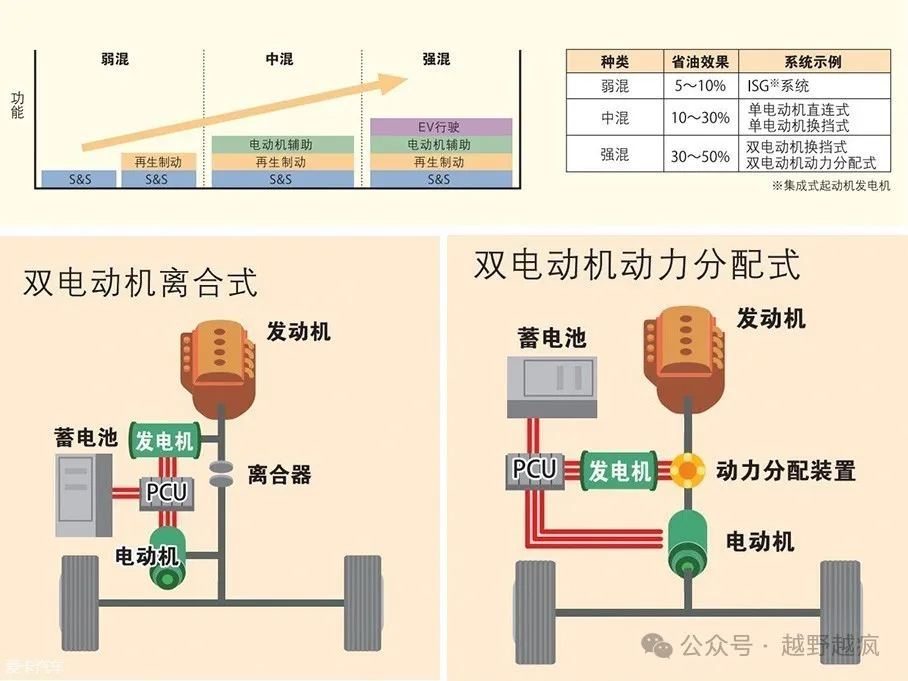
The transmission form of hybrid vehicles can be divided into
Series type
Parallel type
Hybrid type
The hybrid transmission system is based on the vehicle's driving needs, and can achieve power diversion and matching of fossil energy and electric energy. Its development trends are mainly:
Diversification of power connection methods
More compact transmission system
Based on the auxiliary role of the motor, the engine power can be continuously transmitted
Series hybrid electric vehicles
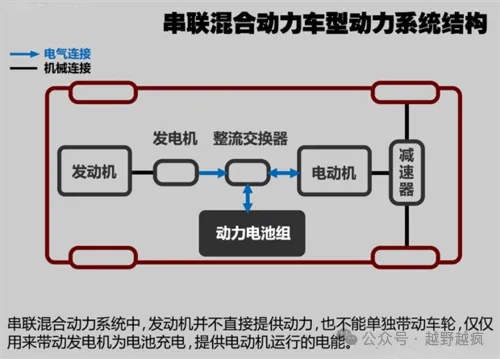
The characteristics of the series type are that the engine, motor and drive axle are connected in series. The drive method uses the engine to drive the generator to convert the fossil energy of fossil fuels into electrical energy, which is then stored or directly supplied to the motor to drive the vehicle.
The engine and drive axle do not use mechanical solid-state connection, but use electrical energy as the medium, which can realize the transmission of energy between fossil energy and mechanical energy, and between electrical energy and mechanical energy.
In terms of speed change, an automatic transmission with gears or a fixed gear ratio reducer without gears can be applied.
Typical models are Ideal series models: Ideal ONE, L7, L8, L9, etc.
Parallel hybrid electric vehicles
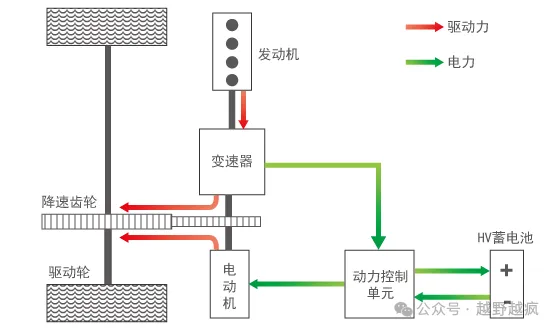
The engine and motor of parallel hybrid vehicles are directly connected to the wheels through some type of transmission.
This structure will affect the engine's running speed, and the engine's output torque will increase with the assistance of the motor. The motor can be used to balance the torque load of the engine, so that the engine can work in a higher efficiency area.
There are two basic types of parallel hybrid vehicles: one with the engine as the main power source and the motor as the auxiliary power; the other with the motor as the main power source and the engine as the auxiliary power.
The parallel hybrid vehicle uses a physical connection between the engine and the motor, which makes the parallel control much more complicated than the series type.
Hybrid hybrid electric vehicle
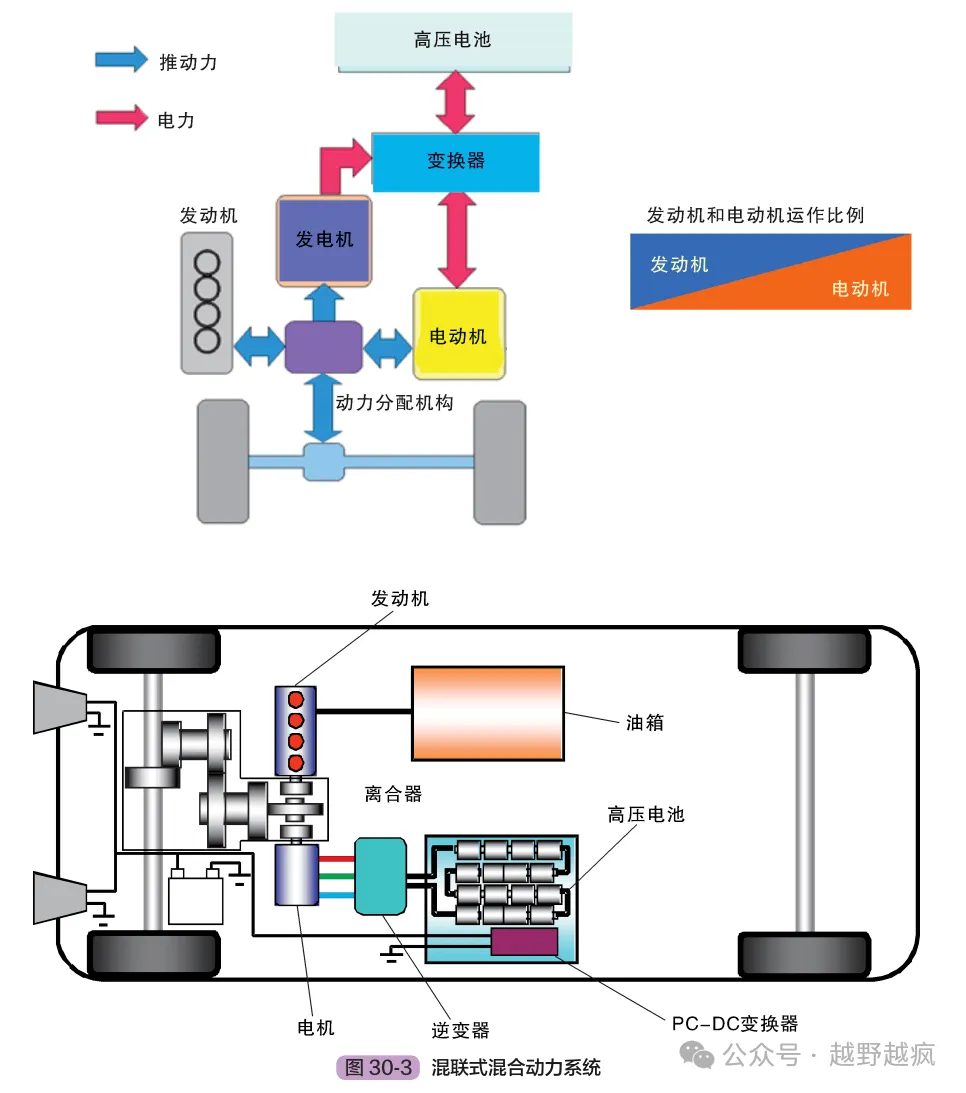
Hybrid hybrid vehicles combine the characteristics of both series and parallel structures. They can operate independently in series or parallel, and can also operate in hybrid mode.
This structure allows the engine and motor to work in a certain proportion.
Hybrid generally requires at least 2 motors.