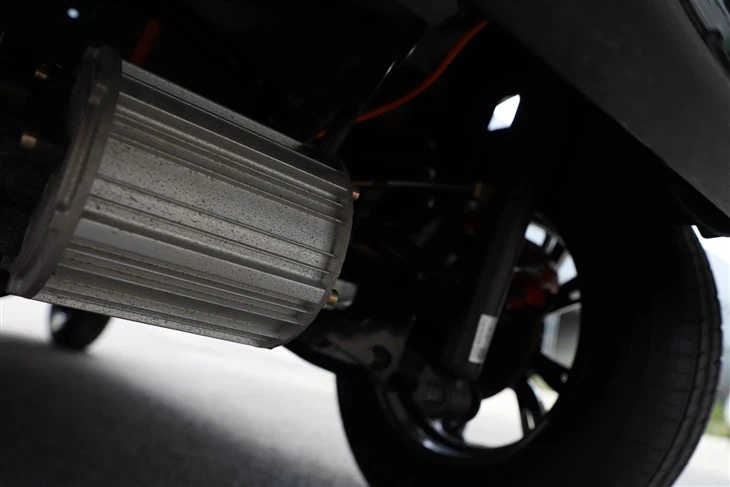

The common structural styles of the rear axles of electric tricycles
Single-side motor, external frame type
Single-side wheel motor, external frame (the frame is outside the wheel), this structure of vehicle has no main shaft, so the stability is not good, the rear two wheels are not synchronized, the load capacity is light, and the frame is prone to deformation. The advantages of this electric tricycle are simple manufacturing process, lightweight body, relatively low power consumption, no differential, relatively simple drive system, and low cost. The disadvantage is that the usage range is relatively narrow and is not suitable for use in rural areas with poor road conditions. Generally, this type of vehicle has a low speed, is easy to control, and can be used as a means of transportation for the elderly and the disabled.
Mid-mounted motor with large shaft type
Tricycles with a central motor and a large shaft (the large shaft is also known as the rear axle or rear beam, which is the axle connecting the two rear wheels of the tricycle and is an important component of the tricycle) have good stability. The central motor drives both rear wheels simultaneously, ensuring smooth startup. Moreover, these tricycles do not require an external frame, and the overall appearance is also attractive. This type of tricycle has a relatively high cost, a heavier body, and strong load-bearing capacity. It is suitable for urban freight transportation and use in rural areas with poor road conditions. As the usage scope expands, electric tricycles for taxis and electric tricycles for sanitation have also emerged.