

I. Market Growth and Development Opportunities
The global Wrecker Truck industry is steadily expanding for three reasons: there are more vehicles on the roads, commercial fleets are getting larger, and the rules for road rescue are becoming stricter. According to a report, the global market for heavy-duty Wrecker Trucks will reach approximately 3.26 billion US dollars by 2025, and is expected to rise to 4.5 billion US dollars by 2035, with an annual growth rate of 3.0% to 3.2%. Other data show that the entire Wrecker Truck market will grow from 2.13 billion US dollars in 2024 to 3.5 billion US dollars in 2035, with an annual growth rate of approximately 4.6%.
This growth has brought opportunities for manufacturers, suppliers, and fleet owners. Now, they can invest in more efficient, larger-capacity, and smarter rescue vehicles. The Wrecker Truck industry will face significant opportunities, especially in areas with rapid urbanization and good transportation infrastructure, where there is a particularly high demand for advanced Wrecker Trucks.
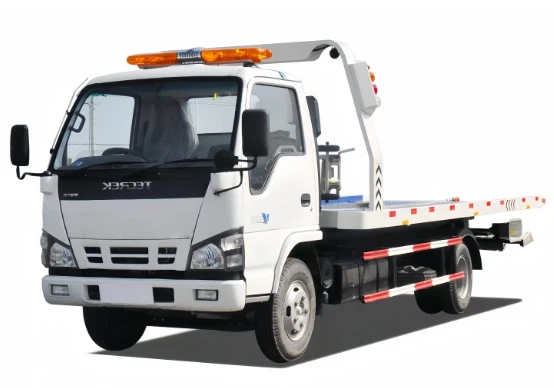
II. Technological Upgrades and Intelligent Configurations
There is a clear trend in the Wrecker Truck industry to incorporate intelligent technologies and advanced systems:
Fleet management can be remotely handled: real-time positioning, fault detection, finding the optimal route, remote monitoring of vehicles, these functions are increasingly common on modern trailers, and have even become essential.
Hydraulic, materials, and platforms have improved: using high-strength steel, aluminum alloys, etc., can improve efficiency and loading capacity; the body is modularized, which can adapt to different rescue situations, significantly improving operational efficiency.
Safety and automatic functions have increased: advanced headlights, collision avoidance, remote control platforms, functions to assist operators, are used more and more, and are very important for road rescue.
Electric and alternative fuels are becoming trends: due to strict emission regulations worldwide, urban rescue requires quiet and environmentally friendly vehicles, so hybrid or electric trailers are becoming increasingly common in the industry.
III. Emerging Sub-sectors and Product Differentiation
The Wrecker Truck industry is no longer about replacing old vehicles with similar new ones; instead, there is a trend of "dividing into sub-sectors" and "doing differently":
Heavy-duty rescue: large commercial vehicles, buses, engineering equipment, require more loading capacity, heavy-duty winches, multi-axis platforms, and advanced rescue functions.
Urban / Light-duty rescue: in densely populated cities, vehicles need to be flexible, responsive, and have low emissions.
Specialized models are popular: such as double-decker Wrecker Trucks, flatbed rescue vehicles that can carry multiple vehicles, these niche vehicles are favored by transportation companies and ferry companies - they need to transport multiple vehicles at once.
Services become diverse: rescue companies can provide not only towing services but also tire changing, battery installation, and on-site repairs, which requires trailer manufacturers to meet the needs of such service-oriented fleets.
IV. Regional Trends and Market Dynamics
North America remains the main market: due to mature infrastructure, a large number of vehicles, good fleet operations, and strict regulations.
Asia-Pacific has the greatest growth potential: as fleets grow, roads improve, and investment in fleet services increases, the demand for Wrecker Trucks has risen.
Globally: urbanization, increased logistics, and the development of e-commerce have led to more vehicle usage, more breakdowns, and a greater urgency for high-quality rescue solutions; the pressure to respond quickly to accidents and ensure road safety and emissions also drives the replacement of modern rescue vehicles.
V. Challenges and Attention Points for Manufacturers and Purchasers
Although there are many opportunities, the industry also has many challenges:
Initial costs are high: advanced Wrecker Trucks (especially heavy-duty, intelligent/ electric) are costly, and small operators may postpone vehicle replacement.
There is a shortage of skilled operators: modern rescue vehicles require professionals trained in operating hydraulic systems, remote equipment, safety systems, etc.
Supply chain pressure is high: the price of high-strength steel, electronic components, etc. has risen, affecting profits and delivery times.
Regulations vary: emission, safety standards, vehicle size/weight restrictions differ in different regions, and designs and production must be considered. Market dispersion: There are manufacturers and service providers in every region, with intense competition and inconsistent standards. "Doing differently" is crucial.
VI. Insights for Clearing Vehicle Manufacturers and Wholesale Customers
For factories producing rescue vehicles, as well as wholesale purchasers and distributors, these suggestions are very practical:
Design modular and flexible vehicles: The body does not rely on a specific chassis. The platform is modular and customizable (suitable for heavy-duty, multi-vehicle, urban rescue), attracting wholesale customers from different markets.
Add intelligent configurations: Make remote management, remote control platforms, safety functions, etc., standard or optional. The fleet needs these and can make the vehicle more valuable when sold second-hand.
Emphasize environmental protection: Even if not all markets can use pure electric vehicles, having hybrid, low-emission engines, or a platform that can be converted to electric can also give a competitive advantage.
Make vehicles by region: Developing markets value cost-effectiveness and reliable quality; developed markets value vehicles with a large capacity and comprehensive configurations.
Highlight long-term cost-effectiveness: Low fuel consumption, fewer rescue trips per run (especially multi-vehicle platforms), short downtime - these are selling points that attract wholesale customers.
Provide good after-sales and parts: Rescue vehicles are commonly used and require quick repairs. Purchasers value reliable repair networks and parts supply.
Adapt to regulations in advance: Accident response times and safety standards are becoming increasingly strict. Meeting the requirements early can be a selling point.
VII. Market Positioning of "Double-layer Clearing Vehicles"
Double-layer clearing vehicles align with many of the trends mentioned above:
High transportation efficiency: Can carry two or more vehicles at a time, improving the operational efficiency of dealers, transportation companies, and rescue fleets.
Specialized model: The double-layer platform design conforms to the industry trend of "providing different rescue solutions" in different fields.
Long-term cost-effectiveness: Reducing transportation trips, lowering fuel consumption, and saving labor can bring higher returns to fleet purchasers.
In areas with a large number of vehicles and a high demand for transporting faulty vehicles (such as city centers and large logistics parks), it has a competitive advantage. Conclusion
The rescue vehicle industry is clearly evolving - from simple trailers to sophisticated, efficient, network-enabled, and customizable equipment. Manufacturers and wholesale buyers can better seize growth opportunities by leveraging intelligent technologies, prioritizing environmental protection, designing flexibly, and adapting to the needs of different regions. For factories that produce specialized rescue vehicles, focusing on these trends (including designs like double-decker barrier removal vehicles that can carry multiple vehicles) is a good direction to meet procurement demands, adapt to the market, and prepare for the future.