


Safety Performance is the "Bottom Line" of Sightseeing Vehicles
As a people-carrying tool, the safety performance of sightseeing vehicles is an absolute "bottom line" that cannot be ignored. This includes the sensitivity of the braking system, the stability of the vehicle body, and the availability of necessary safety devices. High-quality sightseeing vehicles will adopt a dual-circuit hydraulic braking system. Even if one circuit has a problem, the other can still function, ensuring that the vehicle can stop in time in emergency situations; the body structure will be reinforced to maximize the protection of passengers in case of a collision.
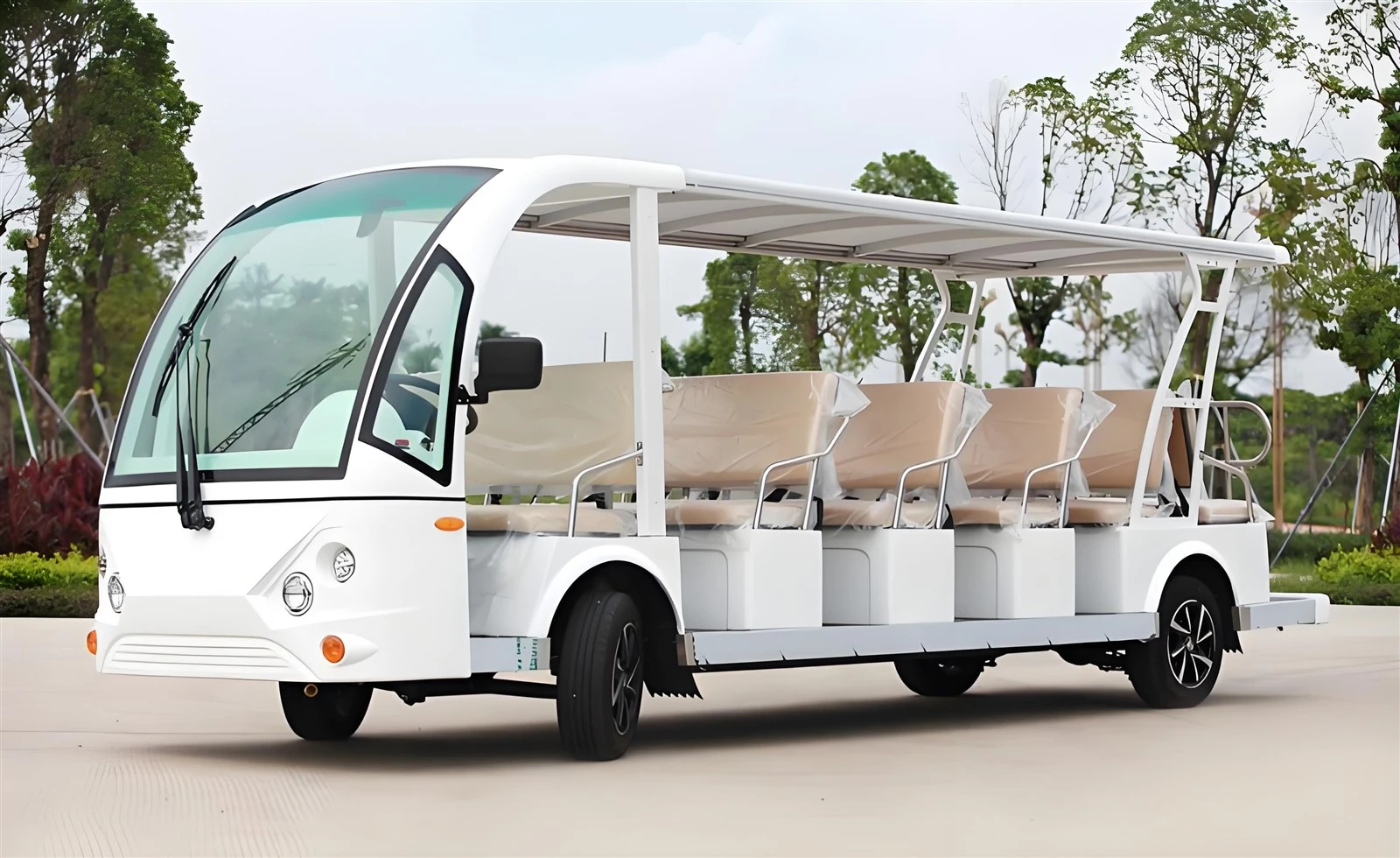
Scenic electric sightseeing vehicles (a common variant of sightseeing vehicles) have safety designs more suitable for scenic spot environments. For example, in mountainous scenic spots with many curves, scenic electric sightseeing vehicles will be equipped with anti-rollover devices; in rainy scenic spots, their tires will have better anti-slip performance. There was once a scenic spot that ignored the safety performance of sightseeing vehicles, resulting in a vehicle's brake failure on a slope. Although no serious accident occurred, it made tourists feel scared and affected the scenic spot's reputation.
Passability Adapting to Scenic Road Conditions is Crucial
The road conditions in different scenic spots vary greatly, so whether the passability of sightseeing vehicles is suitable is particularly important. If there are many gravel roads, steep slopes, or narrow forest paths in the scenic spot, it is necessary to choose a sightseeing vehicle with a higher chassis and strong power to avoid getting stuck or insufficient power; in flat and open plain scenic spots, a sightseeing vehicle with ordinary passability can meet the needs.
Scenic electric sightseeing vehicles have targeted designs in terms of passability. In some scenic spots with shallow beaches or wading sections, scenic electric sightseeing vehicles will use waterproof motors and circuits to prevent damage from water ingress; for scenic spots with attractions connected by steps, some scenic electric sightseeing vehicles also have a certain climbing ability. Only when the passability of the sightseeing vehicle matches the road conditions of the scenic spot can the smooth transportation be ensured.
Cost Accounting Should Not Only Focus on the Purchase Price
When choosing a sightseeing vehicle, cost accounting should not only focus on the purchase price but also consider the long-term use cost. This includes the replacement cycle and cost of the battery, the vulnerability of parts, and the replacement cost. Some sightseeing vehicles are cheap when purchased, but their batteries have a short lifespan and need to be replaced in less than two years, which is actually more expensive overall; while high-quality sightseeing vehicles, although with a high initial investment, have batteries that can last four to five years, resulting in a lower long-term use cost.
The use cost of scenic electric sightseeing vehicles is also related to energy consumption. With the same passenger capacity and driving mileage, energy-saving scenic electric sightseeing vehicles can save a lot of electricity bills per month compared with ordinary models. A certain scenic spot calculated that after using energy-saving scenic electric sightseeing vehicles, the annual energy consumption cost was reduced by 30% compared with before, and the initial additional investment was recovered in three years.
In short, choosing a sightseeing vehicle is a matter that requires comprehensive consideration. By paying attention to safety performance, passability, and long-term costs, we can select the most suitable model for the scenic spot, allowing the sightseeing vehicle to truly contribute to the development of the scenic spot.