


A Simple Choice That Isn't So Simple
For fleet managers, logistics operators and commercial vehicle dealers, one question comes up repeatedly:Gasoline light trucks or diesel light trucks – which has lower actual cost for short-distance transport?
At first glance, the answer seems obvious.Gasoline trucks have lower upfront cost.Diesel trucks are known for durability and torque.
But for short-distance transport – urban delivery, last-mile logistics, municipal services, regional distribution – the decision is much more than just engine type.
The real issue is not power.It is the total long-term operating cost.
This article analyzes the real cost differences between gasoline and diesel light trucks in short-distance operations, and explains why more professional buyers are rethinking their purchasing strategies.
Why This Is a Real Problem for Short Distance Operators
In emerging markets and developing logistics areas such as Africa, the Middle East, Southeast Asia and Latin America, short-distance transport is the main part of daily operations.
However, many buyers still make decisions based on traditional ideas, leading to:
Higher fuel costs than expected
Rising maintenance costs
Low vehicle utilization in urban environments
Shorter service life than expected
Low resale value due to improper configuration
The core problem is simple:A truck designed for long-distance transport is usually not cost-effective for short-distance operations.
Choosing the wrong power system will quietly increase operating costs year after year.
Understanding Short Distance Transport: Why Engine Choice Matters
Before comparing gasoline and diesel, it is important to define short-distance transport clearly.
Typical characteristics include:
Daily mileage: 50–200 km
Frequent start and stop driving
Heavy urban traffic congestion
Multiple cold starts per day
Payload lower than maximum rated capacity
Fixed routes and predictable schedules
These conditions have very different requirements for the engine, transmission and chassis compared to long-distance transport.
This is where the real comparison between gasoline and diesel begins.
Gasoline Light Trucks: Low Entry Cost, High Usage Sensitivity
Main Advantages
Lower purchase price
Quieter operation
Faster warm-up time
Better performance in frequent start-stop cycles
Easier to repair
In short-distance use, gasoline engines reach optimal operating temperature quickly, reducing engine wear during urban delivery cycles.
Hidden Cost Factors
However, gasoline light trucks usually have:
Higher fuel consumption per kilometer
Shorter engine life under heavy daily use
Lower torque efficiency under full load
Faster depreciation in commercial second-hand markets
In areas with high fuel prices or heavy daily use, these costs add up quickly.
Diesel Light Trucks: Built for Work, But At What Cost?
Core Advantages
Stronger low-speed torque
Better fuel efficiency at steady speed
Longer engine life with proper use
Higher resale value in most markets
Diesel engines are traditionally good for heavy-duty and long-time work – but short-distance transport cannot always use their advantages.
Disadvantages in Short Distance Use
In urban logistics, diesel trucks may have:
Higher upfront purchase cost
More complex maintenance
Carbon build-up from frequent cold starts
Lower fuel efficiency in stop-and-go traffic
Longer payback period
When diesel engines do not run at optimal load and temperature, their advantages decrease quickly.
Total Cost of Ownership: The Only Important Metric
For professional buyers, the real comparison is Total Cost of Ownership (TCO) over 5–8 years.
|
Cost Item |
Gasoline Light Truck |
Diesel Light Truck |
|
Purchase Price |
Lower |
Higher |
|
Short-distance Fuel Cost |
Medium–High |
Medium |
|
Maintenance Cost |
Lower |
Higher |
|
Engine Life |
Medium |
High |
|
Urban Efficiency |
High |
Medium |
|
Resale Value |
Medium |
High |
Conclusion:For short-distance, high-frequency transport, the cheapest truck to buy is not always the cheapest to operate.
What Is the Smarter Solution?
The smartest buyers no longer ask:"Gasoline or diesel?"
They ask:"Which truck configuration fits my actual operating conditions?"
This includes:
Engine displacement matching real payload
Optimized gear ratio for urban use
Lightweight and strong frame design
Modular body configuration
Engine calibration suitable for local fuel quality
This is why customized light trucks are better than standard models.
Why More Buyers Choose WPC (Whole Product Customization)
WPC is not just adding options.It is designing vehicles based on real usage scenarios.
For short-distance transport, WPC focuses on:
Reducing unnecessary large engines
Lowering weight through optimized body structure
Improving fuel efficiency in real road conditions
Extending service life through matched parts
Instead of making operators adapt to vehicles, vehicles adapt to operations.
Why Choose ShanDong Tairui Automobile & Electronics Co., Ltd.
Founded in 2003, ShanDong Tairui Automobile & Electronics Co., Ltd. is a customized vehicle manufacturer integrating R&D, production, sales and service.
Our products cover:
New energy vehicles
Commercial vehicles
Special vehicles
Vehicle bodies and lightweight composite materials
Reliable Manufacturing Strength
4 R&D centers and 10 production bases in 8 provinces
Annual vehicle capacity: over 20,000 units
Independent stamping, welding, painting and assembly workshops
More than 100 national patents in stamping and welding
Our vertically integrated manufacturing system allows us to control cost, quality and delivery time, not just assemble vehicles.
Tailored Light Trucks for Short Distance Transport
At Tairui, we do not sell "one-size-fits-all" trucks.
We design:
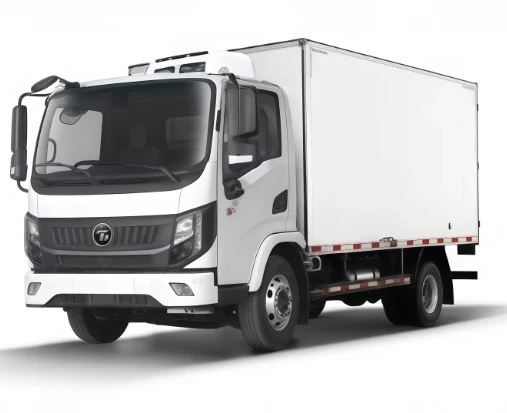
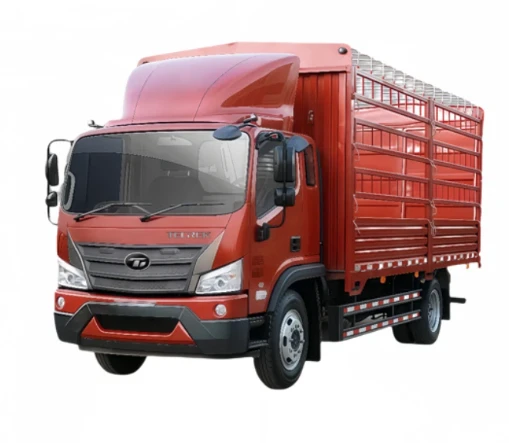
Gasoline and diesel light trucks optimized for urban logistics
Modular cargo bodies for vans, box trucks and special vehicles
Lightweight frames with good strength and efficiency
Custom configurations based on route, payload and climate
You can view examples here:
�� [Light Duty Box Truck Solutions]
�� [Customized Diesel Light Truck Platform]
Real Cost Savings Come from Engineering, Not Guesswork
Our professional design team uses:
Digital simulation
Durability testing
CAE analysis
Modular platform design
To ensure every truck provides:
Lower fuel consumption per delivery
Less downtime
Longer service intervals
Higher resale value
This is how fleets reduce long-term operating costs, not just initial cost.
Final Conclusion: Which Is Better for Short Distance Transport?
There is no universal winner – but there is a correct choice for each operation.
Light payload + dense urban routes → optimized gasoline solutionMedium payload + mixed routes → tuned diesel configurationHigh-frequency delivery → customized powertrain and body integration
The cheapest truck is the one designed for your real working conditions, not imagination.
Ready to Optimize Your Fleet Costs?
If you are:
Commercial vehicle dealer
Logistics fleet operator
Municipal procurement manager
Distributor in emerging markets
We invite you to communicate directly with our engineering and sales team.
Contact us directly, and we will provide you with accurate and effective quotations and solutions