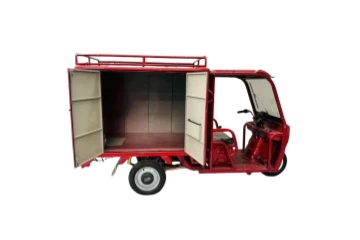

Electric Express Tricycles Lead Export Growth, Penetrating Diverse Global Markets
Where are the main overseas markets for Chinese electric express tricycles? And which models are gaining traction? A review of market insights reveals that China's export landscape for these vehicles spans across Asia, Europe, and Africa. Key destinations include countries like Thailand, Spain, Nigeria, and Brazil, where the demand for efficient, cost-effective delivery solutions is booming.
In terms of models, electric express tricycles designed specifically for urban logistics have emerged as the leading export category. Their compact design, high load capacity, and low operational costs have won praise from overseas users. Data shows that from January to May 2025, electric express tricycle exports accounted for 65% of total electric tricycle exports, with a year-on-year growth of 25%. Meanwhile, variations such as cargo-focused electric tricycles for express delivery and multi-functional electric delivery tricycles have also seen a surge in demand, driven by the global e-commerce boom.
In terms of technological configuration, while traditional lead-acid battery models still dominate exports, new energy electric express tricycles equipped with lithium batteries are gaining ground. From January to May 2025, lithium-powered electric express tricycles accounted for 30% of exports, with their market potential expected to grow as global carbon emission regulations tighten and sustainable logistics trends accelerate.
Domestic VS Overseas: Narrowing Gaps Drive Export Momentum
The rise in export sales of Chinese electric express tricycles can be attributed to four key factors: policy support, evolving overseas sales models, shrinking technological gaps with international brands, and unbeatable price-performance ratio.
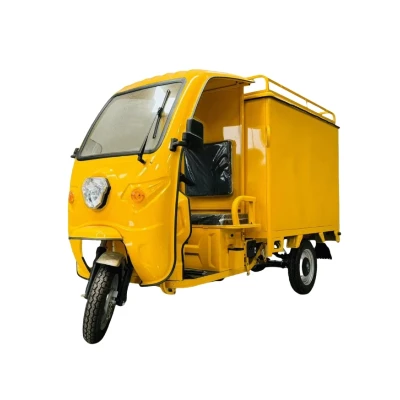
1. Policy Support Fuels Cross-border Expansion
The continuous promotion of the "Belt and Road" initiative has spurred demand for electric express tricycles in 沿线国家 (countries along the route). Governments at all levels have introduced preferential policies for exports, including tax incentives and customs clearance facilitation, which have reduced enterprise costs and boosted export enthusiasm. For example, some regions offer subsidies for electric vehicle exports, directly lowering the price of electric express tricycles in overseas markets.
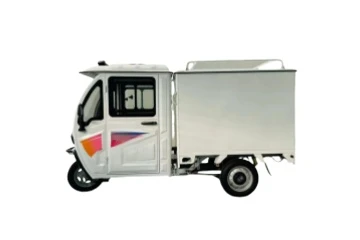
2. Innovative Sales Models Strengthen Global Presence
Chinese manufacturers are shifting from traditional export trade to more integrated models: trade export, overseas KD (Knocked Down) assembly, and direct investment in local manufacturing. Many enterprises have established production bases in Southeast Asia and Africa, enabling on-site assembly of electric express tricycles. This not only reduces transportation costs but also enhances local brand recognition. For instance, a leading domestic brand's KD factory in Thailand has increased regional sales by 40% since its establishment.
3. Technological Leap Narrows Global Competition Gap
With continuous R&D investment, the technology of domestic electric express tricycles has approached or even surpassed international counterparts. In key areas such as motor efficiency, battery life, and intelligent control systems, domestic models now feature brushless DC motors with energy efficiency rates exceeding 90%, and lithium battery packs that support a range of over 150 kilometers. Vehicle designs also prioritize ergonomics and safety, with features like anti-slip tires and intelligent braking systems becoming standard.
In the realm of smart connectivity, some models are equipped with GPS tracking, remote monitoring, and data management systems, allowing logistics companies to optimize delivery routes and improve operational efficiency. These advancements have made Chinese electric express tricycles highly competitive in mature markets like Europe, where users value both technology and sustainability.
4. Unmatched Cost-Effectiveness Captures Global Demand
Compared to European and American electric tricycles, Chinese models offer a 30-50% price advantage while maintaining comparable quality. The lower production costs, driven by complete domestic supply chains and economies of scale, enable Chinese manufacturers to offer competitive pricing. Additionally, the low maintenance costs of electric express tricycles-with fewer moving parts and simple repair procedures-further enhance their appeal to overseas customers, especially in developing markets where cost is a key consideration.
As global e-commerce continues to thrive and urban logistics demands grow, Chinese electric express tricycles are poised to further expand their share in the international market. With ongoing technological innovation and policy support, these vehicles are not only shaping the future of global delivery but also solidifying China's status as a leader in electric mobility solutions.