


Sightseeing vehicles come in diverse forms based on application scenarios and power characteristics.
In scenic areas, electric sightseeing vehicles, with their zero - emission and low - noise advantages, are well - suited for ecological tours. Their open - cabin designs allow natural landscapes to be viewed unobstructedly by passengers. In industrial parks, sightseeing vehicles that combine freight and commuting functions, through rational space planning, achieve efficient coordination of personnel transportation and small - scale goods distribution. Regardless of the scenario, sightseeing vehicles, with their reliable short - distance transportation capabilities, form an important part of the transportation system in these venues.
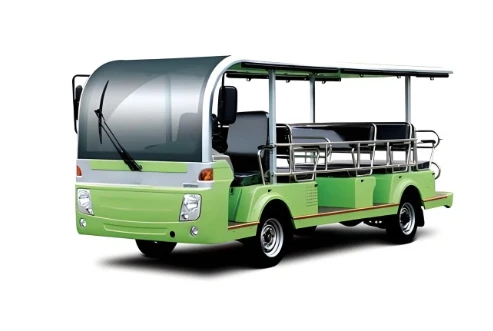
Besides the basic term "sightseeing vehicles"
scenario - specific names like "scenic area tour shuttles" and "industrial park multi - function commuter vehicles" are frequently used in actual operations. When scenic area management deploys transportation capacity, they might mention that "the scenic area tour shuttles have completed route optimization, covering more core scenic spots". In industrial park operation meetings, it could be stated that "the industrial park multi - function commuter vehicles will add night - time trips to ensure the commute of overtime workers". These name variations precisely target the vehicle functions and application scenarios, making management and use more targeted.
Why have sightseeing vehicles become "standard equipment" in various venues?
Maneuverability is one of the core advantages. Compared with large - scale transportation means, their compact bodies can nimbly navigate through scenic paths and industrial park lanes, breaking through space limitations and achieving "last - mile" precise connections. Meanwhile, they reconstruct the travel experience: when tourists take sightseeing vehicles, they can bid farewell to the fatigue of long - distance walking and immerse themselves in the 沿途 scenery; for industrial park employees, using sightseeing vehicles shortens commute time and improves work efficiency. It can be said that sightseeing vehicles are not only transportation carriers but also "boosters" for experience enhancement.
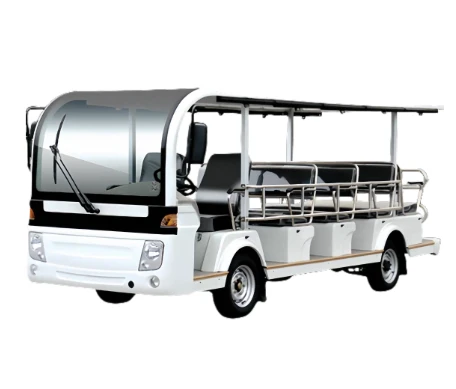
Technological iterations continue to empower the development of sightseeing vehicles
. Modern electric sightseeing vehicles are equipped with high - performance lithium - ion batteries, significantly increasing their driving range to meet the needs of large passenger flows and long - hour operations. After integrating intelligent dispatching systems, the vehicles can achieve real - time positioning and fault early - warning. Operators can precisely adjust transportation capacity through data dashboards, ensuring safe and efficient operations. Some high - end sightseeing vehicles also incorporate user - friendly designs such as shock - absorbing seats and intelligent temperature control, creating a comfortable environment for passengers and turning commutes into enjoyable experiences.
From urban cultural and tourism landmarks to industrial clusters, sightseeing vehicles, along with "scenic area tour shuttles" and "industrial park multi - function commuter vehicles", are deeply integrated into the operation logic of venues. They not only optimize traffic flow lines but also serve as a direct manifestation of venue service quality. Looking to the future, with the advancement of smart city construction and the in - depth development of the tourism industry, sightseeing vehicles will continue to make breakthroughs in function integration and intelligent upgrading. They will act as "transportation hub nodes" in more diverse scenarios, injecting impetus into the value enhancement of venues with every stop and departure, and continuously writing the industry chapter of "small vehicles, big roles".