


The global environmental protection trend is urgent, and the oil price is continuously rising. More and more people need a convenient short-distance travel tool of their own. The modern global transportation is undergoing intense changes. Among various transportation tools, Electric Passenger Tricycles, with their flexible and convenient characteristics, have become one of the fastest-growing transportation means in emerging markets, tourist attractions, suburban communities, and short-distance shuttle areas.
Compared with traditional human-powered tricycles or fuel-powered tricycles for transportation, Electric Passenger Tricycles have core advantages such as cost-effectiveness, environmental friendliness, and ease of use, which perfectly align with the global green development goals. As a result, the market position of this product category has continued to rise in many countries in Asia, Africa, South America, and Eastern Europe.
1. Global Market Size and Growth Prospects
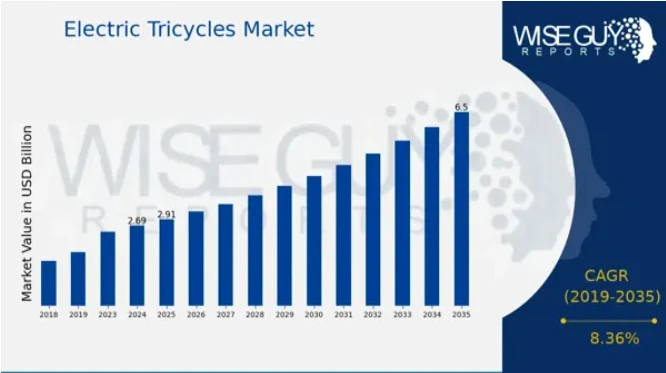
According to industry public data, the global market size of electric three-wheelers exceeded 8.1 billion US dollars in 2024, and is expected to maintain a compound annual growth rate of 7.5% - 10.2% during the period from 2025 to 2030. With the vigorous promotion of green travel plans by various countries' cities, coupled with the increasing preference of tourists for low-speed sightseeing transportation tools, the proportion of Electric Passenger Tricycles in the overall electric three-wheelers market is steadily expanding.
The core factors driving the rapid market growth include:
Electric vehicle support policies of various governments
Countries such as India, Thailand, the Philippines, Egypt, Kenya, Peru, and Mexico have continuously launched incentive policies, such as providing subsidies, tax exemptions, or adjusting import tariffs, to promote the popularization of Electric Passenger Tricycles.
Continuous expansion of urban population size
It is expected that by 2030, the global urban population ratio will exceed 60%. In many developing regions, the public transportation system is not yet complete, which creates a natural market demand for small Electric Passenger Tricycles.
Significant reduction in operator operating costs
Electric Passenger Tricycles can help operators reduce daily fuel and maintenance costs by 60% - 70%, making them an ideal choice for short-distance passenger transportation, community shuttle, campus commuting, and short-distance transportation scenarios.
2. Core Reasons for the Popularity of Electric Passenger Tricycles
Green and zero exhaust emissions
Electric Passenger Tricycles are powered by batteries, and there is no exhaust emissions during operation, helping cities reduce air pollution indices and achieve future carbon reduction goals.
Lower total life cycle cost
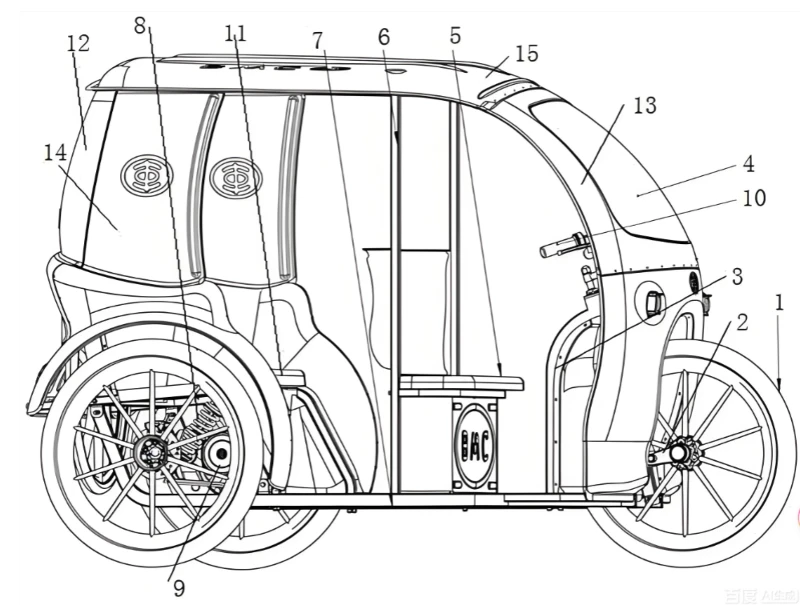
Electric Passenger Tricycles adopt a simplified transmission structure of motor + controller + differential, significantly reducing mechanical complexity. This design not only reduces the number of vulnerable components and lowers maintenance frequency, but also effectively increases the operating duration of the vehicle.
Upgrade in travel safety
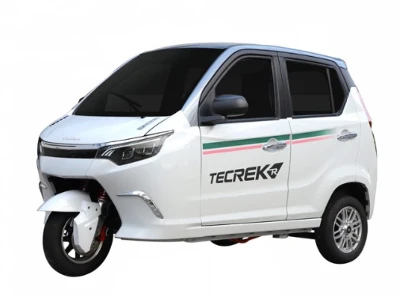
The new generation of Electric Passenger Tricycles optimizes the chassis design, adopts reinforced steel tube frames, upgrades the braking system, and can be optionally equipped with a closed driver's cabin. These safety configurations are not available in traditional fuel-powered tricycles.
Suitable for urban short-distance travel scenarios In developing regions, the one-way distances for most daily trips are no more than 7 kilometers. The range and performance of Electric Passenger Tricycles perfectly meet the short-distance transportation needs in both urban and rural areas.
III. Core Application Scenarios of the Global Market
Tourism and sightseeing transportation scenarios
In tourist towns, coastal resorts, and historical cultural districts, environmentally friendly Electric Passenger Tricycles are gradually replacing small fuel-powered taxis, providing tourists with a quiet and comfortable travel experience.
Community residents' commuting scenarios
In developing countries, Electric Passenger Tricycles are widely used for community shuttle services, transportation for the elderly, and short-distance travel within residential areas.
School campus transportation connection scenarios
Due to their low-speed and low-noise characteristics, many schools in Southeast Asia and Africa have listed Electric Passenger Tricycles as safe commuting tools on campus.
Short-distance passenger transportation connection scenarios
In traffic-congested cities, Electric Passenger Tricycles undertake short-distance connections between transportation hubs, effectively solving the "first mile" and "last mile" problems of urban travel.
Four. Technological Trends Driving the Next Round of Market Growth
Comprehensive replacement of lead-acid batteries by lithium-ion batteries
The market is accelerating its transition from lead-acid batteries to lithium-ion batteries, with significant improvements in battery range and lifespan, and weight reduction of the entire vehicle.
Widespread adoption of high-power motor systems
Powerful 1000–2000W motor systems have gradually become the mainstream configuration, significantly improving the vehicle's climbing performance, enabling it to adapt to complex terrain in hilly areas.
Upgrade in passenger comfort
Through optimizing shock absorption systems, widening seat sizes, adding cabin insulation layers, and adopting ergonomic steering designs, the travel experience for passengers has been significantly improved.
Five. Analysis of Market Demand Differences in Different Regions
Southeast Asia: Strong demand for tourism and short-distance connections, with governments of various countries introducing clear EV incentive policies.
Africa: Thanks to low operating costs and good adaptability to unpaved roads in suburban areas, the market penetration rate of Electric Passenger Tricycles continues to rise.
South America: Due to environmental considerations, tourism cities and ecological reserves are the first to popularize Electric Passenger Tricycles.
Middle East: Resorts and closed communities favor Electric Passenger Tricycles, mainly considering their silent driving characteristics.
Understanding the differences in market demands in different regions helps manufacturers develop products that are more in line with actual usage scenarios.
Conclusion
The global trend of electrification of transportation and the transformation towards sustainable mobility is driving the accelerated popularization of Electric Passenger Tricycles in various fields. As cities strive to build cleaner and more efficient transportation systems, with the dual support of technological upgrades and policy incentives, Electric Passenger Tricycles have become a strategic and market-potential mobility solution.