


With the rapid growth in global logistics, urban delivery, and the transportation demands of small and medium-sized enterprises, choosing the right commercial vehicle is like laying the "foundation" for an enterprise's transportation chain. Its importance has far exceeded that of the past. In the market in 2025, light trucks and medium trucks will still be the "main force" in commercial operations, but there are significant differences in cost, efficiency, and applicable scenarios between the two. So, which of these two models is more cost-effective? Next, this article will analyze them one by one to support the wise decision-making of enterprises.
1. Purchase cost comparison: Light trucks are more in line with the "start-up budget" of small and medium-sized enterprises
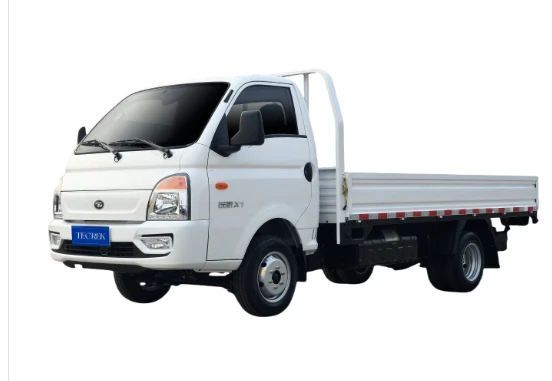
One of the core advantages of light trucks is that their initial purchase cost is relatively low, making them a "rainfall of relief" for small enterprises with limited budgets. Specifically, the price range of light trucks is generally between 20,000 and 40,000 US dollars, while the price of medium trucks can easily reach 50,000 to 80,000 US dollars or even higher. Therefore, for small logistics companies or urban delivery service providers that need to quickly start operations, light trucks are undoubtedly a more cost-effective choice.
Case Recommendation
The 4 ton diesel light truck launched by our company, ShanDong Tairui, not only has a reasonable price, but also features high carrying capacity and flexibility for urban transportation. It is like a "powerful assistant" tailor-made for short-distance deliveries and small-scale business operations, with extremely high adaptability.
II. Fuel and Operating Costs: Light-duty trucks are a "cost-saving gem" for long-term operations
If we consider the purchase cost as the "entry barrier", then fuel efficiency is the "core lifeline" of long-term operating costs. Generally speaking, the fuel consumption of light trucks is lower than that of medium trucks, especially in short-distance urban delivery scenarios, where this advantage is more pronounced. For instance, the fuel consumption of a diesel light truck per 100 kilometers is approximately 8-10 liters, similar to the energy consumption level of an economy car; while a medium truck may require 12-15 liters of fuel per 100 kilometers, resulting in a relatively heavier energy burden.
In addition, the daily maintenance and repair costs of light trucks are generally lower than those of medium trucks. Whether it's tire replacement, brake system inspection, or replacement of small engine parts, the related costs for light trucks are much lower, and the downtime for maintenance is shorter. This is like "pressing the accelerator" for the operational efficiency of the enterprise, which can effectively enhance the overall operational effectiveness.
Product Highlights
The 4 ton diesel light truck produced by Shandong Tairuiis equipped with a highly durable diesel engine, featuring both low fuel consumption and long service life. It can be regarded as the "best value for money" vehicle for light commercial purposes.
III. Bearing Capacity and Transportation Efficiency: Each has its own specialty, suitable for different scenarios
The core competitiveness of medium-sized trucks lies in their carrying capacity and transportation efficiency. They are like the "strongmen" in the transportation field, usually capable of carrying 5 to 10 tons of goods, and are highly suitable for long-distance transportation or enterprises that require large-scale and one-time cargo transportation. However, everything has its advantages and disadvantages. In urban roads, narrow alleys, or fast delivery scenarios, the huge size of medium-sized trucks becomes a "stumbling block", as they are large in size and have poor flexibility, often increasing operational difficulties and additional costs.
In contrast, light trucks, although they have limited carrying capacity (usually ranging from 2 to 4 tons), are like agile "urban spirits", highly adaptable to urban roads and more convenient for loading and unloading goods. Therefore, light trucks are particularly suitable for scenarios such as e-commerce delivery, catering supply chain, and transportation of daily necessities.
IV. Service Life and Depreciation: Light-duty trucks better meet the "stable operation needs" of small businesses
Although the purchase cost of the medium-sized trucks is relatively high, in scenarios involving frequent and large-scale transportation, they have a longer service life and greater durability, just like "heavy-duty laborers", capable of undertaking high-intensity transportation tasks for a long time. However, the depreciation speed of the medium-sized trucks is also relatively fast, especially in the early stage of operation, where the pressure of asset depreciation is more pronounced.
On the contrary, the depreciation rate of light trucks is slower, coupled with lower maintenance costs, making them more like "steady partners", providing strong support for the stable operation of small businesses.
V. Final Decision: Which Model Offers Better Value for Money?
Taking into account the four core factors - purchase cost, fuel efficiency, maintenance cost and operating scenarios - the answer is quite clear:
Urban short-distance delivery and light transportation scenarios - Light trucks offer the best value for money and are undoubtedly the top choice;
For long-distance transportation and large-scale cargo transportation scenarios - medium-sized trucks are more suitable, but the corresponding cost investment will also be higher.
For most small and medium-sized enterprises, choosing "diesel light trucks" or "4 ton diesel light trucks" can not only reduce the initial investment pressure but also ensure operational efficiency, truly achieving the goal of cost optimization.
Company Recommendation
ShanDong Tairui offers a full range of light and medium-sized commercial vehicles, including 4 ton diesel light trucks, small flatbed trucks and other categories. It also supports customized configurations, allowing it to precisely meet various transportation needs like a "private customization expert".
Summary
In the commercial vehicle market in 2025, light trucks will outperform others due to their low purchase costs, efficient fuel economy and excellent urban flexibility, demonstrating higher cost-effectiveness in most short-distance transportation scenarios. Medium trucks, on the other hand, are more suitable for large-scale and long-distance transportation scenarios, although their investment costs are relatively higher. Therefore, when making purchasing decisions, enterprises need to combine their operational scenarios, transportation demands and budget conditions to precisely match the most suitable vehicle models, in order to achieve maximum benefits.
Would you like to know more about our light truck products? Click here to consult the professional advisor from [Shandong Tairei] and obtain free quotations and customized solutions.
FAQ
Question 1: Are light trucks suitable for long-distance transportation?
Answer: The core application scenarios for light trucks are urban and short-distance transportation. If they are used for long-distance transportation, their carrying capacity and driving comfort will be severely limited. It's like asking a sprinter to run a marathon - they would struggle to showcase their strengths.
Question 2: Are the maintenance costs for China-Kenya higher?
Answer: Compared to light trucks, the maintenance costs and component costs of medium-sized trucks are indeed higher. However, in large-scale transportation scenarios, if costs are calculated based on the amount of goods transported per unit, the overall cost of medium-sized trucks still has certain advantages. This is similar to the principle that bulk purchasing can reduce the unit cost.
Question 3: What models of light trucks does Shandong Tairuiprovide?
Answer: The company offers a variety of cost-effective light commercial vehicles, such as 4 ton diesel light trucks and small flatbed trucks. At the same time, we can customize the configurations according to the specific needs of customers to create tailor-made transportation solutions for them.