


When enterprises are choosing a purchasing plan for 4 Ton Diesel Flatbed Truck, they usually prioritize the purchase price. However, experienced fleet managers know that the actual operating costs of 4 Ton Diesel Flatbed Truck go far beyond the initial purchase price. Factors such as fuel consumption, maintenance requirements, and repair costs during unexpected breakdowns all contribute to the long-term usage cost of the vehicle and ultimately affect the company's profits.
For logistics companies, engineering contractors, and municipal fleets that rely on 4 Ton Diesel Flatbed Truck for their daily operations, it is crucial to understand these hidden costs.
Don't just look at engine displacement to determine fuel costs
Fuel expenses are usually the largest ongoing expense for 4 Ton Diesel Flatbed Truck during use.
Although engine displacement and fuel type are factors that affect fuel consumption, the actual fuel cost also depends on many other factors. For example, weather conditions, the weight of the transported goods, and the actual conditions of the road, etc., can significantly affect vehicle fuel consumption. The reason why diesel-powered 4 Ton Diesel Flatbed Truck are widely recognized in the market is that diesel engines can output strong torque at low speeds, which can more efficiently carry heavy loads and also reduce fuel consumption.
In addition, the matching of the transmission, the main reduction ratio, and the lightweight design of the entire vehicle will also affect fuel economy. A vehicle can run for thousands of hours each year, and even a small difference in fuel consumption will eventually translate into considerable cost savings or additional losses.
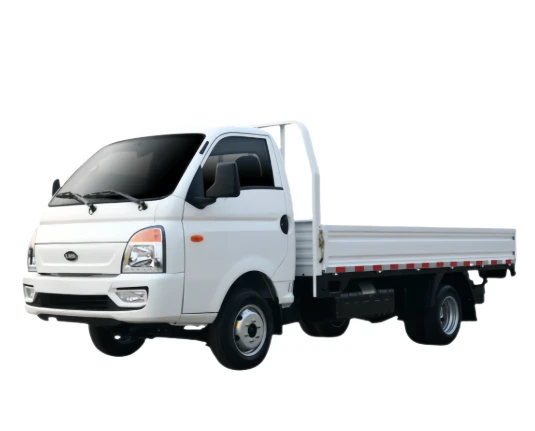
The "Secret" of Maintenance Expenses
Maintenance costs are another major core component of a vehicle's total operating costs.
Routine maintenance such as oil changes, brake system checks, and suspension inspections are inevitable expenses. However, the frequency and severity of repairs are inseparable from the manufacturing quality and brand quality of the vehicle.
Light-duty trucks designed for commercial use usually come with reinforced frames, leaf spring suspensions, and simplified mechanical systems. These seemingly insignificant designs are crucial for convenient maintenance and reducing the number of repairs when used under continuous high loads.
Preventive maintenance also plays a key role in this process. Fleets that adhere to scheduled vehicle inspections tend to reduce the occurrence of major failures, lower maintenance costs and frequencies, and extend the lifespan ofcommercial trucks. Conversely, delaying maintenance can easily lead to component failures, thereby increasing labor maintenance costs and causing vehicles to be out of service for a long time.
The Most Important and Easily Forgotten Down Time
When calculating costs, we often overlook the downtime costs of vehicles because they do not directly manifest in the specific invoice amounts. However, once a light-duty truck stops working, the losses it brings to the operator are very serious.
Order delivery delays, project progress slowdowns, and driver absenteeism can all lead to a decline in customer satisfaction, and the various losses accumulate rapidly. For enterprises with already thin profit margins, even a single day of vehicle downtime can cause losses far exceeding the fuel savings achieved over several weeks.
This shows that vehicle performance is not a single measurement indicator. There are many details that we have not noticed that are also overlooked. Models with stable powertrains, durable braking systems, and easy-to-source parts can significantly reduce the risk of downtime. This is also why many fleet managers prefer to give up the short-term cost advantage of purchasing, and instead prioritize the use of technologically mature engine platforms, standardized parts models, and brands.
Shandong TaiRui, backed by a professional R&D team and profound brand heritage, has established in-depth cooperation with numerous well-known brands. Leveraging its solid technical strength and rigorous quality control standards, the company has achieved remarkable results in the international market. With an outstanding brand reputation and reliable product quality, it has won widespread trust and high praise from customers worldwide.
Total Cost of Ownership: A Long-Term Perspective
The true cost of owning a light truck is best evaluated through total cost of ownership (TCO), rather than upfront pricing alone. TCO combines fuel consumption, scheduled maintenance, repair frequency, and downtime impact over the vehicle's service life.
In many cases, a slightly higher initial investment results in lower long-term expenses due to improved reliability, better fuel efficiency, and reduced downtime. For commercial users, choosing the right light truck is not simply a purchasing decision-it is a strategic business decision.
ShanDong Tairui's decades of experience incommercial truck manufacturing allow fleet operators to better understand and predict these costs, ensuring smart purchasing and fleet management decisions.
Making Smarter Fleet Decisions
Businesses that analyze ownership costs holistically are better positioned to scale operations sustainably. By focusing on fuel efficiency, maintenance predictability, and operational reliability, fleet managers can minimize risk and maximize return on investment.
As market competition intensifies and operating costs rise globally, understanding the true cost of owning a light truck has become more important than ever.
About This Insight
This article is intended to help commercial truck buyers and fleet operators make informed decisions based on real operating factors rather than purchase price alone.