


Content
In the modern urban governance system, the role of specialized vehicles is becoming increasingly prominent - they are like the "professional managers" of the city, silently supporting multiple goals such as operational efficiency, public health, and sustainable development. From emergency rescue to road maintenance, and even garbage collection, these vehicles are specifically designed to tackle tasks that standard trucks cannot handle, and are truly indispensable core support for the efficient operation of the city.
I. The Importance of Specialized Vehicles in the City
The amount of waste generated in modern cities is staggering. Take large metropolitan areas as an example, the annual output of kitchen waste can often exceed 100,000 tons. With such a huge volume of waste, it is clear that ordinary transportation tools are insufficient to manage it efficiently. This requires specialized vehicles with reliability, hygiene, and operational efficiency to "take the lead".
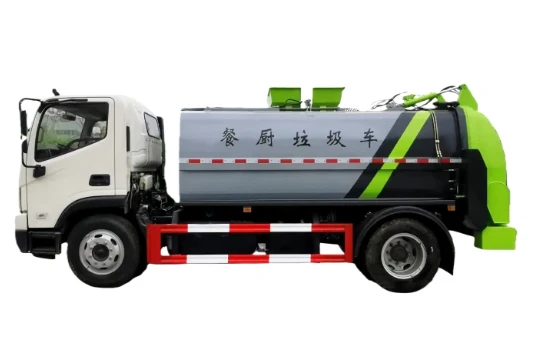
Among the many specialized vehicles, Commercial Food Waste Trucks play a key role in the transportation of organic waste - they are specifically responsible for transporting kitchen waste generated by restaurants, hotels, and community kitchens. Through specialized design considerations, these vehicles not only can reduce environmental impact to a certain extent but also help ensure that kitchen waste is safely and promptly collected and processed.
II. Core Configurations of Modern Specialized Vehicles
To better adapt to specific operational needs, modern specialized vehicles generally feature custom-built advanced systems. Their core configurations include:
Hydraulic compression system: It can efficiently compress the volume of waste, significantly improving the loading efficiency of the vehicle;
Fully enclosed compartments: It can effectively prevent waste leakage and odor dispersion, avoiding secondary pollution;
Intelligent sensors and GPS tracking: They help optimize the collection route and enable real-time monitoring of the operation process.
The Commercial Food Waste Truck of Our company Automobile is a typical representative of this type of vehicle. It ingeniously balances compact design with strong carrying capacity, enabling flexible navigation even in narrow urban streets while maintaining a high collection efficiency of kitchen waste. Moreover, this vehicle is specifically designed for daily operation scenarios in high-density areas and incorporates energy-saving and environmental protection design concepts, which to some extent helps reduce fuel consumption and emissions, aligning well with the environmental needs of modern cities.
III. Multiple Benefits of Specialized Vehicles for the City
Introducing specialized vehicles into urban governance often brings multiple positive benefits:
Quality improvement and efficiency enhancement: It not only helps improve overall operational efficiency but also reduces fuel consumption to a certain extent and lowers operational costs;
Cycle empowerment: It provides important hardware support for waste recycling and composting projects, promoting resource recycling;
Health protection: It effectively reduces the public health risks caused by the accumulation of organic waste, helping to improve the urban public health situation.
Take a certain second-tier city in China as an example. After introducing the Commercial Food Waste Truck of Our company Automobile, the collection efficiency of kitchen waste in this city increased by approximately 30%, the complaints about street odors decreased significantly, and the waste collection utilization rate also improved. Thus, by introducing such specialized equipment, cities can achieve cleaner streets and more efficient waste handling, thereby promoting the sustainable development of urban management.
IV. Emerging Trends in Specialized Vehicle Technology
With the continuous advancement of technology and the increasing environmental requirements, the field of specialized vehicles is also showing some notable emerging trends: Electricity transition: Electric and hybrid commercial food waste trucks are gradually becoming a hot topic in the industry. These types of vehicles have certain advantages in reducing emissions and operational costs, and may become one of the preferred solutions under environmental protection policies;
Intelligent fleet management: The application of real-time monitoring and route optimization technologies is expected to further enhance collection efficiency and reduce unnecessary operational losses;
Automation upgrade: In the future, some vehicles may be able to operate autonomously in controlled environments. This transformation may push the industry to a new level of intelligence.
Conclusion
Special vehicles are undoubtedly an important part of modern urban infrastructure. Among the family of special vehicles, Commercial Food Waste Trucks represented by Our company Automobiles are like a precise "key", fully demonstrating how advanced vehicle design can solve the specific problem of urban food waste collection. They integrate technological innovation with the actual needs of food waste collection, providing a reliable hardware support for urban sustainable development.