


The demand for compact, eco-friendly transport solutions has grown rapidly in recent years, especially in markets where small logistics and local deliveries dominate. Among the most popular categories are the electric tricycle and the electric four-wheeler. While both are designed to carry cargo, their structures, performance, and usage scenarios vary significantly. For wholesalers, logistics companies, and small business owners, understanding the differences between these two vehicle types is essential before making a purchasing decision.
Design and Structure
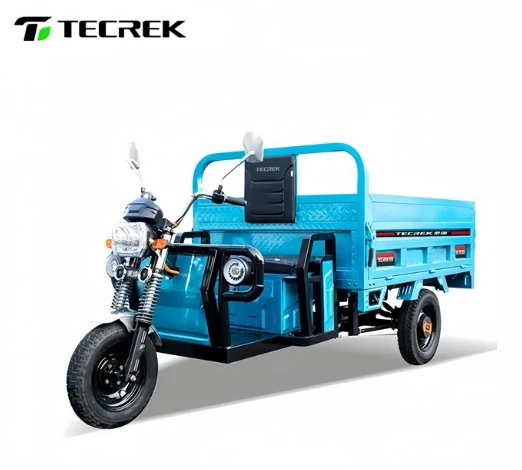
An open cargo electric tricycle typically features three wheels, an open driver's seat, and a reinforced rear cargo bed. Its design emphasizes simplicity and practicality, making it ideal for transporting goods in rural areas or within towns. This category of vehicles is compact and maneuverable, perfect for narrow roads and congested environments.
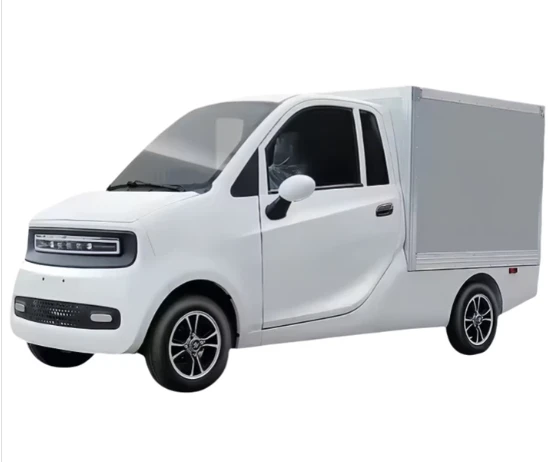
By contrast, the enclosed electric four-wheeler comes with a fully covered cabin that protects the driver and goods from weather conditions. With four wheels, it offers enhanced stability and often looks more like a small truck than a motorcycle-derived vehicle. Modern electric four-wheeler models are usually larger, with enclosed cargo compartments that provide security and weather resistance.
Performance and Power
Performance is another area where the two vehicle types diverge. Open cargo electric tricycles are usually powered by motors in the 800–1500W range, paired with 48V or 60V batteries. They provide adequate torque to handle loads of 300–600 kilograms and ranges of 50–100 kilometers per charge. Their maximum speed is generally 30–40 km/h, suitable for short-distance transport.
On the other hand, enclosed electric four-wheelers are often equipped with more powerful motors and larger battery systems. This allows them to carry heavier loads-sometimes up to 800 kilograms or more-and achieve longer ranges. They are also more stable at higher speeds, which makes them better suited for urban logistics or more demanding delivery routes.
Cost and Maintenance
From a financial perspective, open cargo tricycles are less expensive to purchase and maintain. Their simple design means fewer parts that require servicing. For small businesses in developing regions, wholesale electric tricycles provide an affordable entry into sustainable transport.
In contrast, enclosed four-wheelers come with higher upfront costs but offer greater durability and versatility. Maintenance is still cheaper than that of fuel-powered vehicles, but costs may be slightly higher than those of a tricycle due to more complex systems. For companies needing larger fleets with higher capacity, the long-term return on investment can be favorable.
Safety and Comfort
Safety is another distinction. Open designs expose the driver to weather and external conditions. While this is acceptable for short routes in favorable climates, it may be inconvenient in harsh environments. In comparison, an enclosed electric four-wheeler for business provides full cabin protection, seatbelts, better braking systems, and higher structural stability. Comfort is significantly improved, which is important for drivers who spend long hours on the road.
Market Adoption
Globally, both vehicle types are in demand, but their markets differ. Open cargo tricycles dominate in agricultural areas and small-town logistics, where affordability and maneuverability matter most. Four-wheelers are increasingly chosen in urban centers, where regulations and customer expectations push businesses toward safer, cleaner, and more professional-looking delivery solutions.
Governments worldwide are encouraging businesses to switch to electric mobility, offering incentives and subsidies. This trend is accelerating the growth of both categories, though four-wheelers are projected to see faster adoption as charging infrastructure expands and battery costs decline.
Conclusion
The difference between an electric tricycle and an electric four-wheeler lies in more than just the number of wheels. It reflects distinct design philosophies, performance levels, and target markets. Open cargo tricycles are affordable, practical, and easy to maintain, making them perfect for small businesses and rural logistics. Enclosed four-wheelers, meanwhile, offer stability, protection, and greater carrying capacity, making them suitable for professional urban deliveries.
For wholesalers and operators, the choice depends on customer needs, budget, and the environments in which the vehicles will operate. As demand for sustainable transport continues to rise, both open tricycles and enclosed four-wheelers will play important roles in shaping the future of local logistics and urban mobility.