


In modern international cities, urban logistics is developing rapidly, and an increasing number of vehicle models have emerged. Among them, one model has gained wide recognition and popularity worldwide: the 3.5 ton light truck. Once regarded as a transitional choice between light trucks and medium trucks, the 3.5 ton light truck is now rising in many global markets and becoming the new standard for urban freight transportation.
From increasingly strict urban policies and regulations to the growing frequency of deliveries, multiple factors are driving logistics operators to shift to lighter, smarter, and more cost-effective transportation solutions. Here are the reasons why the 3.5 ton light truck has rapidly become the main transportation tool for modern urban logistics.
From increasingly strict urban policies and regulations to the growing frequency of deliveries, multiple factors are driving logistics operators to shift to lighter, smarter, and more cost-effective transportation solutions. Here are the reasons why the 3.5 ton light truck has rapidly become the main transportation tool for modern urban logistics.
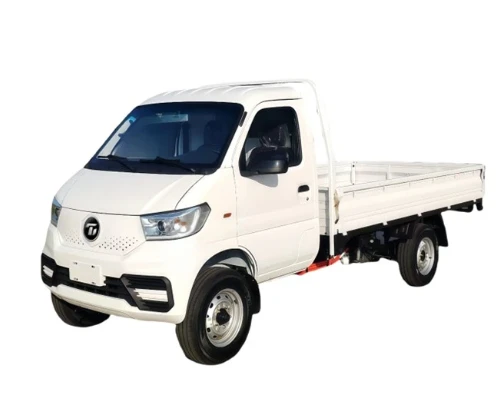
1. Urban regulations are reshaping vehicle choices
Cities around the world are implementing stricter emission, road access, and vehicle size restrictions. Many urban areas now restrict medium-sized and heavy-duty trucks from entering during the day, while 3.5 ton light trucks are usually not subject to this restriction.
In many regions, these vehicles:
Do not require special commercial driving licenses
Face fewer traffic restrictions in the city center
Are more easily able to meet changing emission standards
Just this regulatory flexibility alone makes the 3.5-ton category highly attractive for last-mile and intra-city delivery operations.
In many regions, these vehicles:
Do not require special commercial driving licenses
Face fewer traffic restrictions in the city center
Are more easily able to meet changing emission standards
Just this regulatory flexibility alone makes the 3.5-ton category highly attractive for last-mile and intra-city delivery operations.
2. The ideal balance between payload and flexibility
Unlike small box trucks with limited payload capacity, the 3.5 ton light truck offers a practical balance point:
Higher payload capacity than box trucks
Compact size suitable for narrow streets
Better maneuverability than medium-sized trucks
For logistics companies handling frequent and medium-sized delivery operations - such as retail distribution, e-commerce fulfillment, and municipal transportation - this balance directly translates to higher efficiency per delivery.
Higher payload capacity than box trucks
Compact size suitable for narrow streets
Better maneuverability than medium-sized trucks
For logistics companies handling frequent and medium-sized delivery operations - such as retail distribution, e-commerce fulfillment, and municipal transportation - this balance directly translates to higher efficiency per delivery.
3. Lower total cost of ownership
Cost control remains a core concern in urban logistics. Compared to heavy commercial vehicles, the 3.5 ton light truck has the following advantages:
Lower fuel or energy consumption
Lower maintenance costs
Lower tolls, parking fees, and insurance premiums
Throughout the operational life cycle, these advantages significantly reduce the total cost of ownership, making the 3.5-ton truck particularly attractive for fleet expansion and renewal.
To address these cost pressures, many logistics operators are gradually shifting to a new generation of light trucks specifically designed for urban conditions.
Modern 3.5 ton light trucks now feature reinforced but lightweight chassis structures, modular cargo boxes, and powertrain options optimized for urban stop-and-go traffic. Some manufacturers have also introduced electric light truck variants, aiming to reduce operating costs while meeting zero-emission requirements in urban core areas.
Lower maintenance costs
Lower tolls, parking fees, and insurance premiums
Throughout the operational life cycle, these advantages significantly reduce the total cost of ownership, making the 3.5-ton truck particularly attractive for fleet expansion and renewal.
To address these cost pressures, many logistics operators are gradually shifting to a new generation of light trucks specifically designed for urban conditions.
Modern 3.5 ton light trucks now feature reinforced but lightweight chassis structures, modular cargo boxes, and powertrain options optimized for urban stop-and-go traffic. Some manufacturers have also introduced electric light truck variants, aiming to reduce operating costs while meeting zero-emission requirements in urban core areas.
4. Perfectly adapted for last-mile and high-frequency deliveries
The growth of e-commerce and on-demand delivery services has changed the logistics model. Operators now rely on less long-distance transportation rather than:
Shorter routes
High-frequency delivery plans
Flexible loading configurations
The 3.5 ton light truck is highly suitable for box trucks, flatbed trucks, refrigerated units, and custom cargo compartments - making it an ideal choice for urban last-mile logistics and specialized delivery tasks.
High-frequency delivery plans
Flexible loading configurations
The 3.5 ton light truck is highly suitable for box trucks, flatbed trucks, refrigerated units, and custom cargo compartments - making it an ideal choice for urban last-mile logistics and specialized delivery tasks.
5. Simpler fleet management and driver recruitment
Driver shortage remains a global problem. One overlooked advantage of the 3.5 ton light truck is its operational simplicity:
Easier driver training
A wider pool of qualified drivers
Lower fatigue and stress in dense traffic environments
For fleet managers, this means faster onboarding training, higher safety, and more stable operations.
A wider pool of qualified drivers
Lower fatigue and stress in dense traffic environments
For fleet managers, this means faster onboarding training, higher safety, and more stable operations.
6. Adaptability to multiple power system solutions
As cities move towards sustainability, the 3.5-ton segment is also leading in power system diversity:
Diesel models optimized for fuel efficiency
Gasoline variants for specific markets For electric and new energy versions in zero-emission areas
This flexibility enables logistics companies to position their fleets for the future while adapting to local infrastructure and policy requirements.
As the electrification process accelerates, 3.5-ton electric light-duty trucks are becoming increasingly popular in urban logistics, municipal services, and short-distance deliveries.
Compared to traditional diesel models, these electric variants operate more quietly, have lower energy costs, and are simpler to maintain - making them particularly suitable for high-frequency urban routes and night delivery scenarios.
The bigger picture: The structural transformation of urban logistics
The rise of 3.5-ton light-duty trucks is not a short-term trend - it reflects a deeper structural change in how cities manage their freight transportation. As urban density increases and delivery expectations rise, logistics operators need efficient, compliant, and adaptable vehicles.
For many companies, 3.5-ton light-duty trucks are no longer an option - they are becoming the default choice.
For logistics fleets that are evaluating the next upgrade cycle, the market now offers an increasing number of customizable light-duty trucks and electric light-duty trucks specifically tailored for urban transportation - covering flatbeds, vans, refrigerated, and specialized applications.
This expanding supply further consolidates the role of 3.5-ton light-duty trucks as a long-term solution rather than a temporary measure.
Gasoline variants for specific markets For electric and new energy versions in zero-emission areas
This flexibility enables logistics companies to position their fleets for the future while adapting to local infrastructure and policy requirements.
As the electrification process accelerates, 3.5-ton electric light-duty trucks are becoming increasingly popular in urban logistics, municipal services, and short-distance deliveries.
Compared to traditional diesel models, these electric variants operate more quietly, have lower energy costs, and are simpler to maintain - making them particularly suitable for high-frequency urban routes and night delivery scenarios.
The bigger picture: The structural transformation of urban logistics
The rise of 3.5-ton light-duty trucks is not a short-term trend - it reflects a deeper structural change in how cities manage their freight transportation. As urban density increases and delivery expectations rise, logistics operators need efficient, compliant, and adaptable vehicles.
For many companies, 3.5-ton light-duty trucks are no longer an option - they are becoming the default choice.
For logistics fleets that are evaluating the next upgrade cycle, the market now offers an increasing number of customizable light-duty trucks and electric light-duty trucks specifically tailored for urban transportation - covering flatbeds, vans, refrigerated, and specialized applications.
This expanding supply further consolidates the role of 3.5-ton light-duty trucks as a long-term solution rather than a temporary measure.
Final thoughts
As urban logistics becomes more complex, vehicle selection is no longer solely about payload capacity. It concerns compliance, efficiency, flexibility, and long-term cost control. The continued adoption of 3.5-ton light-duty trucks marks the direction of the industry - and why early-adapting fleets can gain a lasting competitive advantage.