


I. Underlying Logic of the power System: The synergy effect between motor torque and battery capacity
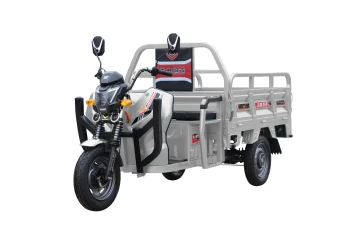
The power system of an electric cargo tricycle is its "productivity core" - the motor is like a "muscle" determining the load-carrying capacity, while the battery is like an "energy reserve" supporting the transportation radius. The parameter matching of the two directly affects the working efficiency and operational economy of the electric three-wheeled freight vehicle.
Analysis of Core Indicators of Motors
Torque (unit: N · m) : It directly determines the vehicle's load-bearing capacity and climbing performance. For example, in urban distribution scenarios with a load capacity of 300 kilograms or less, hub motors with a capacity of 200-300N · m can be selected. For mountainous areas or heavy-load scenarios (over 500 kilograms), a mid-mounted motor with reduction gears should be equipped, and the torque should reach over 500N · m.
Power (unit: W) : Affects the performance of goods starting and accelerating. For regular freight scenarios, it is recommended to choose a 1500-2000W motor. For special requirements such as cold chain transportation, it can be upgraded to 3000W.
Key dimensions of battery parameters
Capacity (unit: Ah) and voltage (unit: V) : Determine the range on a single charge. Take the 60V 100Ah lead-acid battery as an example. The theoretical range is approximately 80 to 100 kilometers. If upgraded to a 72V 120Ah lithium battery, the range can be increased to 120-150 kilometers, with higher energy density and a 30% reduction in weight.
Cycle life: The cycle life of lithium batteries can reach over 1,000 times, which is 2 to 3 times that of lead-acid batteries (300 to 500 times), offering a cost advantage over long-term use.
Ii. Scenario-based Golden Matching Rules: Choose as needed and reject "power waste" or "range anxiety"
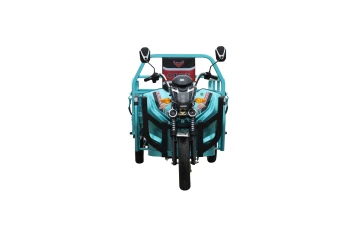
1. The performance requirements for electric cargo tricycles vary significantly in different freight scenarios. Reasonable matching should follow the following principles:
Urban short-distance delivery (daily mileage ≤50 kilometers, load ≤300 kilograms)
Motor: 1500W high-efficiency hub motor (high integration, easy maintenance)
Battery: 60V 80Ah lead-acid battery (cost performance preferred, supports one charge per day)
Applicable scenarios: fresh fruit and vegetable delivery, last-mile express delivery
Advantages: The vehicle body can flexibly navigate through streets and alleys, and the charging cost is low (about 5 yuan per charge).
2. Urban and rural medium and long-distance transportation (daily mileage 50-100 kilometers, load capacity 300-500 kilograms)
Motor: 2000W mid-mounted motor (with 5-speed gearbox)
Battery: 72V 100Ah lithium battery (supports fast charging, 80% charged in 1.5 hours)
Applicable scenarios: goods transfer in agricultural and sideline products wholesale markets, building materials transportation
Advantages: The power output is linear and stable. Combined with an energy recovery system, the actual range is increased by 15% to 20%.
3. Mountainous areas/Heavy-duty special operations (Daily mileage ≤30 kilometers, load ≥500 kilograms)
Motor: 3000W high-power mid-mounted motor (peak torque 600N · m)
Battery: Dual 72V 120Ah lithium battery compartment (supports hot battery swapping, ensuring uninterrupted operation)
Applicable scenarios: Orchard picking and transportation, mine material handling
Advantages: Equipped with a reinforced suspension system, the climbing Angle can reach 25°, meeting the demands of extreme working conditions.
Iii. Guide to Avoiding Pitfalls: Three Major Misunderstandings in Purchasing and Solutions
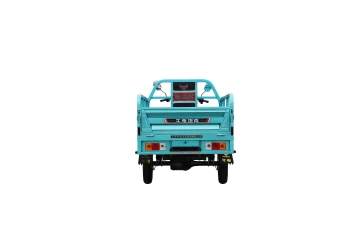
1. Blindly pursuing "low price and low configuration"
Low-priced models often use no-name motors (such as ordinary motors without cooling fans), and long-term heavy loads can easily cause the coils to burn out. Non-standard batteries may falsely label their capacity (for instance, they may be labeled as 100Ah but actually only 80Ah), resulting in a significant reduction in battery life. It is recommended to give priority to electric cargo three-wheeled models equipped with components from well-known brands, with a warranty period of no less than two years.
2. Ignoring the matching of "load - chassis - motor"
Some merchants install high-power motors on small-chassis models to cut costs, which can easily lead to frame deformation and premature tire wear. Judgment method: Check the "curb weight - maximum load capacity" parameter in the vehicle announcement. The conventional ratio should be 1:2.5 (for example, if the curb weight is 500 kilograms, the maximum load capacity should be ≤1250 kilograms).
3. Underestimate the Battery Management System (BMS)
Poor-quality BMS cannot monitor the status of battery cells in real time, which may cause overcharge bulging or unbalanced discharge. Key points for selection: Request the merchant to provide a description of the BMS function, with a particular focus on whether it supports temperature compensation (adaptive adjustment from -20℃ to 50℃), charge and discharge curve optimization, and other functions.
Iv. Technological Upgrade Trends: How to Seize the Initiative of "Efficient Operation"
1. The popularization of lithium batteries
Compared with lead-acid batteries, lithium batteries are 40% lighter, have an energy density twice as high, and support greater current discharge (for example, the instantaneous peak current of a 3000W motor can reach 80A), making them suitable for high-frequency and long-duration freight scenarios. Take a 72V 120Ah lithium battery as an example. Its three-year full life cycle cost is close to that of lead-acid batteries, but it has significant advantages in terms of range and efficiency.
2. Intelligent freight management system
Some high-end models have been equipped with on-board intelligent terminals, which can monitor the battery level, load capacity and driving route of electric freight tricycles in real time, and optimize the delivery route through cloud data. For instance, the "freight brain" system of a certain brand of vehicle can automatically adjust the motor output power according to real-time road conditions, reducing the overall energy consumption by 12%.
3. Innovative modular design
Designs such as detachable battery compartments and quick-change motors have become trends. For instance, dual-battery compartment models can quickly replace the fully charged battery during the journey, completely eliminating range anxiety. The modular design of the motor enables users to flexibly upgrade it according to seasonal needs, such as adding a snow motor in winter.
Conclusion: The core logic of choosing an electric cargo tricycle
 The performance essence of electric cargo tricycles is the "efficiency balance of productivity tools" - the motor and battery solutions need to be dynamically matched according to the type of goods, transportation distance and road conditions. It is recommended to test the full-load climbing ability (such as whether it can pass a 15° slope) and record the real range data (simulating daily route driving) before purchasing, and give priority to choosing brands that offer "scenario-based test drives". Remember, there is no "universal model", only "precise matching" - converting every kilowatt-hour of electricity into real transportation efficiency is the core competitiveness of electric freight transportation.