


Introduction
Under the global push for the "dual carbon goals" (carbon neutrality) and urban refined management, the garbage truck industry is experiencing a new round of technological and market upgrades. From traditional compression refuse trucks to intelligent electric sanitation vehicles (electric garbage truck), the industrial chain is accelerating its transformation from "mechanical sanitation" to "smart sanitation system".
Urban renewal drives the growth in demand for environmental sanitation equipment.
With the advancement of urban renewal, renovation of old residential areas, and improvement of rural living environments around the world, the global demand for waste collection vehicles and waste management equipment continues to grow. According to industry statistics, the current number of sanitation vehicles in China has exceeded 1.6 million, with garbage trucks accounting for nearly 60%.
However, many countries and regions still face problems such as "aging equipment, low collection and transportation efficiency, and rough vehicle management".
Local governments are accelerating the update of sanitation equipment, adopting new energy, low-noise, and highly sealed waste disposal vehicles to enhance operational efficiency and improve the living environment for residents.
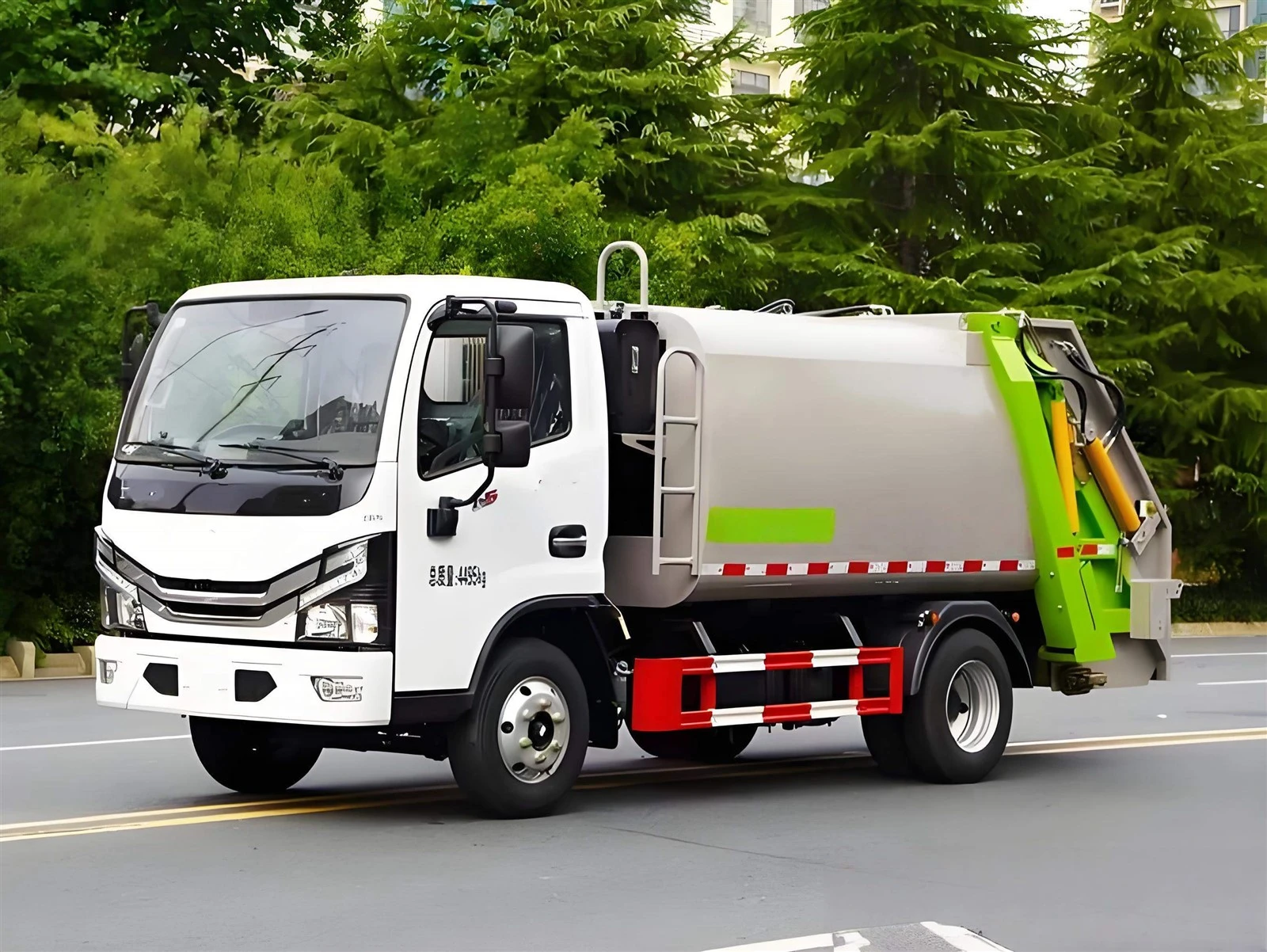
Second, the trend of electrification is obvious, and new energy garbage trucks are gradually becoming popular.
In recent years, the market share of electric garbage trucks has been continuously rising. Compared with traditional diesel models, electric garbage trucks have obvious advantages in urban short-distance collection and transportation scenarios - low energy consumption, zero emissions, and low noise.
Some environmental sanitation enterprises have begun to purchase new energy models in bulk, such as pure electric compression garbage trucks, side-loading garbage trucks, and small community collection and transportation vehicles, to replace old fuel vehicles.
Industry insiders predict that by 2026, the market share of new energy garbage trucks is expected to exceed 40%, becoming the main force of global green sanitation vehicles.
III. Intelligent Systems Make "Garbage Collection and Transportation" More Efficient
In addition to power innovation, intelligent technology has also become a key word in the development of the industry. Many manufacturing enterprises are applying intelligent systems such as IoT (Internet of Things), GPS positioning, weighing systems, and data management platforms to garbage collection trucks to achieve "visual management" and "precise scheduling". For example, smart garbage trucks can upload collection and transportation data in real time, monitor vehicle status, and record operation trajectories, helping urban managers optimize routes, save manpower and energy consumption, and significantly improve the overall efficiency of urban sanitation operations. This smart waste management system based on big data and cloud platforms is becoming a key technology for urban sanitation upgrades in various countries.
IV. The potential of export markets is beginning to emerge.
With the maturation of manufacturing technology and the emergence of cost advantages in China, more and more waste collection trucks are entering the international market. Regions such as Southeast Asia, Africa, and the Middle East have a strong demand for urban sanitation infrastructure construction, and the purchase volume of Chinese garbage trucks continues to rise. Currently, the types of garbage trucks exported from China mainly include compression type, side-loading type, self-unloading type, and mini electric garbage trucks, which are widely used in municipal, community, and industrial park scenarios. Industry experts point out that in the future, with the standardization of products and the improvement of environmental protection technology, Chinese garbage truck brands are expected to occupy a larger share in the international market and become an important force in the global waste management vehicle industry.
V. Industry Future: Green, Intelligent, and Modular
Overall, the global garbage truck industry is shifting from a "manufacturing-oriented" approach to a "system service-oriented" one. The future development trends will focus on three aspects:
Green and eco-friendly: A comprehensive transition towards electrification and low carbonization.
Smart and Digitalized: Build a data platform to achieve intelligent operation management.
Modular Design: Multi-functional combination vehicle models are launched based on the demands of different cities and scenarios.
Driven by both policy guidance and market demand, the garbage truck industry is becoming an important supporting force for the green transformation of cities. This technological revolution centered on "garbage" has not only changed the way cities operate but also brought new growth momentum to the global waste collection and disposal equipment industry.