


The number of cars in cities is increasing worldwide.
Today, the number of cars in the world is increasing. The Flatbed Trailer Market is growing steadily due to advancements in urbanization, strict traffic management, and increasing demand for efficient road structures. According to industry analysts, the global trailer market will grow by ~5% annually between 2025 and 2030, thanks to investments in modern transportation facilities and improved parking management.
Cities need more vehicles.
In large Asian, European and Middle Eastern cities, the density of tea is increasing, which increases breakdowns or agglomerations. The city is purchasing trailers from the panel to improve road cleanliness and efficiency in emergency response. Compared to conventional trailers that use hooks or chains, flatbed trailers are safer as there is no secondary damage to the vehicle. In countries with growing urban populations, such as China, India, and Indonesia, governments are rapidly increasing tenders for rescue and law enforcement vehicles. According to data from several market research companies, by 2024, regional demand will be around 40% of global demand.
Technological improvement and compliance with emission standards
The main trend in the diesel trailer industry is the fitting of greener engines and more advanced hydraulic systems. Manufacturers are increasingly taking Euro V and China V emission standards and are equipped with energy-saving diesel engines, such as the Cummings ISF series. These engines have high power (a large moment), are fuel-efficient and are suitable for heavy traction.
The modern 4×2 trailer, equipped with an automatic control system, safety sensors and an electric winch, to make the structure more comfortable. Several groups are testing hybrid and electric tractors to achieve future carbon reduction targets.
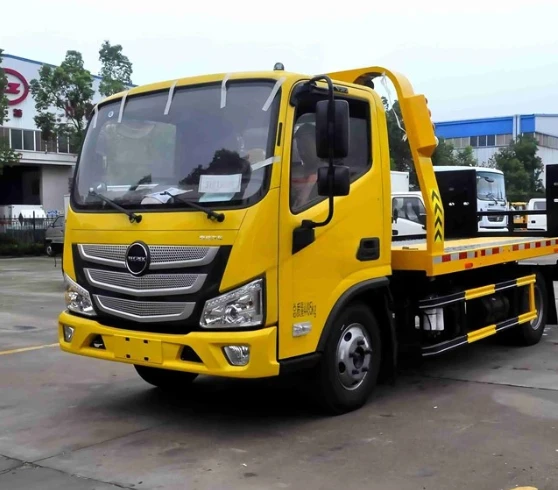
The upgrade of the group and after-sales operators and government departments replace relief fleets with standardized vehicles. 4×2 Panel tow trucks have been favorites for their versatility, small size, and ease of handling traffic jams. It can carry two cars at once, which makes them very efficient for rescue operations in the city.
In addition, the after-sales service of flat trailers is also active. Regular maintenance contracts, tire replacements, and hydraulic system maintenance are submarkets that favor the industry. According to analysts, when shipping companies buy vehicles, the availability and maintenance costs of spare parts become important factors in decision-making.
It is the local market.
Asia Pacific is the largest trailer market of four, driven mainly by urban management projects from China and India.
In Europe, the demand for trailers is increasing due to strong environmental measures and the aging of many vehicles.
The Middle East and Africa are emerging markets. Above all, more infrastructure and more commercial vehicles on the road, more problems on the road and more towing problems. In North America, cities and private tractor-trailers replace older hook trailers with hydraulic plates to comply with hydraulic plates for safety reasons and stricter traffic insurance regulations.
Challenges and opportunities.
While the entire industry is growing, there are also challenges such as cost reduction and technology integration. In 2024, the average production cost of diesel trailers increased by almost 8% due to the rise in steel and component prices. The manufacturer optimized the chassis design and established a modular hydraulic system.
At the same time, digital career management tools offer new opportunities. With remote monitoring and GPS technology, operators can track trailer movements, arrange maintenance, and get to rescue areas faster. All of this can bring benefits and increase the credibility of your service.
2025 to 2030
Experts expect the flatbed trailer market to continue to renew over the next five years. As cities work to establish "carbon-neutral transportation," electricity and smart connected trailers will become more commonplace. At the same time, small logistics companies and government teams have fairly large fuel facilities, especially in developing countries, where there is a high demand for diesel tractors. The global trailer industry is changing from a simple towing tool to a smart and effective rescue system. Performance, compliance, and cost control by manufacturers and wholesalers will become a critical concern throughout the entire lifecycle in the changing automotive industry.