


With the continuous development of urban logistics, regional distribution and infrastructure construction in 2025, more and more enterprises are facing a key question
Should they choose light trucks or medium trucks?
Although both of these vehicle models are used for commercial transportation scenarios, the differences in actual usage costs, operational efficiency, and long-term return on investment are constantly widening.
This article will conduct a comprehensive comparison between light trucks and medium trucks from the perspective of actual operating costs, aiming to assist logistics companies, fleet operators, and engineering contractors in making more rational purchasing decisions in 2025.
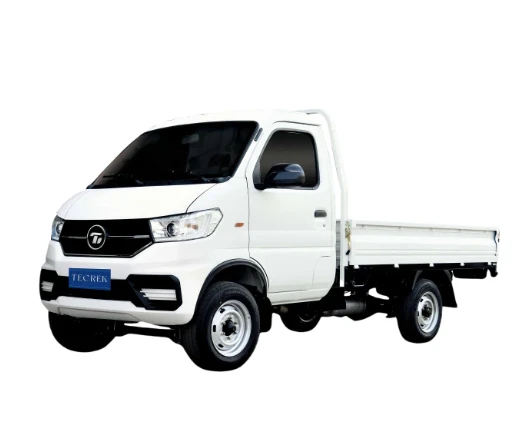
1. Basic Definition: The Core Difference Between Light Trucks and Medium Trucks
Before comparing the costs, it is necessary to clearly define the basic positioning of both.
Light Truck
It usually refers to commercial trucks with a total weight ranging from 3.5 to 4 tons. They are widely used for urban delivery, municipal services, short-distance logistics and end-of-line transportation.
Medium Duty Truck
The general gross weight is between 6 and 12 tons. It is mainly used for greater load capacity, longer transportation distances, and heavy-duty conditions, such as transportation of construction materials or regional trunk logistics.
Although the Zhongka has a greater load capacity, it does not mean that it is more cost-effective in all scenarios.
2. Car Purchase Cost: A Significant Difference in 2025
In 2025, the initial purchase cost will still be the most obvious and also the most easily overlooked difference point.
Whether it is a diesel light truck or an electric light truck, their purchase costs are generally significantly lower than those of medium-sized trucks. In most markets, the purchase price of medium-sized trucks is often 30% - 60% higher than that of light trucks, depending on the configuration and emission standards.
For small and medium-sized enterprises, light trucks mean:
Shorter investment return cycle
Lower financial and financing pressures
More flexible fleet expansion capabilities
This is why light trucks continue to dominate in urban commercial transportation scenarios.
3. Fuel and energy costs: Light trucks have a more significant advantage
With fluctuations in energy prices and increasingly strict emission regulations, energy consumption costs will become a decisive factor by 2025.
Light trucks have lower fuel consumption per kilometer in urban driving conditions.
Electric light trucks have rapidly gained popularity in urban delivery operations, with operating costs significantly lower than those of traditional diesel trucks.
China-Kazakhstan railways are more suitable for full-load, high-speed and long-distance transportation. In the urban environment where trains frequently stop and start, they often remain in a low-load state for a long time, resulting in energy waste.
Therefore, in urban logistics and short-distance transportation scenarios, light trucks have a significant advantage in terms of energy costs.
4. Maintenance and downtime costs: The underestimated "hidden expenses"
Many enterprises fail to consider maintenance and downtime costs when choosing vehicles, and these factors are actually the key determinants of the total cost.
China-Kazakhstan:
The engine and transmission system are more complex.
The cost of the components is higher.
The maintenance period is longer.
Light-duty truck:
The structure is relatively simple.
Maintenance is more convenient.
Lower costs for spare parts and labor.
In 2025, "Vehicles not on the road = Direct loss of income".
From the perspective of reducing the risk of downtime, the comprehensive performance of light trucks is better.
5. Urban Policy and Operational Flexibility
More and more cities around the world are strengthening:
Vehicle dimensions
Emission standards
Noise Control
The management requirements.
In contrast, light trucks are easier to:
Enter the core area of the city
Meet the requirements of low-emission or restriction policies
Avoid additional compliance costs
Some areas located in the city may encounter time-limited traffic restrictions or regional limitations, which will directly reduce operational efficiency.
6. Load Capacity Reality: It's Not Always About "The Bigger, The Better"
The greatest advantage of the Zhongka vehicle lies in its load capacity. However, in reality, many users have not fully utilized this advantage.
If your daily cargo load is:
It is rarely more than 2 to 4 tons.
Then the additional carrying capacity of China-Kazakhstan becomes:
Cost burdens that cannot be converted into revenue
The light truck is specifically designed around the concept of "load capacity efficiency + operational cost balance", which better meets the actual needs of most commercial transportation.
7. Why are light trucks more cost-effective in 2025?
Overall, in the fields of logistics, municipal services, and commercial transportation, the trend is already quite clear:
Light-duty trucks have lower total life cycle costs.
Electric and efficient diesel light trucks further reduce long-term expenses
Modular and customized design makes vehicles more suitable for actual application scenarios.
Manufacturers with the capability of complete vehicle production, deep customization experience and technical accumulation in commercial vehicles are launching lighter truck solutions that better meet industry demands, further enhancing the cost-performance advantage of light trucks.
Final conclusion: In 2025, should we choose a light truck or a medium truck?
The answer depends on your actual usage scenario, but for most enterprises:
If your main business involves urban delivery, short-distance transportation, and frequent operations → Light trucks are more cost-effective.
Only when it undergoes long-distance transportation under heavy load conditions → does the medium-sized truck have a greater advantage.
For the majority of commercial users, light trucks (especially modern diesel light trucks and electric light trucks) have achieved the best balance among cost, efficiency and flexibility.
Are you planning to optimize your fleet for 2025?
If you are evaluating light trucks or electric light trucks for urban logistics or commercial transportation, the choice of vehicle configuration and manufacturer will directly affect your long-term operating costs.
A light truck customized for specific conditions can effectively reduce energy consumption, minimize the risk of maintenance downtime, and enhance overall transportation efficiency.