


Introduction
As cities worldwide accelerate infrastructure upgrades, the global market for aerial work platforms (AWPs) is entering a stage of rapid evolution. Once viewed as simple lifting tools, AWPs are now considered essential urban equipment-much like how elevators transformed high-rise construction decades ago, aerial platforms are reshaping how work at height is performed today.
Safety Regulations Push the Market Forward
In recent years, countries in Europe, the Middle East, and parts of Asia have introduced stricter safety requirements for high-altitude operations. This has pushed industries away from traditional scaffolding and toward mechanized platforms.
For example, during the renovation of a municipal stadium in Turkey last year, contractors replaced all traditional ladders and scaffolds with aerial work platforms due to new work-at-height regulations. The transition reduced project time by nearly 28% and cut safety incidents to almost zero-an illustration frequently referenced in urban-renovation case studies.
Experts often compare the shift to "changing from handwritten accounting to digital systems"-once the transition begins, it quickly becomes the new standard.
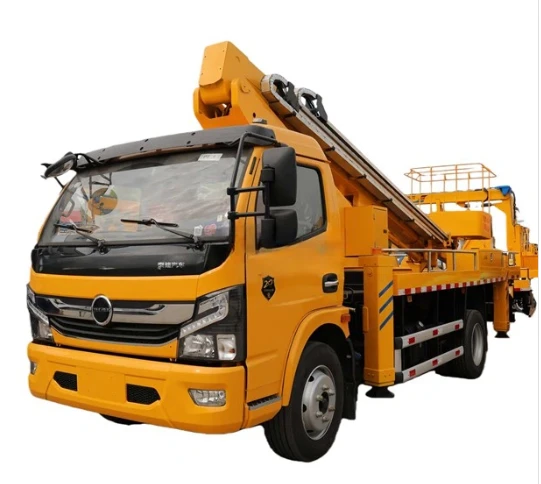
Growing Adoption in Municipal Maintenance
Streetlight and power-line maintenance teams were among the earliest adopters of AWPs, but usage is expanding into new sectors.
A maintenance director in Manila described the difference vividly:
"Using old ladder-based operations was like trying to clean a skyscraper window with a broom. With aerial platforms, the work finally matches the scale of the city."
Municipalities in Southeast Asia now average more than 5,000 aerial lift deployments per month in large cities. This sharp rise has encouraged local governments to include aerial platforms in long-term urban development plans.
Construction Industry Embraces Mid-Height Solutions
While the high-rise segment relies on tower cranes and large boom lifts, the mid-height construction market (10–30 meters) is seeing the fastest growth. Analysts attribute this to the rapid development of commercial streets, logistics parks, hospitals, and residential complexes.
A recent infrastructure project in Saudi Arabia illustrates this trend well. Contractors constructing a logistics distribution center used mid-height telescopic platforms for insulation panel installation. This approach was compared by engineers to "using the right-sized key for the lock"-not too large, not too small, just efficient and precise for repetitive exterior work.
The result: a 21% reduction in labor hours and higher installation accuracy.
Technology Trends Shape the Next Five Years
Three innovations are emerging as defining forces in the AWP sector:
1. Smart Load Monitoring
New platforms integrate sensors that measure load distribution and boom angle. These systems can intervene automatically, a feature once considered optional but increasingly treated as standard.
2. Electric and Hybrid Systems
As cities push for reduced emissions, manufacturers are developing hybrid or fully electric mid-height platforms. While diesel remains dominant for long-distance and heavy-duty operations, electric solutions are becoming common for city-center work.
3. Multi-Application Adaptability
Companies now prefer equipment that can operate in diverse environments-from tree trimming to billboard installation-rather than buying task-specific machinery. This demand mirrors trends in multi-purpose construction tools worldwide.
A Market Growing with Urban Complexity
Urban planners often liken modern cities to "living organisms" that need constant repair and upgrading. As building density increases, the challenges of working safely at height grow as well.
Aerial work platforms are becoming the "circulatory system tools" of modern cities-quietly enabling maintenance, power-grid expansion, communication upgrades, and countless repair tasks that residents rarely notice but rely on every day.
Market analysts predict that global AWP demand will continue to grow steadily through 2030, especially in mid-height categories where the balance of reach, mobility, and cost makes them practical for both private contractors and public infrastructure teams.